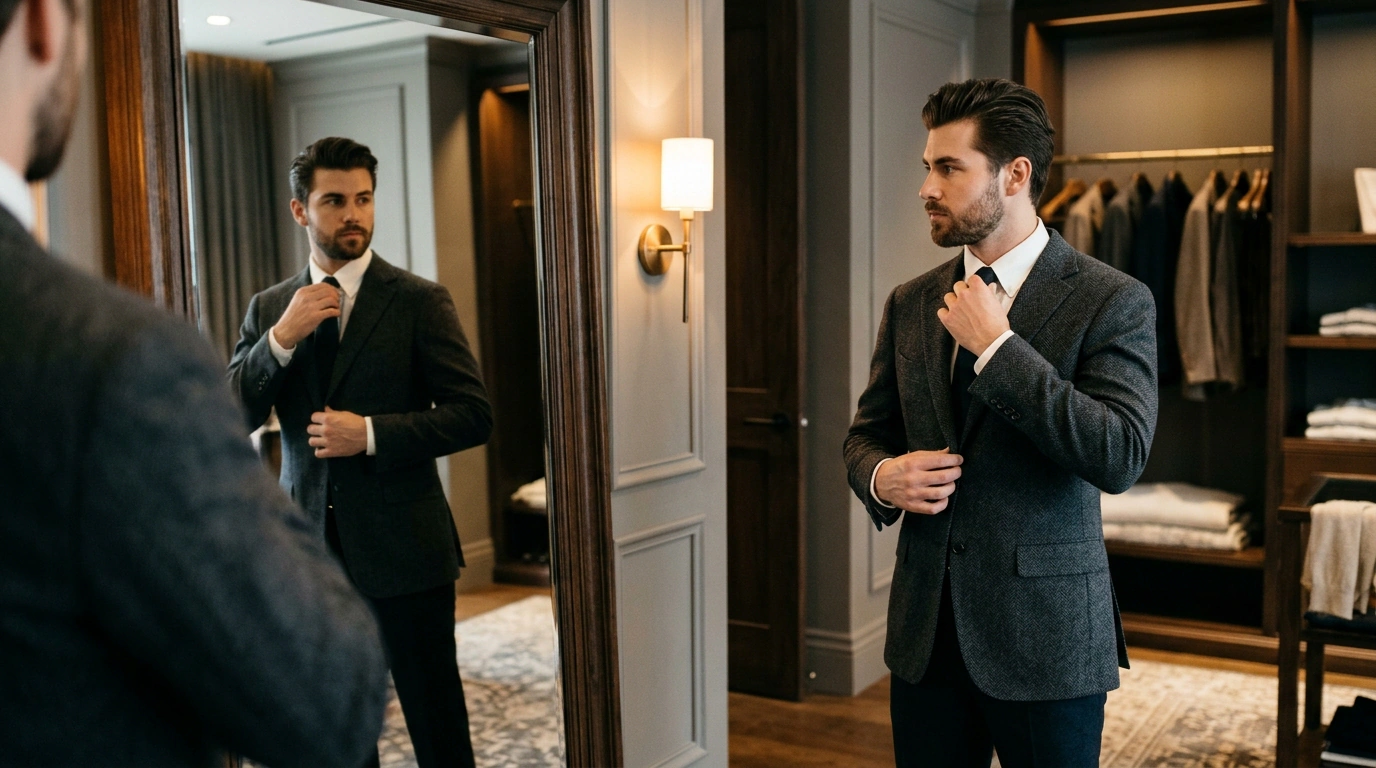
Open any social feed and within ten seconds you'll run into short clips tagged #OldMoney and #QuietLuxury. Young guys strike moody poses in front of historic estates wearing white linen trousers, sockless loafers, and a cashmere sweater artfully draped over their shoulders.
It looks great—right up until you try wearing that exact costume down a real city street in late October. On the subway or in a lecture hall, dressing like "an aristocratic heir on a yacht in Monaco" doesn't look classy; it looks comical, like you wandered onto campus wearing a theater prop.
Antonio Centeno, founder of Real Men Real Style, cuts straight through the fake Instagram gloss. Real Old Money style isn't about cosplaying trust-fund kids or flaunting wealth. It's the exact opposite: a deliberate rejection of flashiness, disposable fast fashion, and screaming logos in favor of timeless classics, razor-sharp tailoring, and materials built to last.
We've already talked about why the 'old money' trend feels dated and how to dress sharp without cosplaying. Now let's translate that aesthetic into a practical everyday wardrobe for a regular young guy—no trust fund required.
Costume Party vs. Reality: What "Quiet Luxury" Actually Means
The core law of old-school style is simple: real status doesn't need a billboard.
Look at typical "New Money" flexing: giant glowing BALENCIAGA prints across the back, oversized gold-logo belt buckles, neon everything. The outfit practically yells at strangers: "Hey, I dropped 100,000 rubles on this hoodie—please validate me!" That's insecurity dressed up as fashion.
In the Old Money tradition, flashing price tags is considered peak bad taste. Real quality speaks for itself through fabric texture, clean stitching, and how a garment frames your build. When the brand label stays hidden inside the collar, the fabric has zero cheap synthetic sheen, and the silhouette is dialed in to the millimeter—that's genuine taste.
We covered smart spending in investing in men's style and daily habits: buying one solid wool piece that lasts ten years beats tossing out cheap polyester rags every season.
Fit Beats Brand: Why a Tailor Matters More Than a Designer Label
The biggest rookie mistake in menswear? Saving up for an 80,000-ruble designer blazer off the rack and assuming the job is done. If that blazer was cut for an average mannequin—pulling at the shoulders, sleeves swallowing your knuckles, extra fabric bunching at your lower back—it still looks sloppy and cheap.
Antonio Centeno's ironclad rule: fit beats brand 10 times out of 10.
A 15,000-ruble suit from a regular store, taken to a local tailor and fitted to your actual frame, will always look leagues sharper than baggy luxury.
Here is what proper tailoring fixes:
- Shoulder line: The shoulder seam should end right where your shoulder bone ends—no divots, no overhanging padding.
- Waist suppression: Taking in the side seams clears out excess back fabric and highlights an athletic V-taper.
- Sleeve length: Exactly 1 to 1.5 cm of shirt cuff should peek past your jacket sleeve. It visually lengthens your arms and adds crisp contrast.
- Trouser break: Ditch the three-fold accordion fabric piling over your shoes. A clean half-break or zero break keeps your leg line tall and sharp.
People size up a man's maturity, reliability, and polish in the first three seconds of seeing him. Your brain instantly locks onto two things: how cleanly the shoulders of your jacket or coat sit, and the condition of your shoes. No pricey watch or designer belt can rescue an outfit with sloppy shoulders and dusty boots.
The Interchangeable Capsule: 6 Classic Colors and Natural Fabrics
Quiet luxury is ridiculously practical. Its secret is a tight, conservative color palette where literally every piece works with every other piece. You don't burn twenty minutes staring into your closet every morning:
- Navy: your anchor for blazers, knitwear, and peacoats.
- Charcoal & Mid-Gray: ideal for wool trousers and overcoats.
- White & Ecru: the clean base for dress shirts and heavyweight tees.
- Light Blue: the timeless shade for Oxford shirts.
- Beige & Khaki: crisp tones for sturdy chinos and trench coats.
Ditching polyester is just as critical. Cheap synthetics squeak, build static, shine weirdly in sunlight, and trap odor fast. Stick to time-tested natural weaves: worsted wool, flannel, tweed, cotton twill, corduroy, and supple full-grain leather.
In our basic fall capsule guide for guys, we listed the durable fabrics that hold their shape year after year.
The Fall Blazer & Oxford Kit: A Smart Investment Blueprint
Let's put together a benchmark fall outfit in understated classic style that works equally well for a date, the office, or dinner out:
- Navy Wool Blazer: An unstructured single-breasted blazer in matte wool with a natural soft shoulder (skip the armored 1980s shoulder pads). Look for horsehair canvas construction inside—over time, your body heat molds it to your chest.
- Oxford Cloth Button-Down (OCBD): A textured cotton Oxford shirt with a button-down collar. It gives you that effortless collar roll that looks sharp both under a blazer and solo with rolled sleeves.
- Chinos or Wool Trousers: Mid-rise heavyweight cotton chinos in sand or olive, or clean gray wool trousers.
- Footwear: Brown suede chukkas, Chelsea boots, or cognac leather penny loafers.
- Accessories: A leather belt matched to your shoes, plus a clean mechanical watch with a light dial on a leather strap—zero blinking smartwatch screens.
Old Money style isn't about pretending you own a yacht or flexing a bank balance. It's about quiet self-respect, clean lines, and dressing with intention. Tailor your clothes to fit your frame, keep your boots clean, and wear the classics like you belong in them.