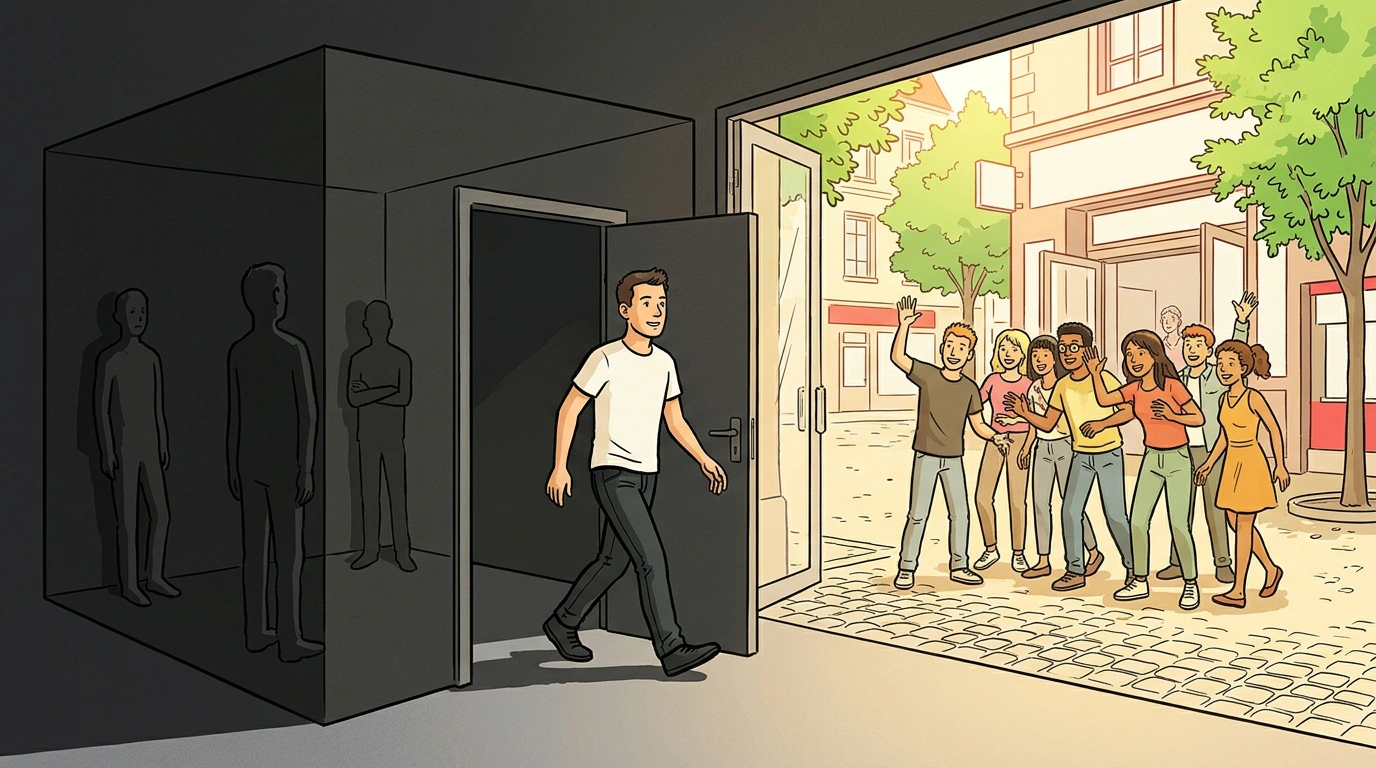
Have you ever felt like around your high school or college friends you get stuck inside an invisible glass case? Even if over the past few years you've read a mountain of books, built a great physique in the gym, launched a project, and learned to communicate with confidence, the moment you step back into your old circle, you catch yourself falling back into rehearsed jokes, timidity, and compliance. In psychology, this is called role rigidity.
The Trap of Familiar Social Scenery
A social environment is built for efficiency: it's convenient for the people around you to assign you a role once and keep you in it for years. To your parents, you're forever "the boy who needs someone keeping an eye on him." To old friends, you're "that quiet guy who always stays silent in the corner." To coworkers, you're the reliable executor who doesn't claim leadership.
When you try to display a new pattern of behavior in a familiar circle, your environment pushes back unconsciously. Your new manners, confident voice, or refusal to tolerate toxic teasing are treated like a system glitch. People try to put you back in your box with lines like: "Why so serious all of a sudden? Been watching self-help videos? Relax!" Your brain gets tired of fighting that pressure and capitulates, sliding back into the worn-out groove. As a result, your charisma gets pickled, and your inner progress never makes it into real life.
New Spaces as a Blank Slate for Character
The only reliable way to break this loop is to regularly change your social scenery. When you walk into a completely unfamiliar place among people who know nothing at all about your past, the magic of a blank slate happens.
There is no baggage of expectations here. New acquaintances see you strictly as you present yourself right now: your current posture, your tone of voice, the way you dress, and your confidence. They don't have a dossier on your childhood insecurities or college blunders. You earn the legal right to act spontaneously, try bolder lines, flirt openly, and take the lead.
Choose spaces built around shared activity: martial arts classes, debate clubs, climbing gyms, or networking meetups. A shared task removes initial tension and lets you calibrate a natural masculine presence without rehearsed masks.
Every step into a new context calibrates your updated self. You notice attractive women you've never met smiling warmly at your remarks, and unfamiliar men listening respectfully to your thoughts. That fresh social feedback burns away old fears for good. Don't be afraid to change your routes, walk into unfamiliar venues, and spend time with people whose scale of thinking challenges you.