You're young, your lab work is spotless, and the woman you've been wanting to take out is finally sitting across from you—everything points to an unforgettable night. Then you head back to your place after dinner, things move to the bedroom, you reach for a condom, and right at the moment of truth your body goes on strike—even though just yesterday, alone in front of a screen, everything worked without a hitch.
Why does an active guy in his twenties suddenly misfire in bed, and how can simple tweaks to your daily routine bring back rock-solid reliability? I cross-referenced a breakdown by men's lifestyle creator Aaron Marino of alpha m. with urological data from Healthy Male and sleep research from the U.S. National Center for Biotechnology Information. An erection rests on two pillars—unrestricted blood flow and a calm nervous system—and a sudden bedroom flop almost always turns out to be the cumulative bill for ten everyday habits.
Erections as an Early Warning Sensor: Why Blood Vessels Signal Years Before Doctors Notice
Take 23-year-old frontend developer Alexey. After an embarrassing misfire on a date, he went in for a Doppler ultrasound, and the doctors confirmed his vascular anatomy was completely healthy. To see why things still stalled, let's translate the urology into plain English.
An erection is pure hydraulics triggered by a nerve impulse. When arousal sparks in your cerebral cortex, a signal shoots down through the sacral spine along the pelvic nerve to the endothelium—the single-cell inner lining of your blood vessels. Healthy endothelium releases nitric oxide (NO), which activates guanylate cyclase and raises cGMP levels. That relaxes the smooth muscle inside the corpora cavernosa: arterial blood floods the chambers at 100 mmHg of pressure and pins the draining venules flat against the tunica albuginea. The veno-occlusive mechanism locks in—outflow is sealed, and you get firm.
Why would that chain break in your twenties when your heart feels totally fine? It comes down to pipe diameter. Your heart's coronary arteries are 3–4 mm wide, while the cavernous arteries of the penis measure just 1–2 mm. Any spasm, low-grade inflammation, or endothelial fatigue shows up in the bedroom 3–5 years before your first cardiology symptom ever appears. Morning and evening firmness is the most sensitive vascular barometer you have—the first gauge to flash red when daily habits are sabotaging your system.
Vascular Sabotage: Sleep Debt, Zero Cardio, and Why Lifting Weights Won't Save Your Arteries
Let's tally the real price of lifestyle shortcuts that feel like an easy trade for late-night coding or a quick buzz. The first four habits hammer your vascular and hormonal foundation:
- Chronic sleep debt (under 7 hours a night). Grinding at your desk until 1:30 a.m. and waking at 7:00 feels like buying extra hours. Yet during REM sleep, your body runs 3–5 nocturnal erections that flush cavernous tissue with oxygen-rich blood. Sleeping 5.5 hours (or the 5–6 hours plenty of guys settle for) starved Alexey's tissue of overnight oxygenation—a pattern linked to smooth-muscle fibrosis—and cuts testosterone output by 10–15% in a single week. For more on how late-night screens and stress tank androgens, see our guide to habits that crash testosterone.
- Ten-hour desk marathons and pelvic stagnation. Sitting in a chair for 10 hours straight lets pelvic circulation pool and stall. Aaron Marino compares the corpora cavernosa to any other muscle: without regular blood-flow surges and morning erections, the trabecular meshwork loses elasticity and responds sluggishly when you actually need it.
- Skipping cardio in favor of weights only. Heavy lifting builds biceps, sure, but it barely conditions your endothelium. For the eNOS enzyme to pump out steady nitric oxide, your arteries need hydrodynamic shear stress—fast-moving blood brushing against vessel walls during aerobic cardio at 120–140 bpm.
- Sugary energy drinks, visceral fat, and blood pressure. Two or three energy drinks buy half an hour of focus, yet blood-sugar spikes glycate the endothelium and push blood pressure up. Meanwhile, deep belly fat produces the enzyme aromatase, converting testosterone into estradiol—while visually burying usable length behind a fat pad.
Head Traps: Porn-Driven Dopamine Overload, Wasted Fuel, and Cortisol Spasms
Even spotless arteries stay quiet if your brain's wiring gets scrambled. The next three habits dull your arousal circuitry:
- High-speed porn and dopamine numbness. Using screens to blow off steam fuels porn-induced erectile dysfunction (PIED). Constantly chasing novel, extreme clips desensitizes dopamine and androgen receptors in the brain: in bed with a real woman, normal touch, scent, and body heat stop registering as enough stimulus.
- Masturbating before a date and sex without real heat. "Clearing the chamber" a couple of hours before meeting up so you'll last longer backfires hard—you walk into the bedroom inside a refractory recovery window with your physiological tank half empty. Going through the motions mechanically without genuine emotional and sensory arousal kills the signal before it starts.
- Turning intimacy into a pass/fail exam. Treating sex like a performance review triggers a panic loop. The moment Alexey worried about misfiring again, his brain dumped cortisol and adrenaline—instantly clamping down cavernous arteries and shutting off his parasympathetic nervous system. We mapped out how to break that cycle in our breakdown of why performance anxiety kills intimacy.
Everyday Toxins: Salt-Nic Vapes, Liquid Courage, and Overheated Underwear
Rounding out the list are three daily habits most guys treat as harmless background noise:
- Vapes, nic salts, and cigarettes. Hitting a vape beside your laptop every twenty minutes (Alexey was racking up 20 sessions a day) feels minor. In reality, nicotine is a direct vasoconstrictor that narrows vessels and slashes nitric oxide synthesis by 30–40% for 2–4 hours. Salt nicotine absorbs even faster, triggering a peak pelvic arteriole spasm that lasts 60 minutes per hit.
- Alcohol for "courage" and medication side effects. A couple of bar cocktails take the edge off nerves, yet ethanol slows nerve signaling from the spinal cord to the pelvic plexus, softening erections and blocking climax. Certain blood-pressure meds and antidepressants cause similar dips—always check with your doctor if you switch prescriptions.
- Tight synthetics, heat, and dehydration. Your testes need to stay 2–3 °C cooler than core body temperature—around 34–34.5 °C. Snug synthetic boxer briefs and heated car seats create a sauna that drives venous congestion, while drinking coffee instead of water lowers blood plasma volume and hydraulic pressure.
The Male Reset Protocol: 5 Steps That Restore Rock-Solid Tone in Two Weeks
According to urologists at Healthy Male, vascular and dopamine fatigue in young men is completely reversible. Five straightforward shifts get you back online fast:
- Sleep in pitch darkness: 7.5–8 hours with lights out by 11:00 p.m. lowers inflammation via melatonin and brings back overnight tissue oxygenation.
- Aerobic cardio: 30–40 minutes of brisk walking or jogging 4 times a week restarts eNOS enzyme activity within 10–14 days.
- Dopamine detox: cutting out porn for 14–30 days and saving your sexual energy on date days restores natural brain sensitivity.
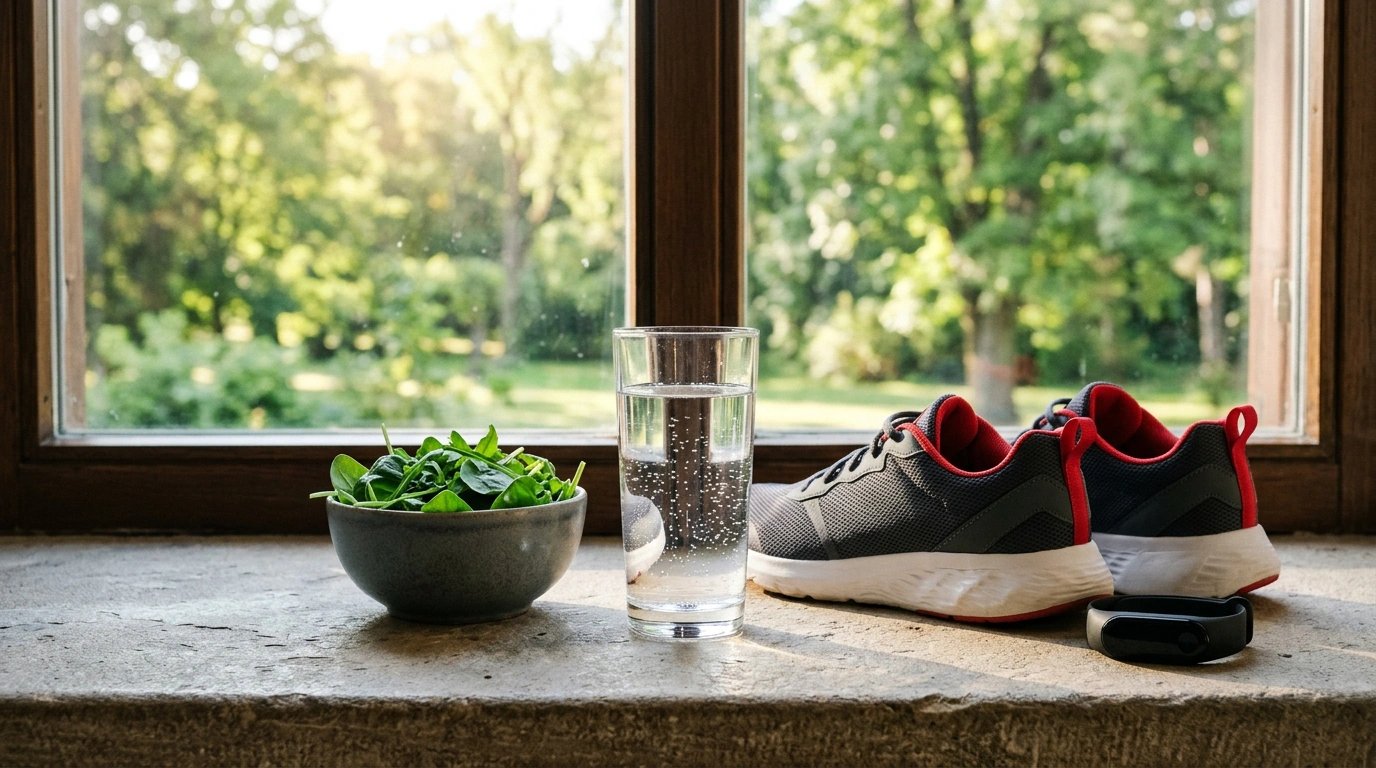
- Nitrates and hydration: plain water alongside spinach, arugula, and beets fuels an alternate enterosalivary nitric oxide pathway through oral bacteria.
- Zero spasm triggers: ditching the vape and switching to loose cotton boxers eliminate overheating and capillary constriction.
Quick Pre-Date and Pre-Sleep Self-Check
- Bedroom is dark and cool, with your phone parked away from the bed
- Weekly schedule includes regular brisk cardio walks or runs
- Porn tabs stay closed, and physiological reserves are saved on date day
- Energy drinks and vapes are swapped for plain water and leafy greens
- Tight synthetic underwear is replaced with breathable cotton boxers
Once Alexey tossed his vape, blocked porn sites, locked in an earlier bedtime, and started walking briskly through the park every evening, steady morning erections returned in 12 days—and three weeks later, his date-night anxiety vanished completely. Just keep perspective and don't turn into a panicked hypochondriac. Don't wake up every morning frantically testing yourself under the covers, and don't sneak sildenafil or tadalafil before dates without a doctor's prescription: for a young guy, PDE-5 inhibitors just paper over lifestyle sabotage and build psychological dependence on a pill. Give your body a clean month first; if morning tone still hasn't returned after 4–6 weeks of solid sleep and movement—or if you notice pelvic pain—book a visit with a urologist-andrologist to rule out varicocele, prostatitis, or hidden diabetes.