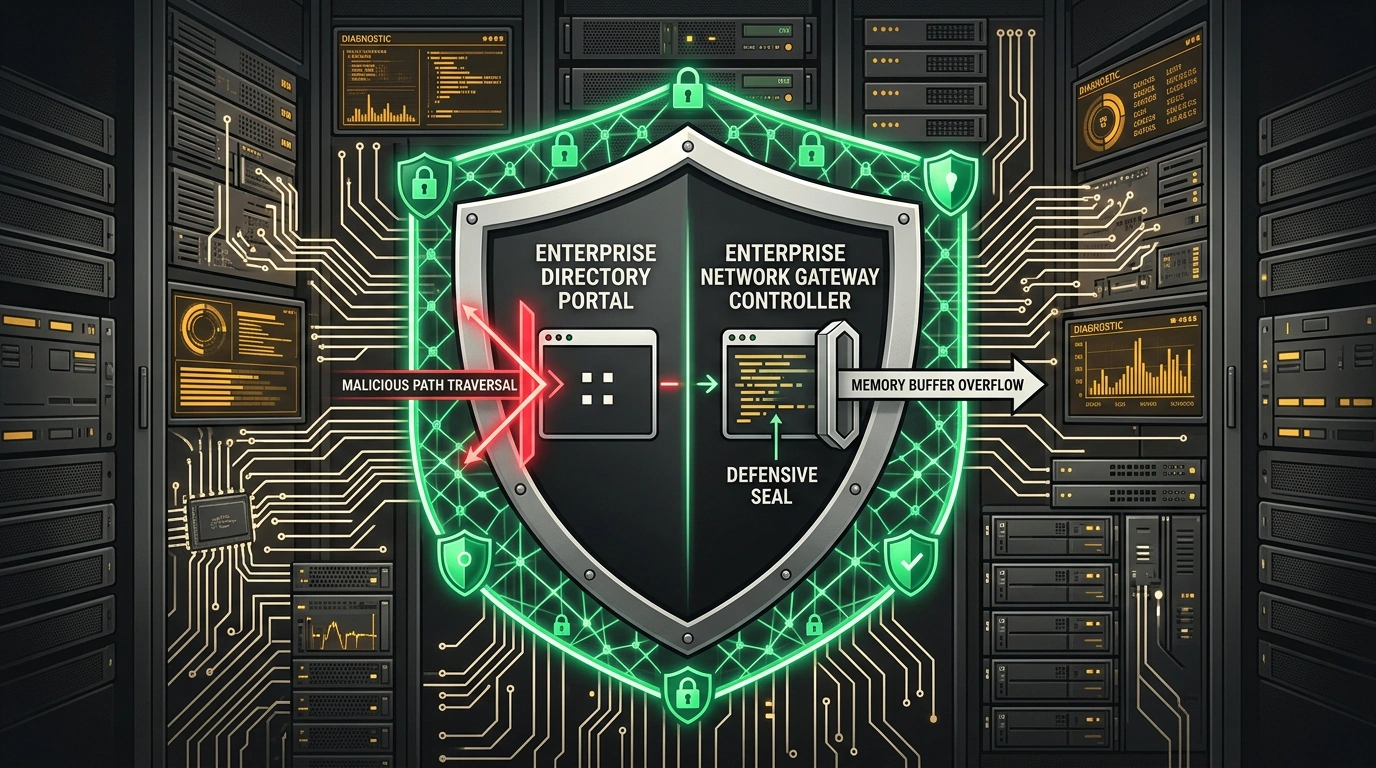
When a vulnerability scores above 9.0 on the CVSS scale, it's not a routine hygiene reminder—it's a fire alarm for system administrators. Over the past week, the industry faced a double hit as both Atlassian and Citrix shipped urgent patches. The targets are NetScaler network gateways alongside Jira, Confluence, and Bamboo servers. Both flaws allow unauthenticated attacks against the corporate perimeter and are already being exploited in the wild.
Breaking into Data Center with Colons: Inside CVE-2026-21589
The Atlassian flaw (CVE-2026-21589, CVSS 9.3) affects on-premises Data Center and Server deployments: Jira, Confluence, Bamboo, Bitbucket, and Crowd.
The root cause lies in how servlet web resource paths are parsed. If a request contains a :: sequence, the internal router treats it as a directory separator (Path Traversal). That lets an unauthenticated remote attacker read arbitrary files from the application server.
The main target is WEB-INF/classes/crowd.properties. This configuration file stores plaintext integration passwords for Crowd, the directory server managing organization accounts. With those secrets, an attacker can seize domain admin rights, source code, and build pipelines. VulnCheck has already added this flaw to its Known Exploited Vulnerabilities (KEV) catalog.
Buffer Overflow in NetScaler SAML Gateways: Remote RCE Risk
The situation with Citrix NetScaler controllers is even more severe: CVE-2026-107406 carries a CVSS score of 9.5. It is the vendor's second emergency patch in ten days.
The bug is a memory buffer overflow (CWE-119) in the SAML protocol handler. When a gateway is configured as a SAML Identity Provider (IdP) or SSO gateway using samlAction or samlIdPProfile directives, a specially crafted request corrupts daemon memory. An unauthenticated attacker can trigger a denial of service or execute arbitrary code remotely (RCE) on the gateway.
There are no software workarounds—you cannot close this hole without updating the firmware. Only builds 14.1-73.46 and 13.1-64.29 are confirmed safe.
Post-Quantum Armor in OpenSSH 10.6: Preparing for Future Threats
Alongside these emergency fixes, the OpenSSH team shipped a strategic release. OpenSSH 10.6 enables the hybrid ssh-mldsa44-ed25519 digital signature algorithm by default.
It pairs Ed25519 elliptic curve cryptography with the post-quantum ML-DSA algorithm (standardized by NIST). This defends against "Harvest Now, Decrypt Later" attacks, where adversaries store encrypted traffic today to crack it once quantum computers arrive. WarnWeakCrypto is now on by default as well, and LZ77 compression is disabled due to side-channel leak risks.
Immediate Action Plan for On-Call Engineers
If you run any of the affected services, act right away:
- Isolate Atlassian and add WAF rules: Move Jira, Confluence, and Bamboo behind a VPN. Configure your Web Application Firewall to block requests containing
::or targetingcrowd.properties. - Audit logs and rotate passwords: Check access logs for suspicious hits to resource servlets, and rotate your Crowd master passwords immediately.
- Upgrade NetScaler clusters: Roll out builds
14.1-73.46or13.1-64.29across your high-availability nodes using sequential failover.