Issue October 14Daily digest · 11 items
In this issueReviewed 67 sources, gathered 11 items
Architectural isometric diagram of analytics acceleration in Postgres Pro AXE 2.0 showing row-based heap tables separated from columnar Parquet blocks on a graphite background.
ArticleDataAnalyticsPostgreSQLDatabases

Postgres Pro AXE 2.0: Analytics on Parquet and DuckLake with Familiar SQL

When an evening marketing report brings a transactional database to its knees, you're seeing the classic pain of PostgreSQL row-based storage. To sum a single column, the engine has to read every field of every row from disk.

The major Postgres Pro AXE 2.0 release introduces native analytical tables built on the open Parquet columnar format. Combined with the DuckLake metadata catalog embedded directly in relational tables on the same instance, complex analytical queries run up to 30x faster without losing familiar SQL syntax.

Let's see how to combine Lakehouse analytics and row-based Postgres without a zoo of third-party databases or painful permission migrations.


👍 0
Базы данных & SQLPostgres Pro AXE — аналитическая СУБД на ядре PostgreSQL
October 14
Product still life of floating frosted translucent cards from the OpenGlass UI design system over a graphite surface with crisp edges and clean DOM text.
ArticleDevelopmentDesignReactUI

OpenGlass UI: A Glassmorphism Component Library with Accessible DOM

Frosted glass effects on the web are often a frontend nightmare: Canvas rendering breaks screen readers, and stacked backdrop-filter: blur() layers tank mobile frame rates.

OpenGlass UI takes a different architectural path: 40 ready-to-use React components keep clean semantic text in DOM nodes, while the default auto renderer runs on pure CSS. Optical refraction via SVG and WebGL2 is strictly optional.

Accessibility is built in: the interface automatically adapts to prefers-reduced-transparency and prefers-reduced-motion, preserving WCAG contrast standards.

👍 0
Библиотека фронтендераOpenGlass UI — Liquid Glass component system for React
October 14
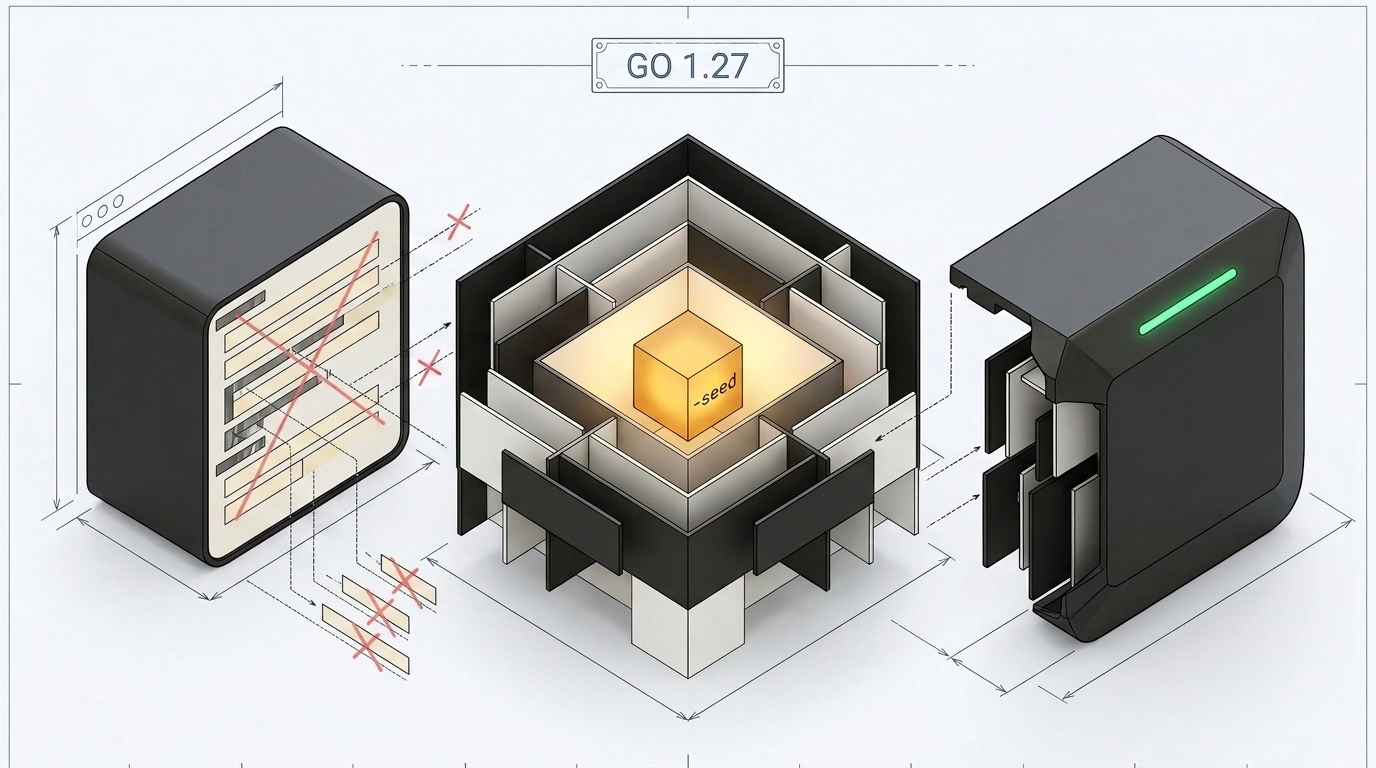
Exploded graphic diagram of a Go binary split by the garble 0.18 obfuscator into cryptographic nodes and a tangled control-flow graph.
ArticleSafetyDevelopmentGolangCompilers

garble 0.18: Go Binary Obfuscation with Go 1.27 Support

The standard Go compiler leaves plenty of debug metadata inside binaries: local source paths, type names, and internal package structures are easy to read with a simple strings command.

The garble 0.18 obfuscator hooks into the Go toolchain to turn executables into an unreadable maze. This release adds Go 1.27 support, speeds up builds by 15% by parallelizing its custom linker, and makes control-flow obfuscation deterministic with the -seed flag.

Here's how the aggressive -tiny stripping mode works and why debugging a production crash is nearly impossible without saving your build seed.

👍 0
Библиотека Go-разработчикаgarble 0.18.0 release notes
October 14
News · October 143 news items

Fastify 5.12.6: Security Fix and Faster Request Body Decoding

Fastify has released security patch 5.12.6 to fix vulnerability GHSA-389g-gv7q-r4x8, where header validation could be bypassed using mismatched letter casing. The release also speeds up single-pass string body decoding, adds a FIFO cache for Content-Type headers, and introduces the fastify.query() method per RFC 10008.

Reslop 0.3.0: Background AI Agents and GitHub/GitLab Issue Import

Reslop 0.3.0 expands orchestration for AI coding agents including Claude Code, Cursor, Codex, and OpenCode. Build commands, Git operations, and model runs now execute in the background without blocking the terminal, while tasks can be imported from GitHub and GitLab issues with compressed logs to save context.

Cluster Self-Healing: How Argo CD Prevents Late-Night Config Drift

Manual cluster edits via kubectl edit cause configuration drift and repeat outages on the next deploy. Enabling selfHeal and prune in an Argo CD Application manifest forces the controller to restore resources to the Git source of truth and remove orphaned manifests automatically.

Minimalist conceptual still life showing the meeting of two modular platforms, Deno and Cloudflare Workers, with an emblematic Hacker News label on a graphite background.
ArticleDevelopmentOpen SourceDenoCloudflare

Ryan Dahl on Deno Joining Cloudflare: 'Why Rewrite Node? It Works'

An eight-year effort to build an ideal runtime isolated from npm has ended with recognition of Node.js ecosystem dominance: Ryan Dahl and the Deno team are joining Cloudflare. Deno Deploy will shut down in six months, while the Deno runtime itself will receive one final year of official bug fixes.

The core goal of this alliance is integrating the celld isolation engine into the open-source workerd runtime. This will let developers run serverless functions and distributed Durable Objects databases on their own infrastructure without Cloudflare cloud lock-in.

Here's why pragmatism beat idealism and what Deno projects should do next.

👍 0
JavaScript WeeklyDeno is Joining Cloudflare
October 14
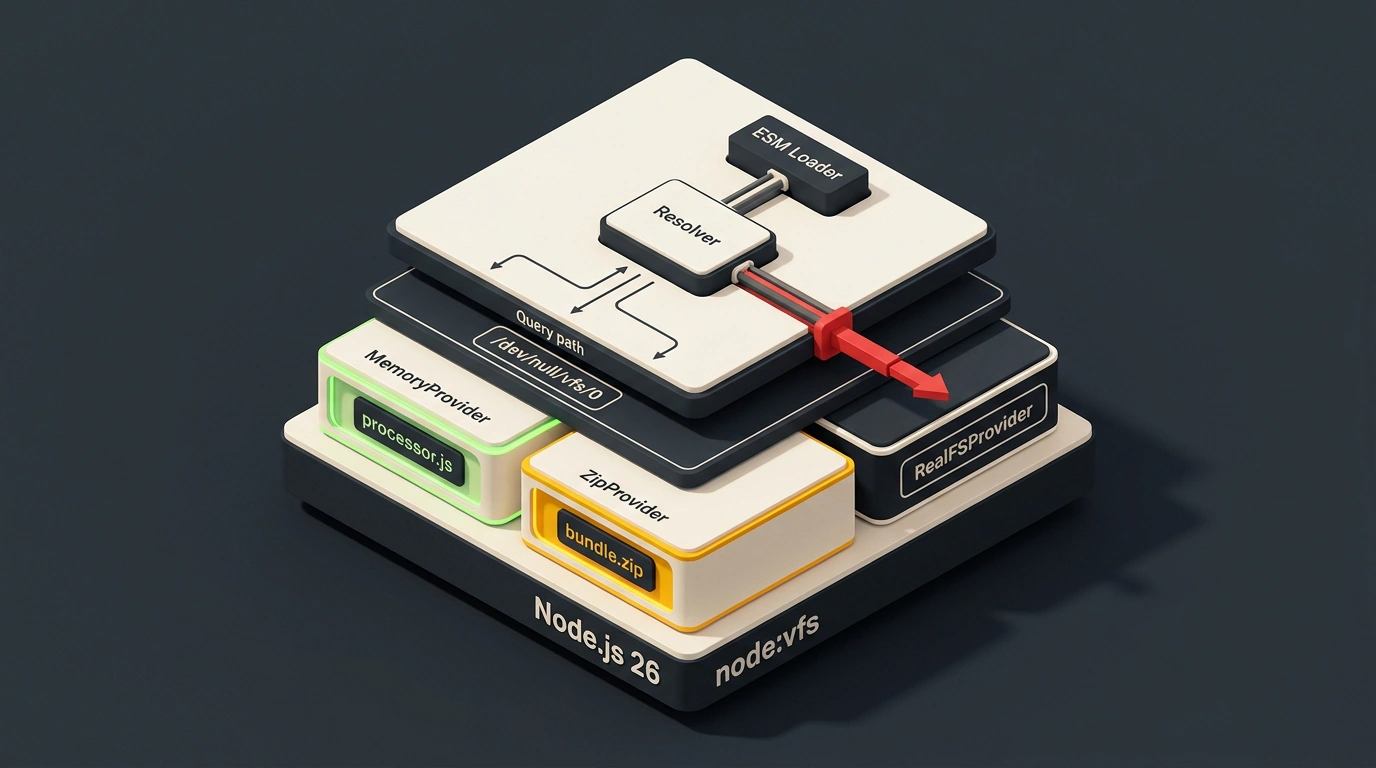
Architectural isometric model of the node:vfs subsystem in Node.js 26 showing the separation of the path resolver and in-memory or archive storage providers on a graphite background.
LongreadDevelopmentArchitectureNode.jsFilesystems

Virtual Filesystems in Node.js: How the node:vfs Module Works

Running code from RAM or compressed archives in Node.js used to rely on fragile fs monkey-patching libraries. The Node.js 26 branch introduces the native node:vfs module, led by Matteo Collina.

Its architecture separates the Path Resolver (integrated with the ESM loader) from Storage Providers (memory, real disk, and ZIP archives). Instead of risky global mount paths, the runtime allocates isolated namespaces to prevent accidental disk fallbacks.

Let's see how VFS simplifies Single Executable Applications (SEA), loads native C++ addons via memfd_create, and speeds up autonomous AI agents.

👍 0
Platformatic BlogNode.js PR #61478: add node:vfs virtual filesystem module
October 14
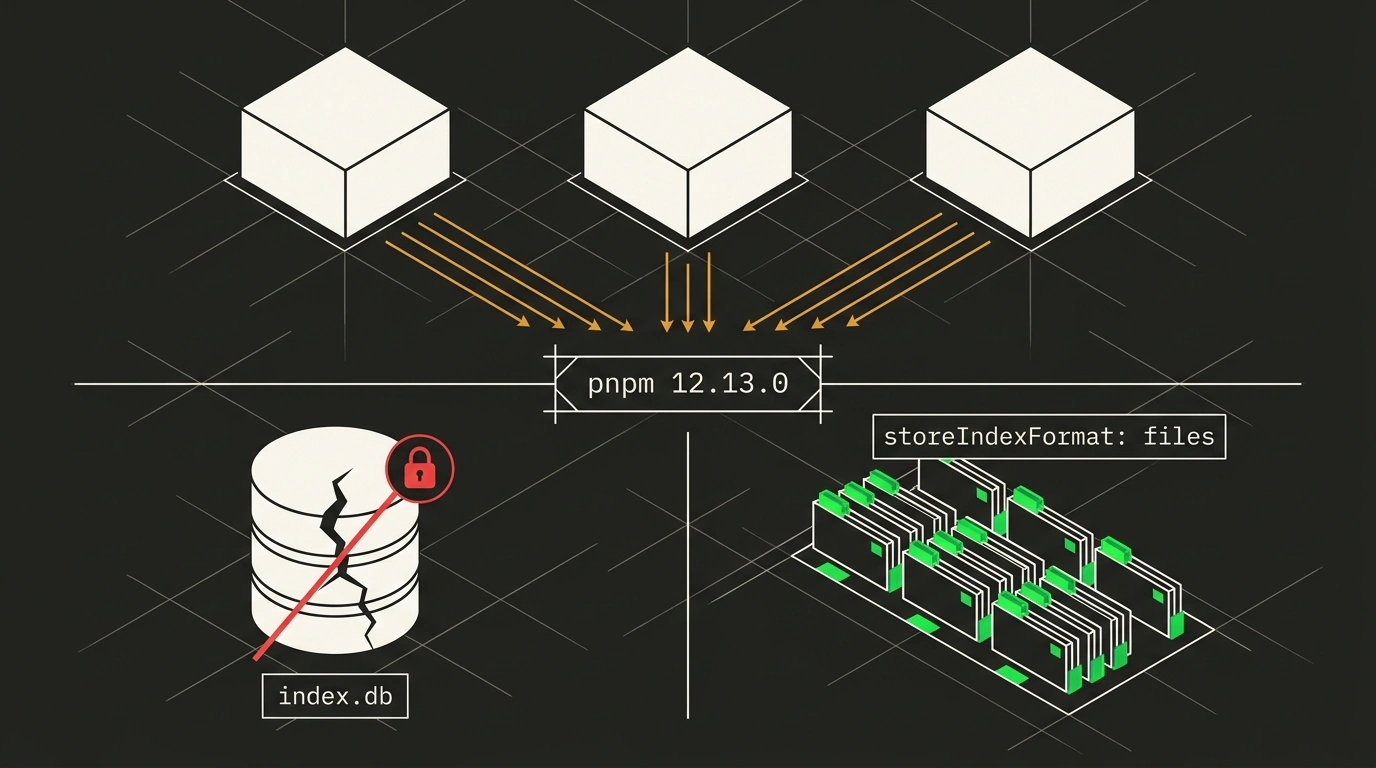
Architectural blueprint of parallel CI/CD runners safely writing isolated pnpm metadata files to an NFS network volume without SQLite lock contention.
ArticleDevelopmentAutomationPnpmPackage Managers

pnpm 12.13.0: Registry Profiles, Tokens, and Safe Shared Storage on NFS

Parallel CI/CD builds on shared NFS and SMB drives have long suffered from SQLite corruption: the index.db metadata file breaks under unreliable network file locks. pnpm 12.13.0 solves this with storeIndexFormat: files, storing a separate index file per package.

The package manager also gains native pnpm profile and pnpm token CLI commands for auditing and issuing registry keys, speeds up PEP 658 Python dependency resolution by 10x, and skips redundant network requests when the store is warm.

Here's how to configure the shared cache and monitor inode limits on network filesystems.

👍 0
pnpm Blog
October 14
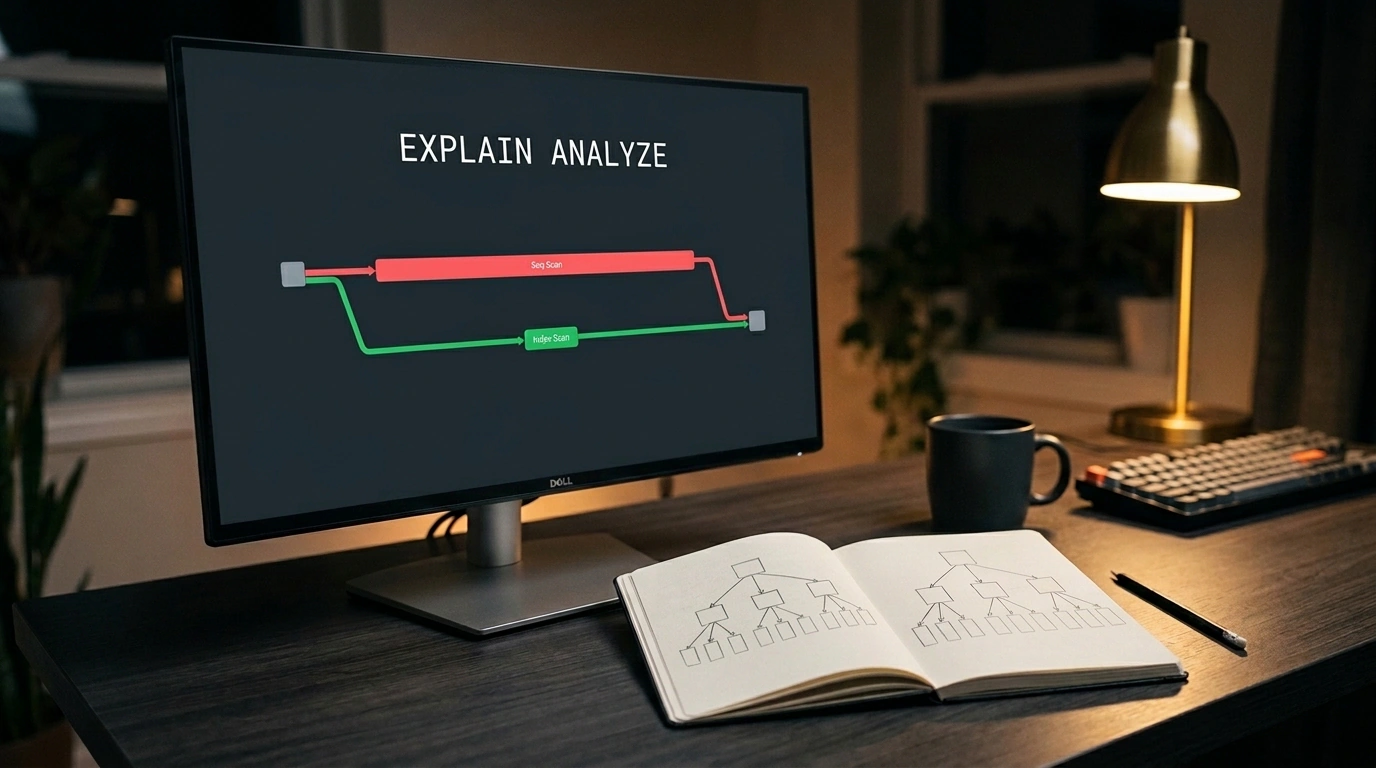
Engineering desk still life with a monitor showing an EXPLAIN ANALYZE profiler, query cost chart, and a B-Tree index diagram lit by a warm desk lamp.
ArticleDataEfficiencySQLOptimization

10 Rules for Fast SQL: Indexes, Selectivity, and Execution Plans

A query that flies in 1.5 milliseconds on a local test database can stall production on millions of rows. The culprit is often non-SARGable conditions: functions like YEAR(date) = 2026 in a WHERE clause disable B-Tree indexes and force a full table scan.

We break down 10 proven engineering rules for fast SQL: why EXISTS beats IN, when PostgreSQL's planner intentionally picks a Sequential Scan over an index, and how overusing DISTINCT hides broken JOIN conditions.

We also look at reading plans with EXPLAIN (ANALYZE, BUFFERS) and safely profiling write queries inside a rolled-back transaction.

👍 0
SQL PortalPostgreSQL Documentation: Using EXPLAIN
October 14
Still life of an engineer's desk with a laptop screen and a notebook showing a defense-in-depth diagram of Sanitizer API, setHTML(), and Trusted Types.
LongreadSafetyDevelopmentMarkdownBrowsers

Safe Markdown Rendering: Sanitizer API, setHTML(), and Trusted Types

Popular Markdown parsers like marked.js pass raw HTML through by default under the CommonMark spec, opening the door to XSS attacks and stolen auth tokens. Meanwhile, default configs in tools like DOMPurify leave <form> tags enabled, letting attackers overlay phishing password forms.

We walk through a defense-in-depth architecture: building a strict SanitizerConfig allowlist, using the native setHTML() browser method, parsing inside a windowless document to block tracking pixels, and falling back to DOMPurify.

Finally, we enforce Trusted Types via CSP so the browser engine blocks raw innerHTML assignments outright.

👍 0
Веб-стандартыMDN Web Docs: Element.prototype.setHTML()
October 14