Issue October 21Daily digest · 7 items
In this issueReviewed 67 sources, gathered 7 items
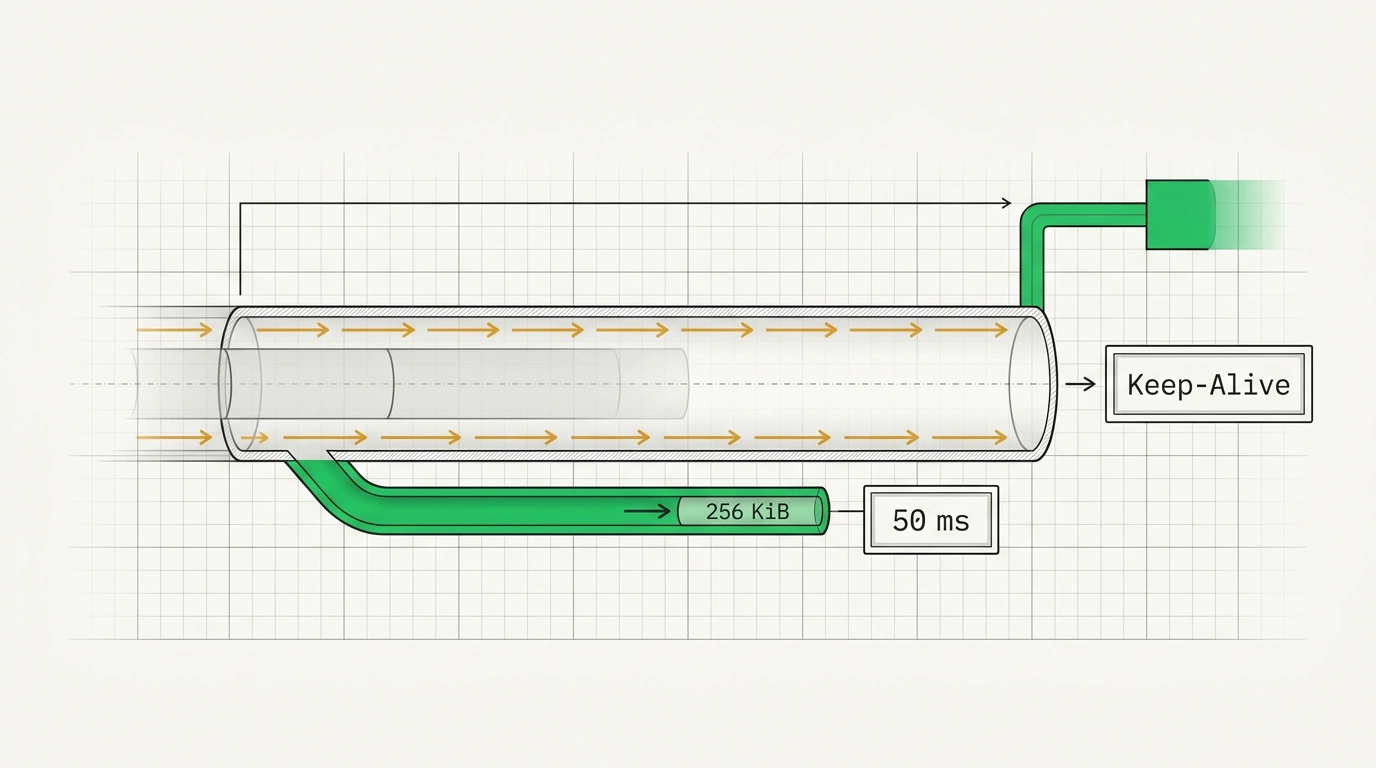
Network trace and Go 1.27 buffer showing background draining of an HTTP response tail back into the idle pool
ArticleDevelopmentGoOpen SourceHTTP

Go 1.27: How Background resp.Body Draining Speeds Up HTTP/1 Fivefold

You have written defer resp.Body.Close() in Go services for years without realizing that over HTTP/1, that call was quietly tearing down sockets and burning CPU cycles on repeated TLS handshakes. Leaving even a single unread byte in the buffer—like a trailing newline after decoding JSON—caused net/http to flag the connection as dirty and evict it from the pool.

In Go 1.27, core engineers fixed that architectural trap with smart background draining. The transport now asynchronously reads the tail of the response behind the scenes (up to 256 KiB within 50 ms) and safely returns the socket to duty. Across a hundred-request run, latency dropped from 710 to 150 milliseconds without a single line of manual workaround code.

👍 0
Библиотека Go-разработчикаThe Go Blog — Better HTTP/1 connection reuse
October 21
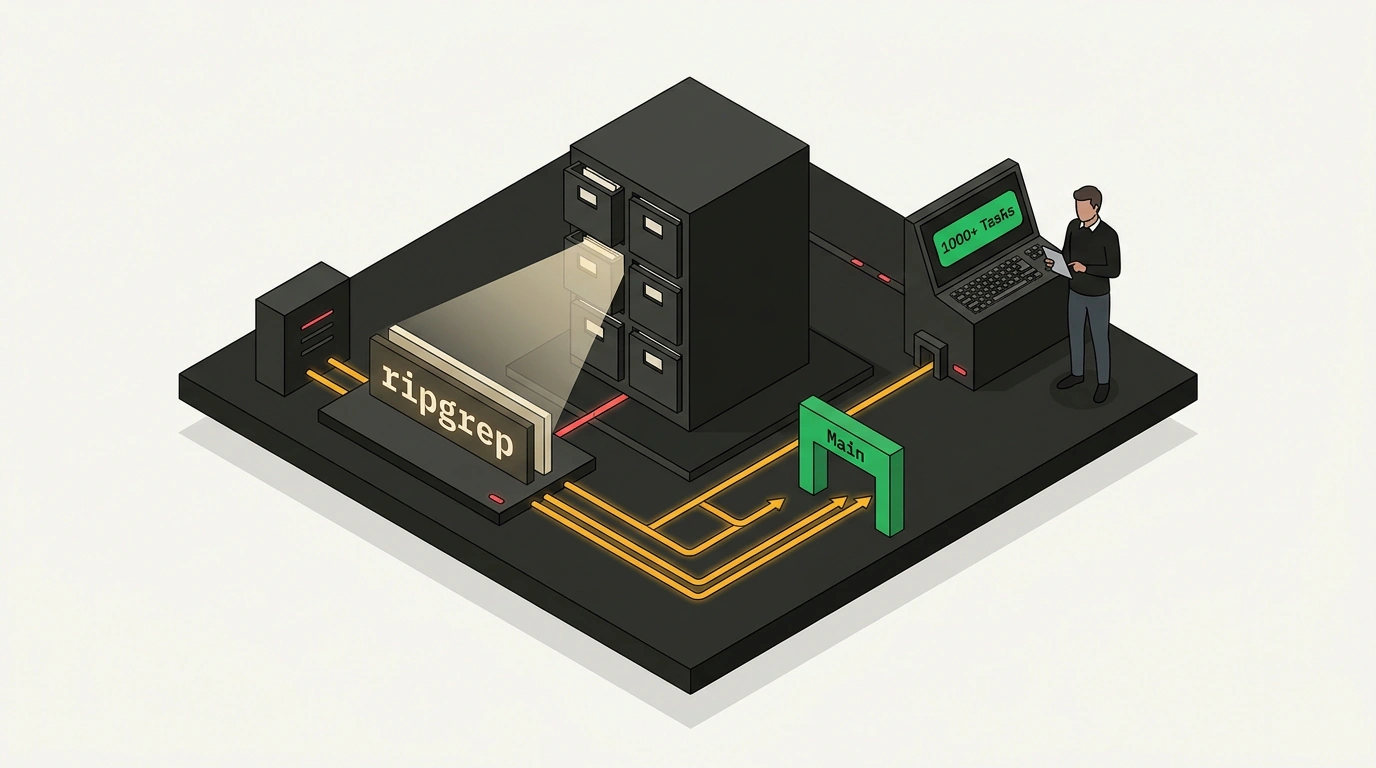
Engineering diagram of a monorepo and deterministic grep loop for an autonomous agent
ArticleAIAI AgentsAutomationDevelopment

An Agent Pipeline With Zero Human Commits: Raiffeisen's Talk at AI Native Conf

A thousand closed production tasks and not a single manual human commit—those are the results Raiffeisenbank presented for its autonomous engineering pipeline at AI Native Conf. Yet the most striking part isn't the automation itself, but how ruthlessly real-world practice crushed popular AI hype stereotypes.

The team ditched trendy multi-agent chains in favor of a single agent, consolidated two hundred microservices into roughly a dozen monorepos, and replaced vector databases with plain deterministic grep. Instead of a relay race between analysts and coders, a Product Engineer owns the flow, tracked by first-pass success rate. True autonomy doesn't come from clever prompts—it comes from crystal-clean architecture and uncompromising tests.

👍 0
System Design & HighloadAI Native Conf — Официальный сайт конференции
October 21
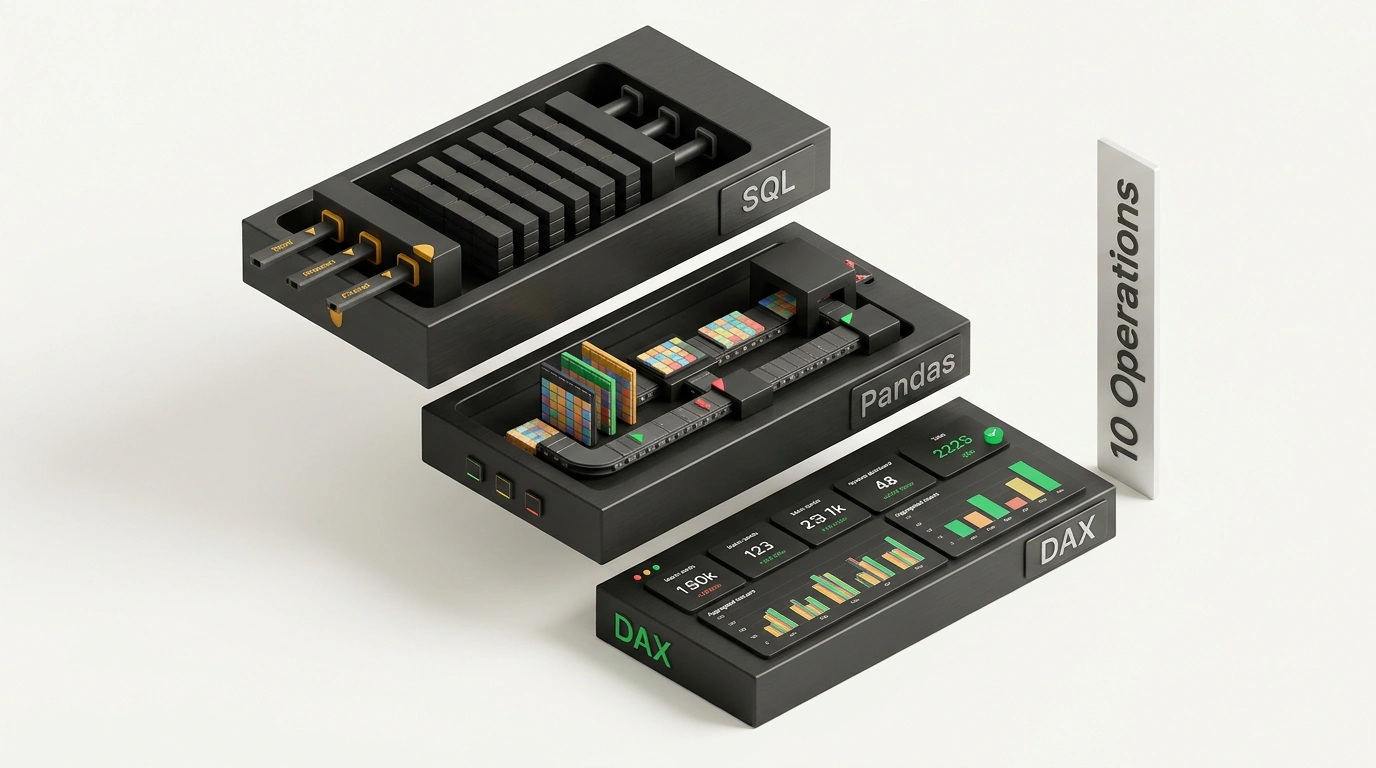
Three-tier architectural diagram of data processing across SQL, Pandas, and Power BI DAX
ArticleDataAnalyticsDevelopmentSQL

Data Transformation Made Simple: 10 Operations in SQL, Pandas, and Power BI DAX

Moving analytical logic between a data warehouse, Python scripts, and Power BI dashboards constantly causes syntax whiplash. The underlying math stays the same, yet declarative database queries, vectorized DataFrame methods, and formula evaluation context demand different engineering mindsets:

  • SQL shines at filtering raw rows right at the source using indexes and WHERE predicates;
  • Pandas handles heavy vectorized cleaning, validation, and missing-value imputation;
  • DAX computes dynamic business KPIs and rolling windows inside the VertiPaq engine.

Comparing ten core operations side by side helps you design a clean pipeline architecture and avoid out-of-memory crashes.

👍 0
SQL PortalMicrosoft Learn — DAX and Power BI documentationPandas Documentation — Comparison with SQL
October 21
News · October 212 news items

blocks: An Open Component Registry for shadcn/ui and Tailwind

The open-source blocks.so registry streamlines building interfaces with React and Tailwind CSS: login screens, navigation bars, and dialogs now drop in with a single shadcn CLI command via components.json. The code is copied straight into your project with zero extra npm dependencies, keeping full control in the developer's hands.

OpenCode Console Breach: Developer API Keys Leaked in a Distillation Attack

The OpenCode team has confirmed a security breach: a model distillation attack exposed developer API keys belonging to 1.4% of OpenCode Console users. The incident affected only the cloud platform and led to unauthorized billing charges. All impacted users are urged to rotate their tokens immediately.

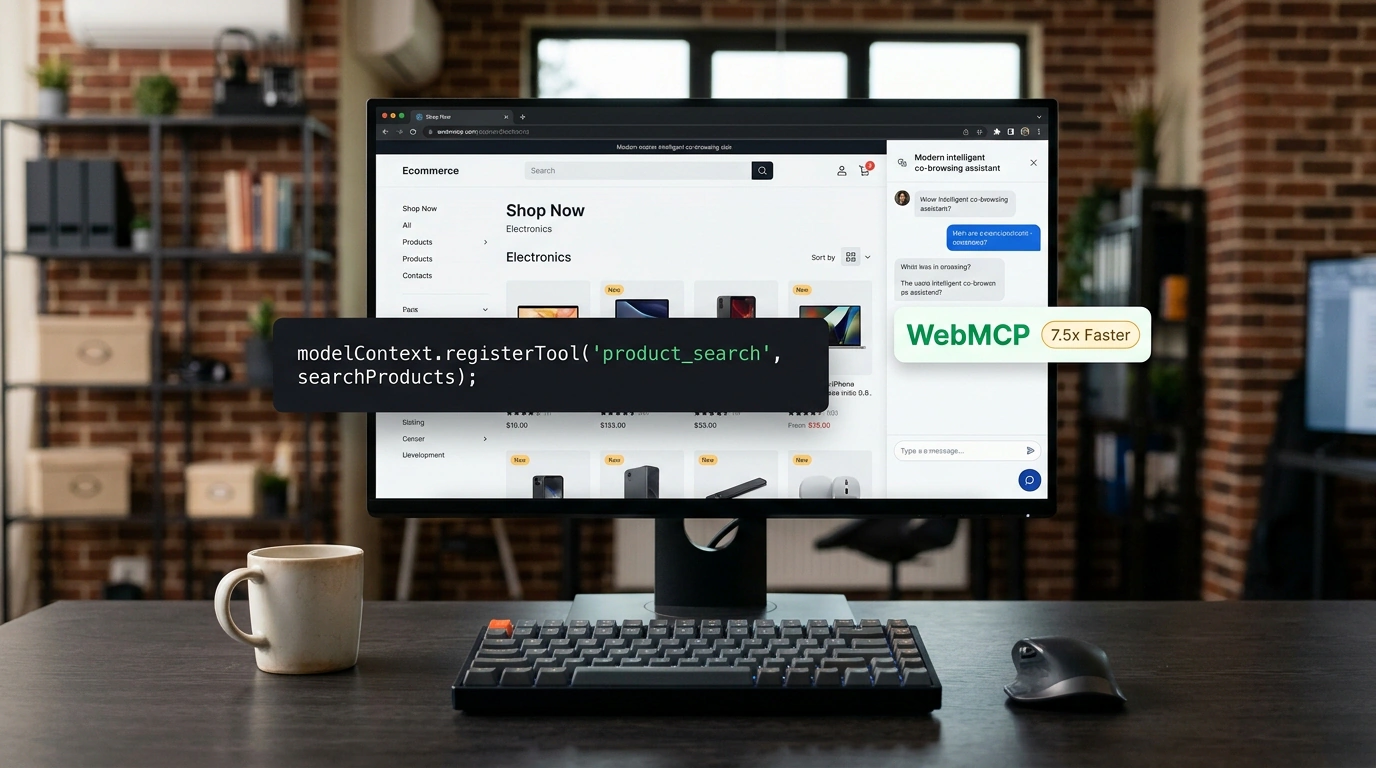
Developer workstation with an open browser and typed native WebMCP calls
ArticleAIAI AgentsDevelopmentWeb Standards

WebMCP: Why Co-Browsing With Agents Changes Web Performance

While some setups force AI models to screenshot browser tabs and click pixel coordinates, the WebMCP standard offers a fundamentally better approach to web automation. Instead of heavy computer vision and brittle DOM scraping, sites register typed JavaScript tools with explicit parameter schemas, turning an open page into a machine-readable API for language models.

The benchmarks show a dramatic contrast: in tests by nekuda.ai and Shopify, native WebMCP calls ran up to 7.5x faster and up to 47x cheaper than auto-clickers, delivering 100% reliability on checkout flows. At the same time, co-browsing keeps the session, cart, and full visual control with the human, protecting the open web from fracturing.

👍 0
Веб-стандартыYoav's blog thing — Why WebMCP mattersW3C WebML Community Group — WebMCP Standard Proposal
October 21