Issue November 28Daily digest · 29 items
In this issueReviewed 68 sources, gathered 29 items
Isometric architectural model of a multi-level AdonisJS segment routing tree splitting high-speed request streams
LongreadDevelopmentNode.jsOptimizationOpen Source

How AdonisJS Got Faster: Why 'Hello World' Benchmarks Lie, Route Trees, Node.js Fixes, and a V8 Trap

Standard web framework benchmarks measure returning an empty string and ignore the cost of middleware, hundreds of routes, and telemetry. The AdonisJS team built a realistic benchmark suite and sped up the Fold DI container, router, JSON responses, Shield, Edge, Inertia, Bodyparser, VineJS, and dev mode. Along the way, they found a ReDoS bug, a V8 regression in Node.js 25+, and two patches for Node.js core.

👍 13
AdonisJS BlogAdonisJS HTTP Server Releases (GitHub)
November 28
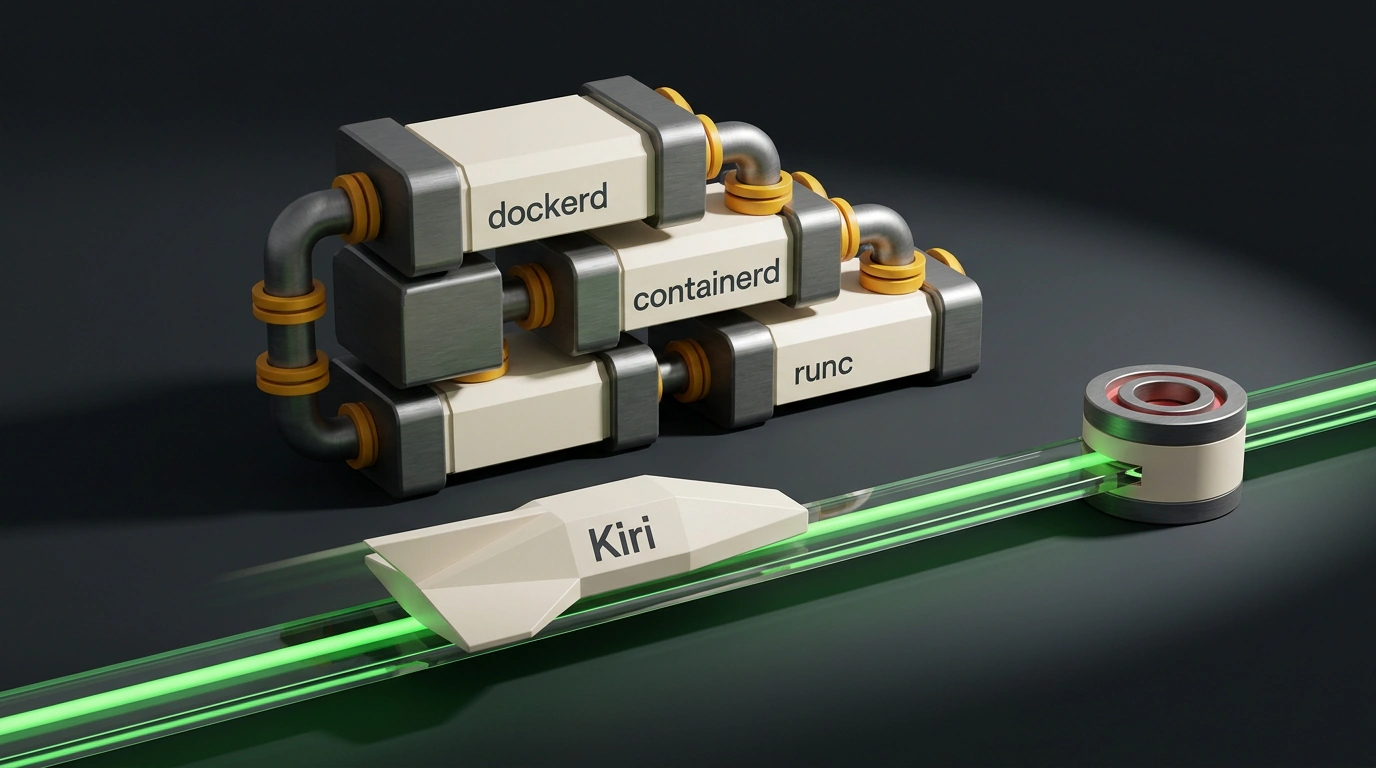
Conceptual 3D composition of the ultra-lightweight Kiri runtime making a direct kernel syscall while bypassing the daemon chain
ArticleDevelopmentOpen SourceDockerDevOps

Kiri: A Rust Container Runtime Replacing Docker Desktop with 2.5 ms Startups

Drop dockerd, runc, and shim processes, shrink the guest Linux kernel to 10 MB, and start containers with a single clone3 call—that is how the open-source Rust runtime Kiri works. On macOS, it starts containers in 2.55 ms, puts idle VMs to sleep at 15 MB, and understands standard docker CLI, Compose, and k3s. Here is how it works under the hood, benchmarks across three OSes, migration commands, and the real limits of branch 0.2.2.

👍 12
DevOps&SRE LibraryKiri on GitHub (libracoder/kiri)Kiri Official Site
November 28
Studio knolling layout of Go developer tools with measuring instruments and modular toolchain blocks
LongreadDevelopmentGoProductivityAI Agents

The 2026 Go Tooling Guide: go tool, go fix, gopls with MCP, Linters, Fuzzing, and PGO

The Go ecosystem has transformed over the past seven years, and this new guide for Go 1.24–1.27 maps out the entire developer stack. It covers when to use go install, go run, or go get -tool, why to run go fix with -diff, and how gopls mcp and godoc-mcp save tokens for AI agents. Plus a three-layer linter pipeline (govulncheck, go vet, staticcheck, nilaway), fuzzing, avoiding GOCACHE traps, PGO optimization, and finding data races.

👍 18
Go WeeklyAn Overview of Go's Tooling: Version 2 — Alex Edwards
November 28
News · November 2810 news items

Next.js Adds an Experimental Go Server Named Switchyard in Front of next start

The Next.js repository merged Switchyard, an experimental Go server that sits on the public port in front of next start. For now it is opt-in via __NEXT_EXPERIMENTAL_SWITCHYARD=1 and acts as a transparent reverse proxy before Node.js, with routing planned to move into Go in later stages.

minipg: PostgreSQL 18 in a Single Binary with Databases Stored in a .pgdb Folder

The minipg utility packages PostgreSQL 18 into a single executable without Docker and stores the database in a plain .pgdb folder, much like SQLite. The server starts on demand, injects DATABASE_URL into test runs, and shuts down when idle. Here are the launch commands, GitHub runner support, and prototype limits.

Exact by Expo: An Experimental Rust Framework Without React Built for AI Agents

Expo open-sourced Exact, an experimental Rust framework without React. Instead of JSX, it uses the compact Contract language and native rendering across web, iOS, macOS, Android, Linux, and Windows. A built-in 10-command driver and fast-forwardable clocks let AI agents build and verify screens themselves.

Ricky Hanlon Leaves Meta, Yet Stays on React

On November 25, Ricky Hanlon closed his Meta laptop after eight years at the company, as most of the React Core team has already moved elsewhere. He isn't leaving the project itself and will keep working on React from a new home, while the framework's rights have belonged to the independent React Foundation since February 2026.

How TypeScript's never Type Catches a Forgotten switch Case Before Code Runs

Added a new order status like refunded to a union type, yet missed one switch statement in your project? The build will pass and the bug will ship to production. Assigning to a variable of type never in the default branch forces the TypeScript compiler to flag the missing case right in your editor.

Why sync.OnceValues in Go Permanently Caches File Read Errors

If you wrap reading config.json in Go 1.21+'s sync.OnceValues, the function runs exactly once and caches both results forever—including any error. Even after the file appears on disk, your service keeps failing until restart. Here is why that happens and how to write a loader that retries on failure.

CTEs vs. Temporary Tables in SQL: When Readability Matters and When You Need Materialization and Indexes

When a SQL query grows large, it helps to split it with WITH (CTE) or a temporary table. A CTE lives for one query, runs on read-only replicas, and can be tuned with MATERIALIZED in PostgreSQL 12+, though it does not support indexes. A temporary table persists for the session and speeds up heavy JOINs.

COALESCE Instead of Verbose CASE in SQL: Picking the First Non-Null Price Cleanly

When a product catalog has three price columns (special offer, discount, and base price), a multi-line CASE repeating column names is easy to replace with a single COALESCE call. We cover lazy argument evaluation, portability across databases over NVL and IFNULL, and the zero and empty-string trap.

How to Disable Telemetry in Claude Code, Bun, Next.js, Astro, and Other CLIs with One Block of Env Vars

Modern CLIs and AI agents send usage stats and crash reports by default. Add seven official environment variables to .zshrc or .bashrc to turn off telemetry at once in Claude Code, Bun, Supabase, Wrangler, GitHub CLI, Next.js, Astro, and Vercel. Includes a copy-paste snippet and two Claude Code quirks.

Google Antigravity Lifts Neon Cache Hit Rate Another 4.5%, Fitting 28% More Tasks into the Same Quota

The Google Antigravity team tuned caching for Gemini 4 Neon again: cache hits rose by 4.5%, letting users fit 28% more tasks into the same quota. Over five days, subscription capacity has grown nearly 75%. Here is why a small hit-rate bump creates such a big jump and who benefits most.

Conceptual security filter for the Hono router blocking Prototype Pollution attacks and normalizing request paths
NoteSecurityDevelopmentHonoJavaScript

Hono v4.13.23: Three Vulnerabilities in TrieRouter, except(), and Bun URL Parsing

Hono released an urgent v4.13.23 patch fixing three medium-severity security vulnerabilities. We break down how a proto method request crashed Node.js processes via TrieRouter, why except() bypassed auth on paths like /api/loginX regardless of the main router, and how Bun behind a reverse proxy dropped the first path segment when Host was missing. Includes a quick upgrade checklist for 4.x and 5.0 RC.

👍 11
Hono ReleasesHono v4.13.22...v4.13.23 Compare
November 28
Minimalist sculptural scene of the Go 1.28 branch freeze with crystallizing code, SIMD blocks, and build cache cleanup
NoteDevelopmentGoPerformanceTools

Go 1.28 Enters Freeze: Stable SIMD API by Default and Automatic GOCACHE Trimming

Go 1.28 has entered its pre-release freeze, with RC1 expected the week of December 10. Before the branch closed, two long-awaited features landed in the standard toolchain: a stable SIMD API (simd and simd/archsimd packages) enabled without flags, and generational GOCACHE auto-trimming requested for seven years. Here is how both work, their limits, and the GOEXPERIMENT flags to roll them back during RC1 testing.

👍 17
Go Weeklygolang-dev: Go 1.28 release freeze has startedGo Gerrit CL 866013: enable simdstable by defaultgolang/go#29561: cmd/go: clean GOCACHE based on disk usage
November 28
Conceptual 3D workshop of an AI model generating HTML components with instant zero-build browser calibration
NoteDesignAI AgentsDevelopmentFrontend

A Design System from One DESIGN.md: How an AI Agent Built HTML-First Components and Found Token Gaps

Can you skip Figma and vague 'make it pretty' prompts by giving an AI agent a single DESIGN.md file? In a DevHands experiment, an agent built a 12-section HTML-first showcase strictly from CSS tokens in src/theme.css and caught three WCAG contrast issues along with a Token gaps list. Here is how explicit GAP comments, verify.sh, and the trade-offs work.

👍 6
System Design & HighloadDevHands: Claude Design System — Component Showcase
November 28
Studio still life comparing neural network models on a cloud infrastructure benchmark calibration rig
NoteAILLMDevelopmentAI Agents

GigaChat-4 on Cloud.ru: Free 708B Model with 1M Context, Per-Million Pricing, and First Benchmarks

Cloud.ru Evolution AI Factory launched two hybrid MoE models in the GigaChat-4 family: the flagship 708B-A41 with 1M context (free via API at launch) and the compact 37B-A3 with clear ruble pricing per million tokens. We look at where the release matches DeepSeek and Mistral on coding tests, where it still lags in agent loops, and what to verify before moving to production.

👍 7
System Design & HighloadCloud.ru Evolution AI Factory: каталог моделей Foundation Models (GigaChat-4)
November 28
Retro-futuristic 3D scene recreating the 1987 arcade game Exolon on a modern HTML5 Canvas engine
NoteDevelopmentJavaScriptAIGame Dev

Multi-Porting 1987's Exolon to JS and Canvas: Why 'Vibe-Coded' Clones Failed and Reverse Engineering Worked

Trying to build a retro game 'inspired by' 1987's Exolon with AI produced a lifeless clone without the right physics. Developer Denis Seleznev disassembled the original binaries, extracted all 125 screens, and rewrote the game in plain JavaScript, Canvas, and Web Audio with no CPU emulation. The browser version now runs six retro platforms, a Remastered mode, and a live Split slider.

👍 9
Node.JS [ru]Habr: Мультипортирование Exolon (Денис Селезнёв, @hcodes)Exolon — Play Online (ZX Spectrum, C64, Amiga & More)
November 28
Engineering cutaway of the Go runtime core showing goroutine scheduler, memory profiling, and garbage collector details
Thematic roundup5 sectionsDevelopmentGoAlgorithmsComputer Networks

Five Go Engineering Deep Dives: encoding/json/v2 Internals, the http.DefaultClient Trap, HTTP/3, Probabilistic Structures, and Git-Free Versioning

Even in seemingly simple Go services, performance and reliability often hit hidden standard-library defaults and build quirks. We break down five practical topics with code and benchmarks: the layered architecture of encoding/json/v2, Linux even-port exhaustion from http.DefaultClient's two-idle-connection limit, HTTP/3 over QUIC, compact binary fuse filters with UltraLogLog, and injecting binary versions without .git.

👍 8
Go WeeklyInside encoding/json/v2 | Internals for InternsPerformance Penalty in Go's default HTTP Client (and some Kernel Spelunking)HTTP/3 From Scratch: Part 2+2
November 28
Experimental test lab of alternative runtimes and system utilities for the Go ecosystem
Thematic roundup5 sectionsDevelopmentOpen SourceGoTools

Unconventional Go Runtimes and Tools: Ekuma JS Engine, gokm Linux Kernel Modules, tabc Browser Containers, errortype, and Expr 1.18

Go is usually seen as a plain backend language, yet new tools are pushing past that image. This roundup features three bold experiments: the pure-Go JavaScript engine Ekuma supporting ES2026 at 8x goja's speed, TinyGo-based Linux kernel module builder gokm, and tabc running OCI containers in Chromium tabs without a Linux VM. Alongside them are two production releases: the errortype v0.0.12 linter and Expr 1.18 with DoS protections.

👍 8
Go Weeklyhajimehoshi/ekuma: A JavaScript engine in pure Gogokm — Linux kernel modules in GoBrowser tabs as a container runtime | Farid Zakaria's Blog
November 28
Modular showcase of fresh Go library releases featuring updated network protocol and terminal UI components
Thematic roundup5 sectionsDevelopmentOpen SourceGoBackend

Go Library Releases of the Week: Bubble Tea 2.2 with OSC 7577, go-redis 9.24, gotreesitter 0.58, quic-go 0.66, and oapi-codegen 2.9

Five fresh releases of popular Go libraries with tangible production impact: Bubble Tea 2.2 adds TUI session resume via OSC 7577, go-redis 9.24 brings Redis 8.12 commands and experimental Active-Active failover, gotreesitter 0.58 reaches C tree-sitter parity on 34 grammars without cgo, and quic-go 0.66 and oapi-codegen 2.9 fix long-standing bugs with important upgrade notes.

👍 9
Go WeeklyBubble Tea v2.2.0 Release NotesProgram Resume Protocol · Rex Docs
November 28
Engineering bench for resilient React architecture featuring form testing, server transitions, and test suite optimization
Thematic roundup5 sectionsDevelopmentReactFrontendTesting

React in Practice: React 19 Forms, Full-Stack TanStack Start, Resilient Components, Fast Tests, and Phone Deploys

Five practical breakdowns for React developers: action prop and post-await startTransition traps in React 19 forms, Base44 moving from SPA plus serverless functions to full-stack TanStack Start, a 10-level component resilience checklist from a SWR co-author, speeding up unmodified RTL tests with @ctrl/dom, and safe OTA Expo releases straight from a smartphone via MCP.

👍 15
React StatusReact Forms Beyond onSubmit — Giorgi MoniavaHow Base44 Apps Went Full Stack with TanStack Start — Base44Building Bulletproof React Components — Shu Ding+3
November 28
React UI component design lab with interactive neural network loaders, split panes, and file viewers
Thematic roundup5 sectionsDevelopmentOpen SourceReactDesign

React UI Libraries and Components: Generative Loaders for AI UIs, Sashay Panes, Browser File Viewer, react-pdf 11.1, and Material UI 9.6

Five React libraries and fresh releases that eliminate tedious frontend work. We cover 46 accessible AI streaming loaders in Generative Loaders, dependency-free split panes in Sashay, a 275-format browser File Viewer, react-pdf 11.1 moving to PDF.js 6.5.438, and Material UI 9.6 highlights—with short code examples and real-world caveats.

👍 13
React StatusGenerative Loaders — text, inline, and image loaders for Reactkasturikhanke/generative-loaders — GitHubSashay: sliding panes for the web+1
November 28
High-precision frontend tooling calibration bench showing faster linting, variable unminification, and chart optimization
Thematic roundup4 sectionsDevelopmentOpen SourceJavaScriptReact

JS and React Tooling: 2x Faster ESLint v10.16.0, Variable Names in Chrome DevTools, echarts-for-react 3.1, and Voltra 2.7

Extra seconds on linter startup, single-letter variables in production bundles, and fussy chart types rarely break a release, yet they steadily drain developer patience. This roundup covers four targeted updates: ESLint v10.16.0 doubling config-merging speed and adding equality suggestions, Chrome 158 restoring original variable names via ECMA-426 Scopes, echarts-for-react 3.1 fixing listener leaks and React 19 types, and Voltra 2.7 fixing iOS widget gradients and diagnostics.

👍 12
ESLint BlogReact StatusESLint v10.16.0 Release Notes — GitHubNew in DevTools - December 2026 — Chrome for Developers
November 28