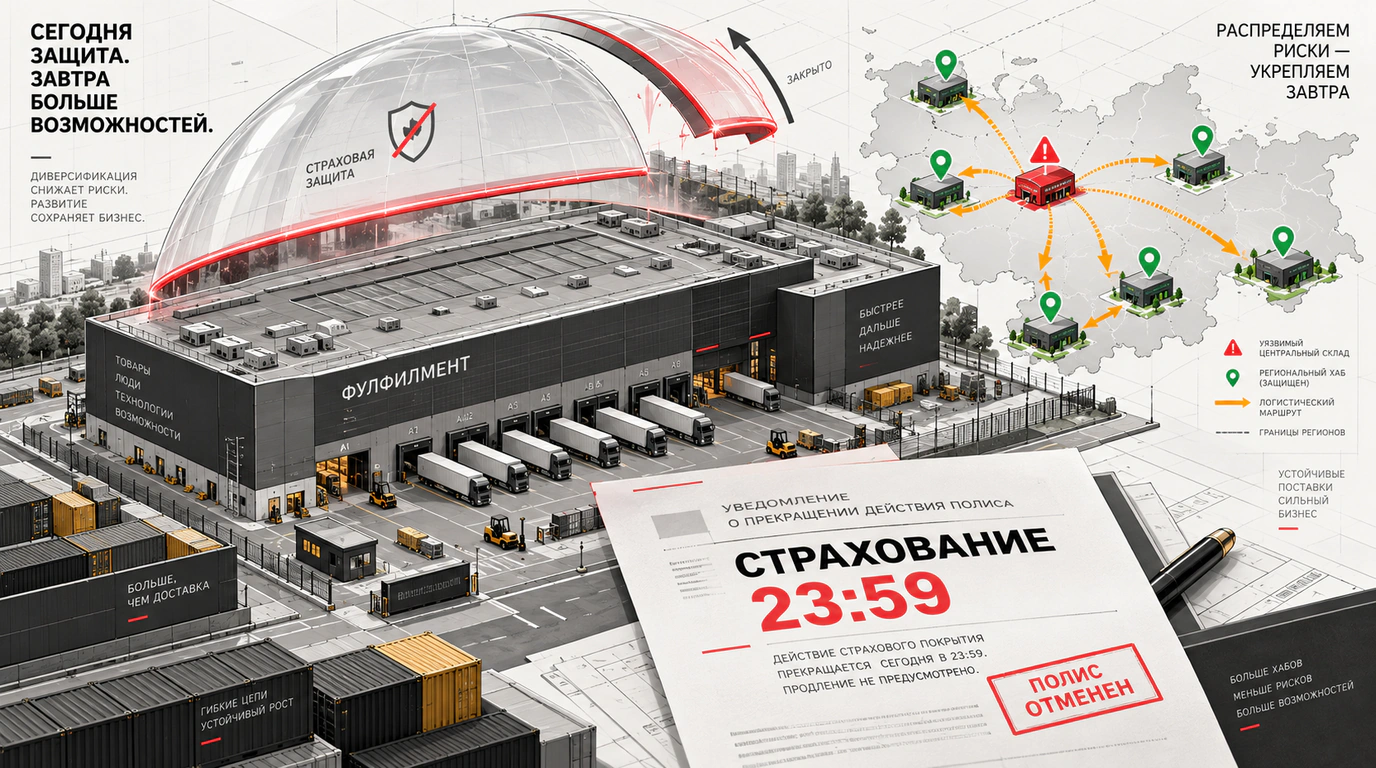
When you ship inventory to a marketplace warehouse, you expect the platform's massive logistics network to keep your boxes safer than a local garage. Until recently, Ozon sellers had a safety net: a voluntary FBO inventory insurance program run jointly with Ingosstrakh against fires, floods, and drone attacks.
As of October 13, 2026, that protection is officially gone. New policy sign-ups have stopped, daily premium deductions have ended, and millions of rubles in seller stock at central fulfillment centers are now exposed to extraordinary risks.
Reinsurer Pullback and a Late-Night Notice
The root cause goes far beyond the seller dashboard. Starting October 1, the state-owned Russian National Reinsurance Company (RNRC), which backs such policies nationwide, sharply tightened its underwriting terms. Following a string of incidents at retail facilities, coverage limits for large logistics hubs were slashed and rates spiked to prohibitive levels.
What angered sellers most, however, wasn't the insurers' stance, but how the breakup happened. The Ozon and Ingosstrakh policy terms clearly state that the platform must notify sellers at least 30 calendar days before terminating the program early.
In reality, the notice landed in seller dashboards late on Friday night, October 9, around 10:00 p.m. Sellers got just four days over a weekend to adapt, with the program closing at 11:59 p.m. Moscow time on October 12. Earlier, we looked at how insurance vanished over a weekend and why Ozon shut down FBO coverage on such short notice.
What Happens to Claims and Fashion Cashback
The most pressing question for affected sellers is what happens to payouts for past incidents. Marketplace representatives confirmed that all events recorded before midnight on October 12—including strikes on warehouse complexes in Samara Oblast, Dagestan, and Adygea—will be settled in full based on inventory count acts.
A second sore spot hit the Fashion category. Late in the summer, Ozon actively recruited clothing and shoe sellers to FBO by promising free storage and 100% reimbursement of insurance premiums through year-end. Ending the insurance also ended the subsidy program. Ozon promised to return cashback for paid days from October 5 to 12 as a separate credit in November. Back in September, we analyzed these risks when breaking down Ozon insurance rates and hidden offer terms, and that forecast has now played out.
A New Warehouse Strategy for Sellers
Losing coverage forces sellers to rethink both unit economics and supply geography. Keeping your entire assortment in a single central mega-warehouse outside Moscow is now an unnecessary gamble.
A practical response comes down to three steps:
- Deconcentrate inventory: split large shipments across distant regional hubs (Urals, Siberia, Volga region), where risks are lower and local stock gets a boost in search rankings;
- Grow FBS and rFBS: high-value and slow-moving items are safer in your own warehouses under your direct control;
- Speed up turnover: keep no more than two to three weeks of active sales stock at FBO so a single force majeure event can't wipe out half a year's revenue.