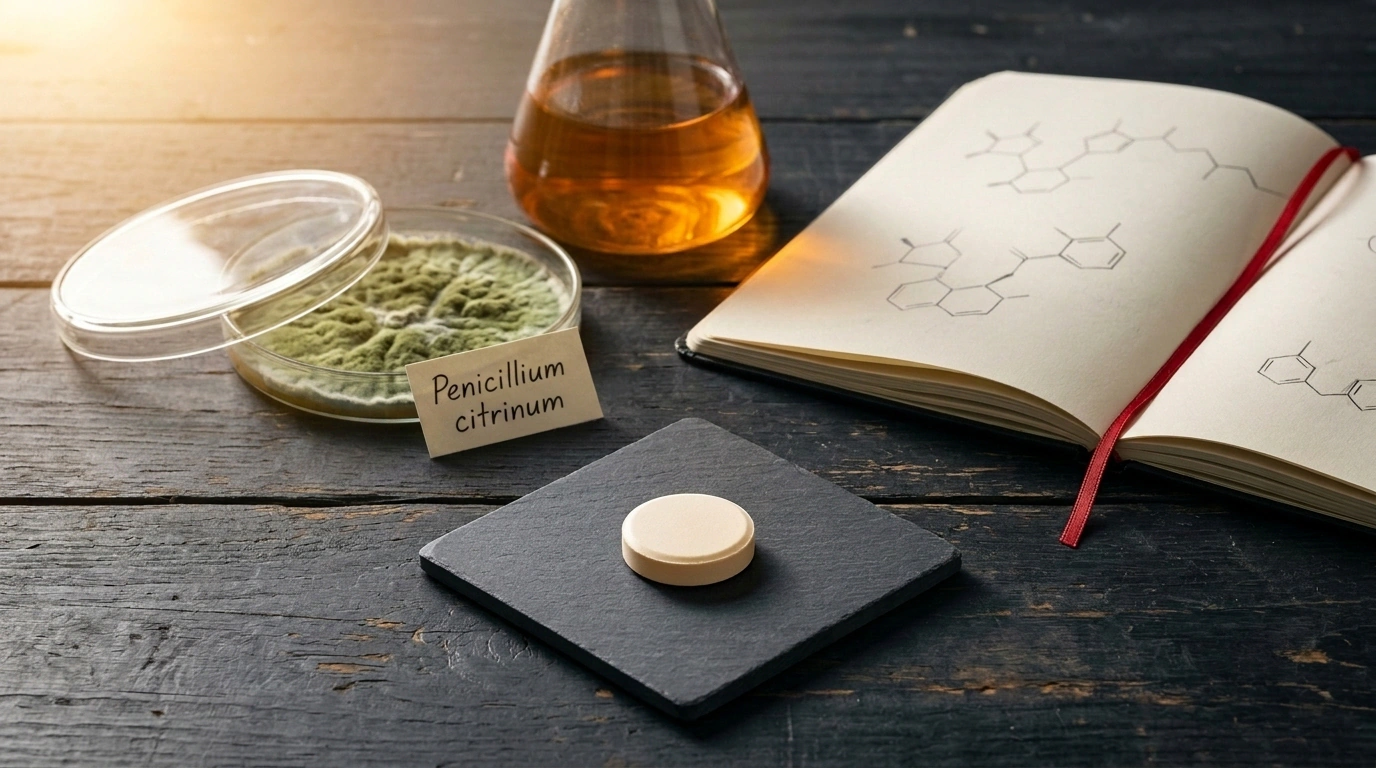
Picture a Tokyo laboratory in the early 1970s: hundreds of glass flasks, test tubes coated with greenish fuzz, and the earthy smell of damp fungus. Japanese biochemist Akira Endo is sifting through thousands of mold samples in search of a molecule that can rein in cholesterol. Back then, most senior academics thought he was crazy—the idea of lowering cholesterol with medication looked either like a pipe dream or a surefire way to poison a patient.
Today, hundreds of millions of people around the world take statins every day. Cardiologists call them the second-biggest medical breakthrough after antibiotics, yet such a thick wall of myths has grown up around them that many patients are terrified of a tiny white pill.
You've probably heard the chatter on forums or from friends: "Statins wreck your liver, destroy your muscles, and steal your memory!" Sound familiar? I used to have those exact doubts myself. When someone suggests a medication you or your loved ones might take for years, a healthy dose of skepticism is only natural. Let's unpack this story piece by piece and separate hard facts from rumors.
From Anichkov's Rabbits to Framingham: Finding the Real Culprit
It all started in 1912 in Saint Petersburg. A young researcher named Nikolay Anichkov fed lab rabbits a cholesterol solution and showed that their blood vessels clogged with plaque in a matter of months. Anichkov summed it up in a simple rule: "No cholesterol, no atherosclerosis." Still, the scientific community brushed it off—rabbits are herbivores, so applying their diet to humans was dismissed as unscientific.
The debate was finally settled by the Framingham Heart Study, launched in the US in 1948. Decades of tracking thousands of ordinary people proved a direct link: high blood cholesterol sharply drives up the risk of a heart attack.
That's when researchers hit a new wall. Even when patients cut out eggs and butter, their cholesterol only dropped by 10–15%. The body turned out to be cleverer than expected: the liver manufactures about 80% of our cholesterol on its own, while only 20% comes from food. Take fats off the plate, and the internal factory simply ramps up production. Medicine needed a tool that could gently tap the brakes on that assembly line.
Akira Endo's Breakthrough: Six Thousand Fungi and a Nobel Trail
Akira Endo thought like a biologist: in the wild, mold has been waging chemical warfare against microbes for millions of years. To survive, parasites need a cholesterol look-alike called ergosterol. What if certain fungi had evolved a way to shut down sterol production in their rivals?
Between 1973 and 1976, Endo tested more than 6,000 strains. Luck finally struck with Penicillium citrinum: a compound he isolated, mevastatin (ML-236B), locked down cholesterol assembly cold.
Although mevastatin itself never reached pharmacies due to toxicity in lab animals, the mechanism was cracked. Scientists Michael Brown and Joseph Goldstein decoded how low-density lipoprotein (LDL) receptors work on cell surfaces, winning the 1985 Nobel Prize. Soon after, Merck isolated lovastatin from Aspergillus terreus, and in 1987 the FDA approved the first commercial statin, Mevacor.
The 4S Trial: Put to the Test in 4,444 Patients
In the early 1990s, skeptics moved the goalposts: "Fine, lab numbers drop. But do people actually live longer?"
The answer came from the Scandinavian Simvastatin Survival Study—the landmark 4S trial, published in The Lancet in 1994 (PubMed ID: 7968073). Researchers followed 4,444 patients with coronary heart disease for 5.4 years in a double-blind, placebo-controlled study.
The results reshaped cardiology:
- All-cause mortality fell by 30% (relative risk 0.70, p = 0.0003).
- Cardiovascular mortality dropped by 42%.
- Major coronary events fell by 34%.
- Deaths from non-vascular causes (including cancer and trauma) showed no difference: 46 on simvastatin versus 49 on placebo.
The fear that lowering cholesterol triggers cancer or depression crumbled under rigorous data. Medicine finally had a therapy proven to save lives.
How It Works: The Liver Factory and Vacuum-Cleaner Receptors
Let's peek inside a liver cell. Right at the start of the production line sits a key enzyme: HMG-CoA reductase. It sets the pace for making mevalonate, a building block of cholesterol. A statin molecule slips into that enzyme's active site like a key into a lock and slows it down.
Laboratory diagram on a warm white background: a statin molecule blocking the active site of the HMG-CoA reductase enzyme and activating liver receptors.
Sensing that cholesterol supplies are running low, the liver cell triggers a protein sensor called SREBP-2 and pushes millions of extra LDL receptors onto its outer membrane. Like tiny vacuum cleaners, these receptors pull atherogenic LDL ("bad cholesterol") particles out of the bloodstream, cutting their levels by 30–55%.
On top of that, statins bring bonus protective effects:
- They improve endothelial function and keep arteries flexible.
- They lower C-reactive protein, dialing down inflammation.
- They strengthen the fibrous cap over atherosclerotic plaques, helping prevent ruptures and blood clots.
Every 1.0 mmol/L drop in LDL lowers the risk of heart attack and stroke by 21–22%, regardless of your starting level. Meanwhile, trying to swap medication for supplements is a losing bet: we've covered why dietary supplements can't replace evidence-based therapy, and recent trial results for new cardiac drugs confirmed that keeping LDL under control remains the decisive factor.
Statins are never prescribed based on a single isolated cholesterol number. A doctor calculates your overall cardiovascular risk using the SCORE2 scale, factoring in age, blood pressure, smoking status, and carotid ultrasound findings. When risk is high, the drug's benefit outweighs any hypothetical downsides many times over.
Myths About Liver Damage and Diabetes
So where did all the panic come from? In 2001, Bayer pulled cerivastatin (Baycol) from the market after high doses combined with gemfibrozil caused rhabdomyolysis (muscle breakdown). That tragedy cast a long shadow over the entire drug class.
Let's look at the actual numbers for modern statins:
- "Statins destroy your liver": clinically meaningful spikes in liver enzymes (ALT/AST more than 3 times the upper limit of normal) happen in only 0.5–1.0% of patients. The bump is dose-dependent, symptom-free, reversible, and does not lead to liver failure. Routine monthly enzyme checks for healthy patients were dropped from international guidelines long ago.
- "Statins cause diabetes": therapy adds a small uptick in risk (1 case per 255 people over 4 years), almost exclusively in people who already had prediabetes and obesity. For every single one of those cases, statins prevent 5–6 fatal vascular events.
Muscle Aches and the Nocebo Effect: A 150,000-Person Meta-Analysis
The number-one complaint is body aches. In 2022, the CTT Collaboration published a meta-analysis in The Lancet covering 23 blinded trials and 150,000 participants (DOI: 10.1016/S0140-6736(22)01545-8).
Here is what they found: muscle symptoms were reported by 27.1% of patients on statins and 26.6% on placebo. A difference of just 0.5%! More than 90% (14 out of 15) of those complaints came down to the nocebo effect—after reading the package insert, people blame everyday joint fatigue or workout soreness on the pill. True rhabdomyolysis is vanishingly rare: 1–3 cases per 100,000 person-years.
The medication protects your blood vessels for as long as you take it. If you quit on your own, your liver goes right back to overproducing cholesterol and plaques become vulnerable again. Long-term treatment isn't 'addiction'—it's simply because atherosclerosis needs ongoing management, much like wearing glasses for nearsightedness.
No dietary supplement has ever reduced overall or cardiovascular mortality in large blinded trials. Plant extracts don't block internal cholesterol synthesis and don't stabilize fragile arterial plaque.
A lipid panel and ALT are checked before starting and again 8–12 weeks later to fine-tune the dose. Once your LDL hits target and liver enzymes look normal, you only need to recheck once a year.
Who Needs the Pill and Who Can Wait
Cardiology leaves no room for extremes:
- Who truly needs statins: anyone who has had a heart attack, stroke, or vascular surgery; patients with coronary heart disease or carotid plaque on ultrasound (narrowing over 20–25%); and people with high SCORE2 risk. For them, the pill is a daily lifesaver.
- Who can hold off: younger adults with moderately elevated cholesterol and no plaques or high blood pressure. This group usually has 3–6 months to try lifestyle changes first: 150 minutes of aerobic exercise a week, dietary tweaks, and weight management.
- Contraindications: decompensated liver failure, pregnancy, breastfeeding, and interactions with specific medications.
When discussing a prescription, ask your doctor: 'What is my SCORE2 risk score?', 'What is our target LDL level?', and 'Should we check my carotid arteries with an ultrasound?' A good clinician will give you clear, concrete benchmarks.
Statins aren't a poison to fear, nor an excuse to rely solely on a pillbox. They are a precise, evidence-backed shield for your arteries—born in nature and refined by science. Trust the data, and take care of your heart.