Wellness blogs love a tempting claim: "Once you detox your gut, you won't need dietary protein anymore! Your body will rewire itself and synthesize everything it needs practically out of thin air."
It sounds magical, except the human body answers to biochemistry, not wishful thinking. Let's look at why atmospheric nitrogen is off-limits to us, what hidden amino acid deficiency actually looks like, and how to build a complete protein plate without meat.
A Biochemical Dead End: Why We Aren't Plants
To build an amino acid—the brick of every protein—you need carbon, hydrogen, oxygen, and nitrogen. The air around us is over 75% nitrogen. Here's the catch: atmospheric nitrogen ($N_2$) is locked together by a rock-solid triple bond that only specialized soil bacteria and legume symbionts can crack.
Humans have zero enzymes for that. Our digestive tract evolved to break down food protein into peptides and amino acids. Nine of the twenty amino acids are essential: our bodies cannot manufacture them under any circumstances, so they have to come from food every single day.
What Quiet Deficiency Looks Like: From Brittle Nails to Swelling
Full-blown protein malnutrition (kwashiorkor) is rare in developed countries. Subclinical protein deficiency, however, shows up all the time—especially in people following strict fruit-only or juice-cleanse diets.
When intake drops, the body goes into rationing mode:
- Hair thins out, and nails peel and snap easily.
- Muscle tone fades as the body breaks down its own muscle tissue to keep the immune system running.
One of the sneakiest signs of protein shortage is persistent puffiness and swelling in the face and legs. Your liver uses amino acids to make albumin, the main carrier protein in blood. Albumin keeps fluid inside your blood vessels through oncotic pressure. When dietary protein runs low, albumin drops, water leaks through capillary walls into surrounding tissues, and you wake up with a puffy, unfamiliar face—even without eating salty food.
And if you're trying to wake up sluggish digestion with raw veggies, remember balance matters: we've previously discussed how to get a sluggish gut moving and why loading up on fiber without adequate protein and water often leaves you bloated instead of light.
Plant Protein: The Maastricht University Study
Does all this mean you need steak and cottage cheese to stay strong? Not at all. A plant-based diet can easily meet your muscles' needs—it just takes smart pairing.
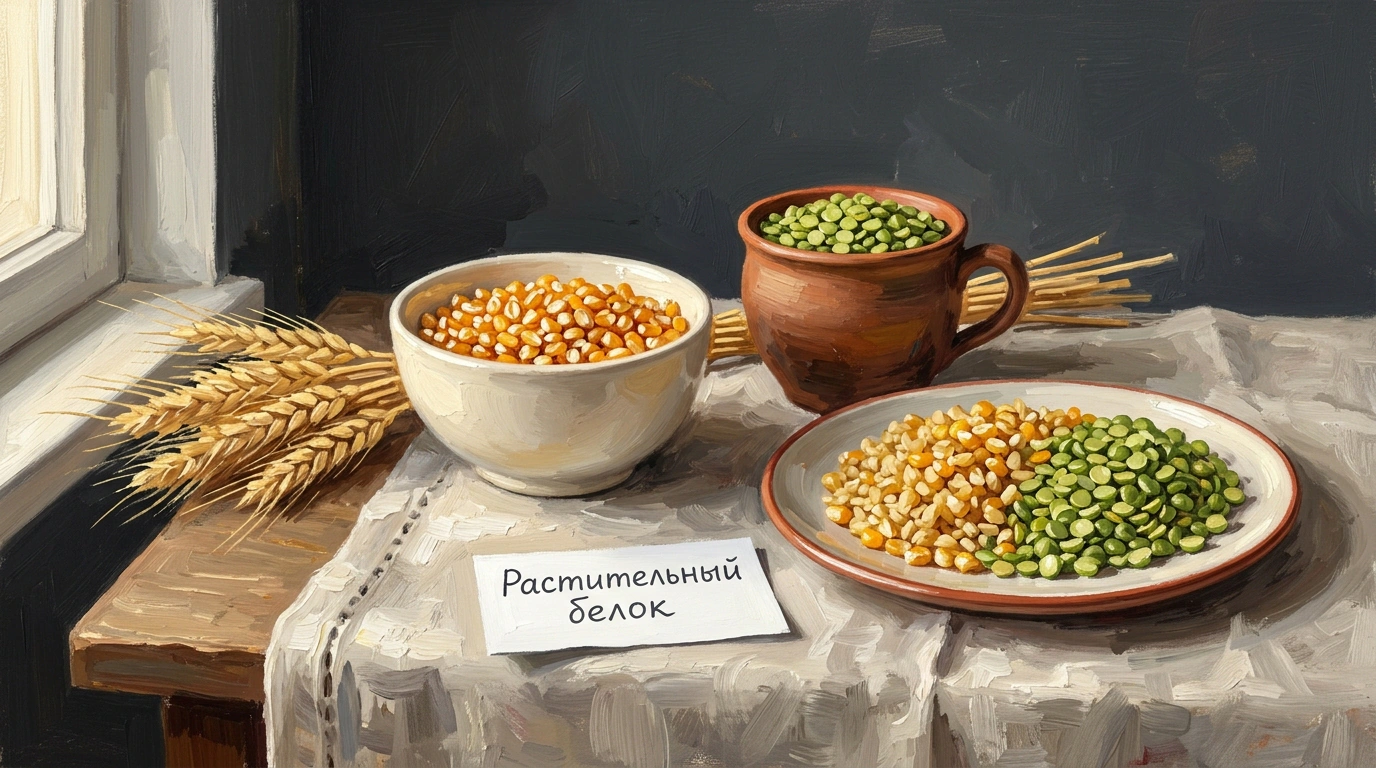
The hurdle with plants is their uneven amino acid profile. Grains (wheat, oats, rice, corn) are rich in methionine but low in lysine. Legumes (peas, lentils, beans, soy) are packed with lysine but short on methionine. If you eat only buckwheat or only chickpeas, you'd have to down huge portions and overload your gut with fiber to cover the gap.
In 2023, researchers at Maastricht University published a landmark study in The Journal of Nutrition (Pinckaers et al.; PMID: 36170964). They gave 24 healthy young men either 30 grams of milk protein or 30 grams of a plant blend:
- 50% wheat protein (15 g)
- 25% corn protein (7.5 g)
- 25% pea protein (7.5 g)
Using isotope tracers and repeated thigh-muscle biopsies over five hours, they found that the plant mix stimulated muscle protein synthesis just as effectively as the gold-standard dairy protein. Corn protein supplied a hefty shot of leucine—the amino acid that flips on the mTORC1 muscle-growth switch—while the grains and legumes covered each other's weak spots.
If you skip meat, use the golden rule of pairing: combine grains and legumes in the same meal. Beans with brown rice, lentil soup with whole-grain bread, or hummus with a corn tortilla give your body the full set of essential amino acids with zero gaps.
The WHO minimum protein baseline is 0.8 g per kg of body weight, while active adults thrive in the 1.2–1.6 g/kg range. Skip the fairy tales about "living on air": feed your body well, protect your muscle, and keep your mind sharp.