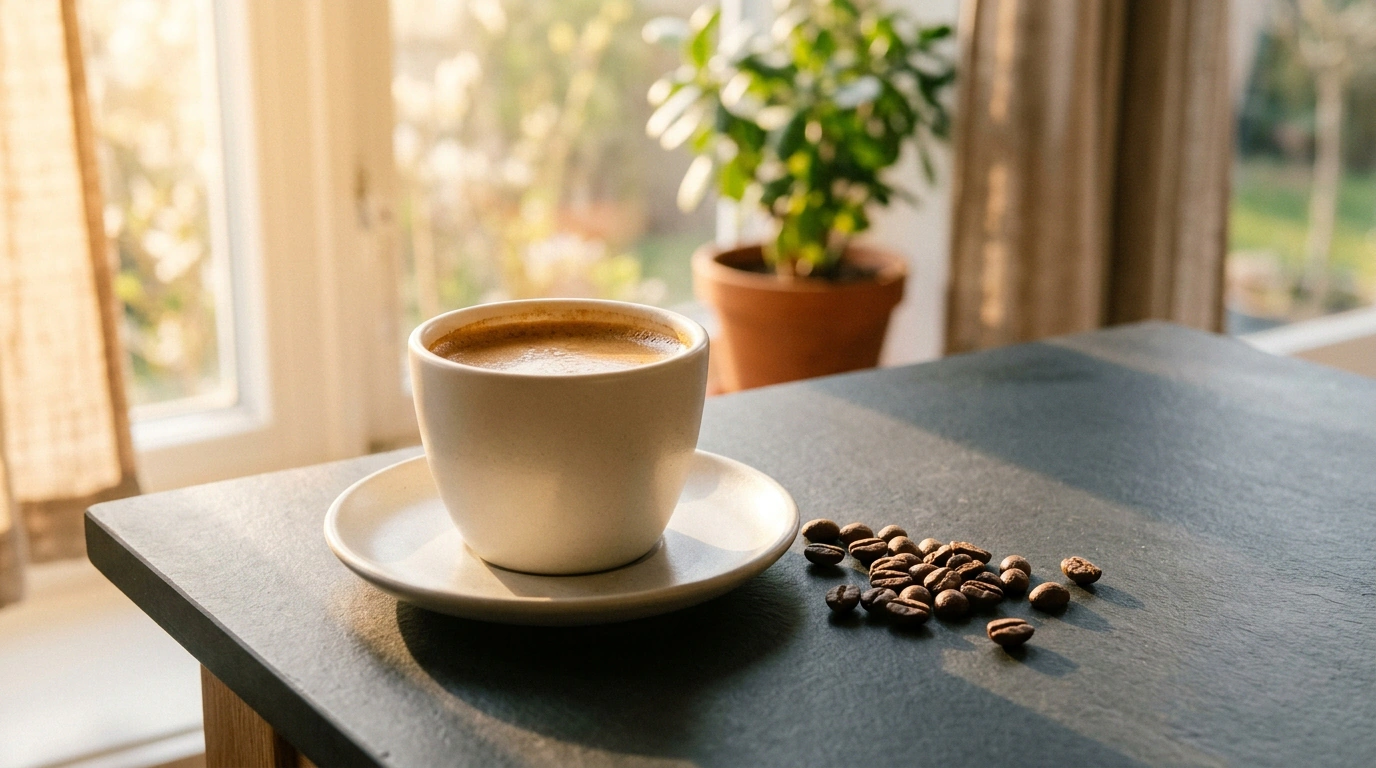
Why do unsweetened, tart foods put us off at first, yet over time become a favorite habit—and how can you use that mechanism to cut back on excess sugar without white-knuckling your willpower? The answer lies not on the tip of your tongue, but in delayed signals that the digestive tract sends to the brain's memory centers after a meal.
What appeals to me in this physiology is that it lifts the guilt over having the "wrong" tastes. Loving unsweetened food doesn't require iron discipline—your nervous system learns it on its own when a flavor is paired with real nourishment.
Why the Tongue Sounds the Alarm When It Meets Bitterness
When you first cut out sweets, an ancient defense kicks in. Say you drop the syrups from your morning coffee and grab a cup of straight, unsweetened espresso. The first sip makes you wince: the drink tastes harsh, almost medicinal.
In that second, your mouth acts like border control. Sweetness promises carbohydrates, while bitterness is policed by roughly 25 types of tongue receptors tuned to catch plant toxins and spoiled food. That is why children instinctively spit out anything bitter, and the tongue greets the alkaloid caffeine as an intruder. Yet since millions of adults adore black coffee, there must be a higher authority in the head that overrules the tongue's alarm.
The Slow Dopamine Bridge: How the Gut Retrains the Amygdala
This circuit was mapped by neurobiologists James Grove and Zachary Knight of the University of California, San Francisco, with colleagues from Yale and the Max Planck Institute, in a November 4, 2026 paper in Nature unpacked on the channel «Доктор Павлова, эндокринолог». The scientists separated the fast reaction in the mouth from the post-ingestive effect—the signal coming from the stomach and gut after swallowing.
When mice were given glucose and fats directly into the stomach, bypassing the tongue, the brain answered with a wave of dopamine lasting minutes rather than seconds. Gut sensors relayed the signal via the vagus nerve to dopamine neurons in the midbrain, bypassing the fast-reward center in the striatum. We have already explored why dopamine acts as a learning molecule rather than a "pleasure hormone"—here it switches on the anterior basolateral amygdala, predominantly on the left side. Suppressing this area in mice left appetite intact but wiped out the ability to remember the benefit of new flavors, while stimulating it made them love plain, calorie-free water. The same held true in humans: PET scans in 13 men after a milkshake and fMRI in 38 adults after glucose revealed activation of the left anterior basolateral amygdala.
The entire gut–brain axis works like a building with a strict security guard at the door and an accounting office inside. The tongue-guard frowns at bitterness, yet tags the flavor "under review." Downstairs, the gut's accounting office tallies the incoming energy and calls up to the left amygdala: "Valuable resource—put it on the whitelist." This check explains why trying to trick sugar cravings with zero-calorie sodas always felt off to me: the guard cheers for the sweetener, but the gut's invoice is blank—the bridge stays silent, and the brain keeps hunting for calories.
How to Rewire Your Tastes Without Fighting Yourself
With morning espresso, the same flavor–effect link kicks in, provided your stomach and nervous system handle caffeine comfortably. Within 15–30 minutes of a sip, it clears away drowsiness—we covered how caffeine blocks fatigue receptors and why coffee is best before noon. Time after time, the brain pairs that bitterness with a clear head.
Within two weeks of a steady ritual, your experience of an unsweetened cup shifts. The grimace disappears: the left amygdala greets the bitterness with anticipation of alertness, you start picking up warm nutty notes in espresso, and you easily skip the syrups.
Dark chocolate, broccoli, and leafy greens are tamed the same way. Chewing plain salad on an empty stomach leaves the gut's "accounting" without a payoff. Pair an unfamiliar whole food in a calm setting with protein or healthy fats: after 10–15 tries, your gut will convince your amygdala that it tastes good.
The discovery of this slow dopamine pathway will shift nutrition science and the food industry in the years ahead. For decades, food technologists fooled only the tongue with bright zero-calorie sweeteners, leaving the brain's learning centers empty-handed. The next step in healthy eating is moving from flavor masking to an honest dialogue with gut sensors through whole, satiating food—so your brain naturally falls out of love with excess sugar.
