"The level of evidence for these protocols is 'trust me, bro, it helped the rats, their fur got smooth and shiny,'" jokes cardiologist and author of the blog «Доктор Утин», dissecting trendy "anti-inflammatory protocols" built out of supplements. Online, a persistent myth is making the rounds: supposedly doctors are wrong to "treat lab numbers," and heart attacks are caused solely by vascular inflammation.
It is easy to believe when you walk out of a neck ultrasound, see plaque in a carotid artery alongside high cholesterol, and dread lifelong pills. What hooked me in this story is how deftly sellers of miracle regimens turn a piece of physiology into a trap: you feel tempted to set aside prescribed statins and take curcumin for inflammation on a blogger's advice—but is cholesterol really harmless?
Why Plaque Has Nothing to Grow From Without LDL Particles
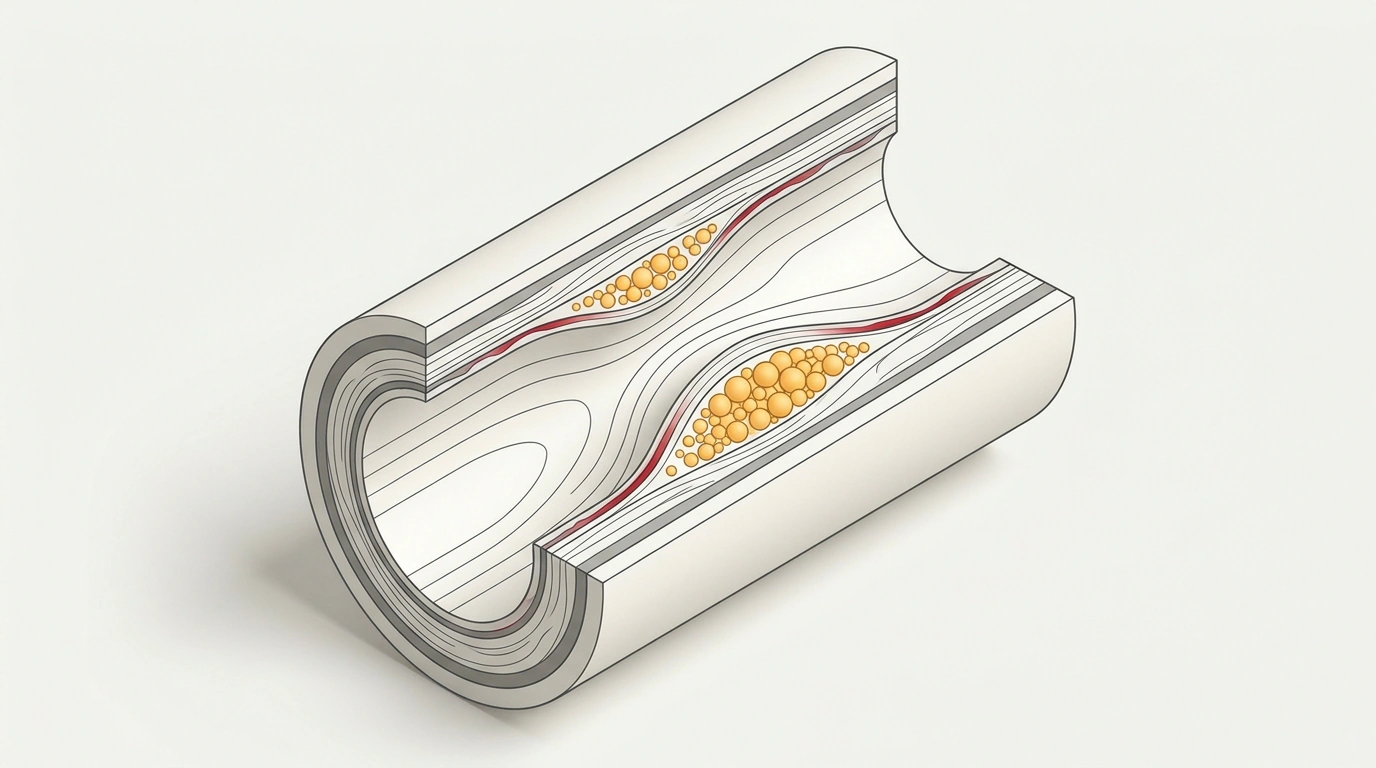
Systemic inflammation does speed up wear and tear on arteries, yet cardiologists do not confuse the spark with the fuel. Cholesterol is ferried through the bloodstream by fatty capsules—low-density lipoproteins (LDL). In the carotid artery, relentless physiology kicks in: if there are too many LDL particles in the blood, they seep into the vessel wall; if they oxidize there, the immune system rallies cleanup cells to them; and if the inflow of fat isn't stopped, overstuffed cells die, stoking inflammation and growing the plaque.
LDL's role meets all nine causality criteria of epidemiologist Austin Bradford Hill: first particles settle in the artery, and only then does a flare of inflammation erupt. Lowering LDL by 1 mmol/L cuts five-year risk of cardiovascular events by 21–22%, and with intensive therapy—as a breakdown in JAMA Cardiology showed—plaques can even shrink. People born with an inactive PCSK9 gene live with low LDL and are protected from coronary heart disease by more than 80% regardless of background inflammation: without LDL "bricks," plaque cannot be built.
Why Blocking Inflammation Without Lowering Cholesterol Failed
Still, if inflammation is already smoldering inside an existing plaque, why not put out the "fire" itself? I cross-checked the trial timeline the doctor cites, and it is sobering. Common painkillers like ibuprofen or diclofenac ease inflammation, yet shift vessel tone and blood clotting in ways that raise the risk of heart attack and stroke. Colchicine in the post-heart-attack CLEAR SYNERGY trial lowered background inflammation, yet failed to prevent new events.
Then on November 7, 2026, results arrived from the ZEUS trial involving more than 6,300 patients with atherosclerosis and chronic kidney disease. Ziltivekimab selectively blocked interleukin-6 (IL-6), a key protein of the inflammatory alarm. High-sensitivity C-reactive protein (hsCRP) in the blood plummeted by 64%, yet the rate of heart attacks and strokes did not drop at all, repeating the pelacarsen paradox. Muting the "siren" without addressing cholesterol is futile—what helps is tackling drivers of inflammation like obesity and clearing out excess lipids.
Statins' Double Strike in JUPITER and Choosing a Vascular Strategy
Statins, by contrast, hit both targets at once. In the JUPITER trial, rosuvastatin (20 mg daily) was tested in 17,802 people without heart disease who had moderate LDL (below 3.4 mmol/L) but elevated hsCRP (2.0 mg/L or higher). The drug cut LDL by 50% and simultaneously dropped C-reactive protein by 37%, over two years reducing heart attack risk by 54%, stroke by 48%, and all-cause mortality by 20%.
Look through those numbers at the situation of someone with high cholesterol and carotid artery plaque. By dropping a statin for a supplement-based "anti-inflammatory protocol," they leave the vessel unprotected: herbal capsules do not clear excess LDL, fresh waves of fat keep packing the plaque in the neck, and its fragile cap risks rupturing and forming a clot.
When a patient instead sticks with cardiologist-prescribed therapy alongside movement and weight control, the liver actively pulls excess LDL out of the bloodstream, fat delivery to the carotid artery stops, inflammation in the vessel wall subsides, and the plaque cap stabilizes. Protecting your arteries means managing LDL levels with a doctor rather than trading proven medicines for untested supplement regimens.
And to critics who claim doctors use statins merely to "treat numbers on a lab sheet," the author of «Доктор Утин» has a sharp reply: "I lower cardiovascular risks, whatever drives them—elevated LDL or systemic inflammation. And are there high-quality trials showing fewer heart attacks and strokes in people on proprietary 'anti-inflammatory regimens'? Trials of the same quality that exist for statins."
