People with weak muscles face roughly a 30% higher risk of stroke. That finding comes from tracking 482,699 adults in the UK Biobank for nearly 14 years, during which 11,814 strokes occurred. At first glance, the number feels surprising. Most of us associate muscle weakness with struggling over heavy grocery bags or tiring on the stairs, not with the blood vessels in our brain.
What Sarcopenia Is and Why Routine Checkups Now Screen for It
With age, muscles gradually lose both size and strength. Doctors call this condition sarcopenia. It creeps in quietly: standing up from a low sofa feels a bit harder, your stride shortens, and an everyday bag feels heavier than it did a year ago. Many people shrug it off as "just getting older," even though the body is losing its primary structural and metabolic engine.
The scale of the issue is substantial. According to Olga Tkacheva, director of the Russian Gerontology Research and Clinical Center at Pirogov University, sarcopenia affects 10% to 27% of people over 60 and roughly half of those over 80, depending on the diagnostic criteria used.
That's why the Russian Ministry of Health approved clinical guidelines for sarcopenia screening in adults over 60. Adopted in August, the update drew wide attention by November. If you bring aging parents to a checkup—or go yourself—a primary care doctor starts with a short questionnaire: any recent falls or fractures, and how many flights of stairs you can climb without stopping to catch your breath.
Basic lab work and simple physical tests come next. Blood panels typically check vitamin D and albumin. Albumin is the main blood plasma protein made by the liver; it keeps fluid inside blood vessels and shuttles hormones, fatty acids, and medications. Low albumin often signals chronic shortfalls in protein and energy. A nurse then checks balance across different foot stances and times how fast you walk four meters down the hallway.
Three Five-Minute Home Tests: Chair, 'Flamingo,' and Grip
You don't have to wait for a scheduled checkup to gauge muscle reserves in yourself or your parents. Early warning signs show up at home in five minutes. One ground rule first: a home screen is not a medical diagnosis. It flags probable muscle weakness—a clear reason to book a calm visit with your doctor and look for underlying causes.
Clear slippery rugs and cords off the floor. Pick a sturdy chair without wheels and stand next to a wall or solid chair back so you can catch yourself at any moment. If you feel dizzy, lightheaded, or get sharp knee pain, stop right away. There's no prize for pushing through.
Test 1: Five chair stands. Sit on an ordinary sturdy chair without armrests (or don't touch them), cross your arms over your chest, and stand up fully and sit back down five times in a row without using your hands. If you can't stand up even once without pushing off, that points to pronounced muscle weakness.
Don't wait for that extreme, though. Under the European EWGSOP2 consensus (the leading global guideline on diagnosing sarcopenia), the warning threshold hits earlier: taking longer than 15 seconds for five stands signals reduced leg strength. Time yourself with a phone stopwatch to get a clear baseline.
Test 2: One-leg 'flamingo' stance. This check isn't in the Russian sarcopenia guidelines yet, but longevity physicians use it widely. Stand barefoot on a flat, hard floor next to a wall or chair back, hands on your hips, eyes fixed on a steady spot two to three meters ahead. Lift one foot by bending your knee to roughly a right angle so it doesn't touch your standing leg, and start timing until your raised foot touches the floor or you grab support. In the original protocol published in the British Journal of Sports Medicine (Claudio Gil Araújo and colleagues, 2022), arms hung loosely at the sides while the lifted foot rested against the back of the standing calf. Both versions test the same system: muscles, coordination, and nerves working together.
The benchmarks are straightforward: holding over 20 seconds shows strong balance, while falling under 10 seconds sits below average and warrants a medical check of muscle function. In Araújo's study, 1,702 participants aged 51 to 75 were followed for seven years. One in five (20.4%) couldn't hold 10 seconds. Even after adjusting for age, sex, BMI, diabetes, and high blood pressure, failing that 10-second test was linked to an 84% higher risk of death from any cause: 17.5% of those who failed died within seven years versus 4.6% of those who passed.
Test 3: Grip strength (hand dynamometry). The word sounds clinical, yet it just means squeezing a handheld dynamometer as hard as you can. Handgrip strength turns out to be a remarkably accurate mirror of total body muscle strength. You can test it free at local Health Centers or Healthy Longevity Centers, or buy a basic mechanical dynamometer online for around 200 rubles. EWGSOP2 cutoffs for probable sarcopenia are clear: under 27 kg for men and under 16 kg for women.
Three-test home self-check (EWGSOP2 and BJSM cutoffs)
If one score dips right after a sleepless night, a cold, or a knee flare-up, don't panic. Retest in a week when you feel rested. A consistent miss on even one item, however, is worth jotting down in a notebook to share at your next doctor's visit.
How Weak Muscles Connect to Blood Vessels and Stroke Risk
What could handgrip strength possibly have to do with brain circulation? The link makes sense once you stop viewing muscles as simple engines for arms and legs. Skeletal muscles pull double duty: they act as a massive sponge for blood glucose and a living endocrine factory.
When you move, muscles soak up the lion's share of sugar from your blood and release myokines—signaling molecules with anti-inflammatory effects. Now trace the chain in reverse. When muscle mass shrinks and sits idle, blood sugar lingers higher for longer, metabolism slows down, and low-grade chronic inflammation quietly climbs. Over years, that inflammation wears down blood vessel walls, pushing up the risk of vascular events.
That exact connection was tested in the large UK Biobank study. Researchers evaluated 482,699 stroke-free adults on three measures: sarcopenia status by EWGSOP2 criteria, grip strength, and usual walking pace (slow, average, or brisk). Over nearly 14 years, weak muscles corresponded on average to a 30% higher risk of both ischemic and hemorrhagic stroke. Weak grip and slow walking pace were each independently tied to more strokes and higher post-stroke mortality.
Still, read those numbers with care. An observational study reveals a steady association, not a mechanical dial where losing one kilogram of grip adds an exact percentage to stroke risk. Some popular summaries multiply relative risk linearly for every missing kilogram and arrive at scary figures like "plus 49%," yet epidemiology doesn't stack risks that simply. Weak grip mostly acts as a barometer reflecting overall vascular health, metabolism, and movement habits. For walking speed, though, geneticists ran Mendelian randomization—a method using genetic markers to test cause and effect—and found evidence that a brisk pace itself may help protect blood vessels.
How do you tell if your walking pace is brisk enough without a smartwatch? Aim for roughly 5 to 6 km/h. In everyday terms, that's a pace where you can still speak in full sentences, though singing a song would feel tough.
What to Do If You Don't Pass a Test
If you get a weak score, your first move isn't buying a heavy barbell or ordering bottles of supplements. Book an appointment with a primary care doctor, geriatrician, or local Health Center. A doctor can check your four-meter walking speed, order vitamin D and albumin labs, and rule out hidden causes of weakness such as anemia, thyroid issues, or medication side effects.
Strength, endurance, and balance exercises to maintain muscle function with age (Source: National Institute on Aging, NIH)
Once acute medical issues are ruled out, you can build and maintain strength at any age—muscles respond to training at 60 and 80 alike. Start with three straightforward habits cleared with your doctor.
First, walk briskly on a regular schedule, aiming for that 5 to 6 km/h effort level. Even 20 to 30 minutes a day without long stops gives your legs and blood vessels steady conditioning. Second, add manageable strength work without needing a gym membership: light dumbbells, resistance bands, or bodyweight moves like chair squats, wall push-ups, and calf raises. Fifteen to twenty minutes a day—or two to three calm sessions a week—is plenty.
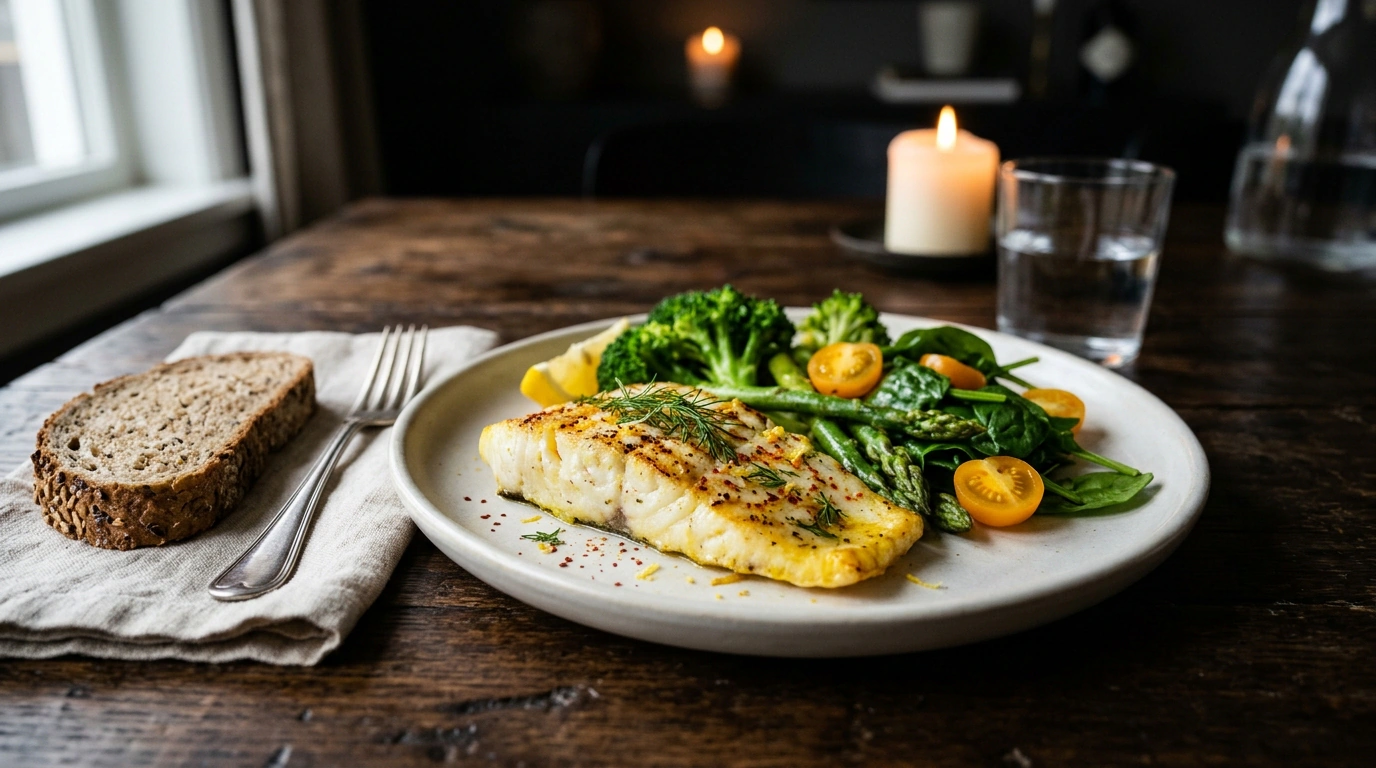
Third, put enough protein on your plate so muscles have raw material to repair. ESPEN recommends that adults over 60 aim for 1.0 to 1.2 g of protein per kilogram of body weight per day from fish, poultry, eggs, cottage cheese, and legumes. Just one caveat: if you have chronic kidney disease, always let your doctor set your protein target.