Issue October 20Daily digest · 17 items
In this issueReviewed 36 sources, gathered 17 items
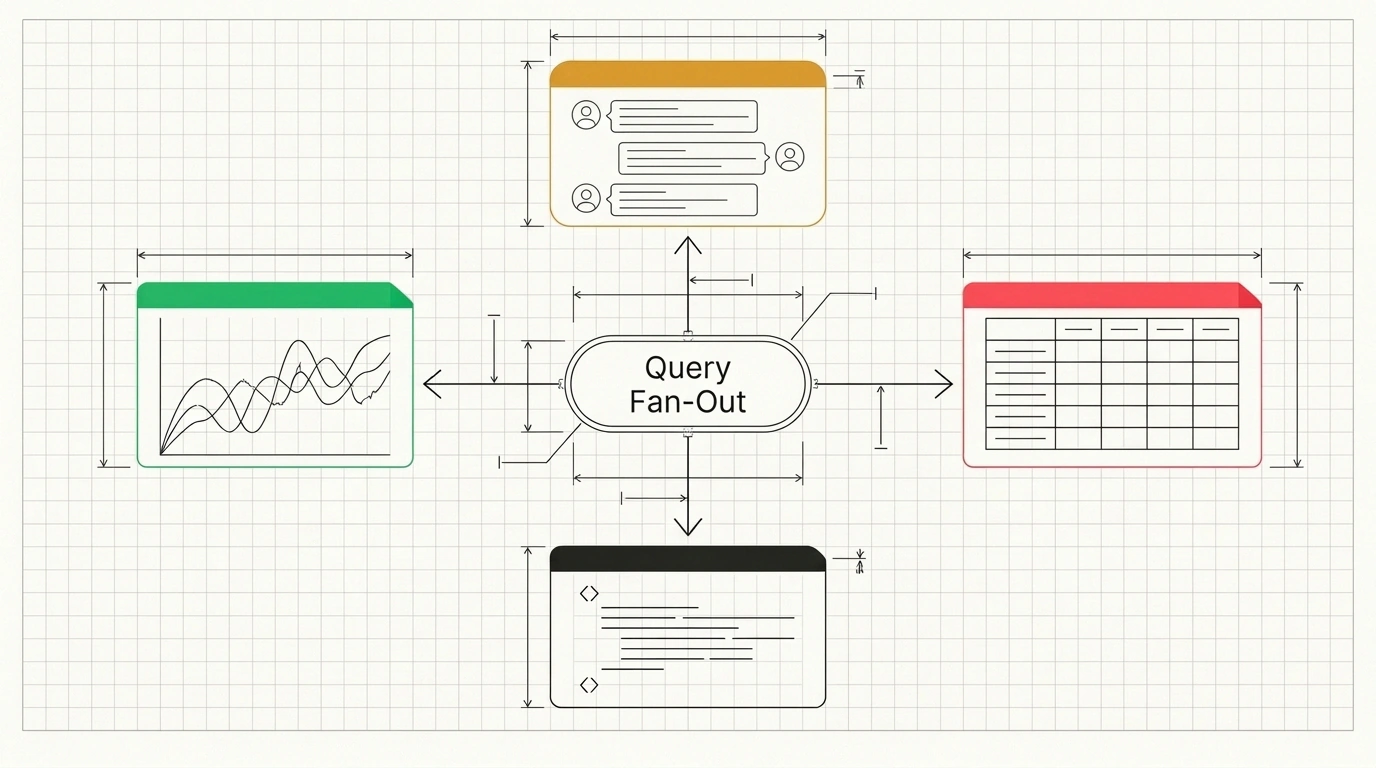
Infographic blueprint showing a search query fanning out into parallel research streams
ArticleAI SearchSEOLLMAutomation

How Search Works in the LLM Era: Citation and Ranking Mechanics in ChatGPT and AI Overviews

Traditional SEO is fading fast: you can sit at #1 on Google for your main keyword and still be completely invisible in ChatGPT Search or Perplexity. AI search engines no longer rank pages by keyword density and bought backlinks—they operate as autonomous analysts using Query Fan-Out. The model splits your prompt into multiple micro-queries, pulls authoritative industry discussions, and synthesizes a single answer right in the chat.

Studies show that landing in the citation block multiplies conversion rates, while adding verified numbers and comparison tables boosts your chance of being recommended by 40%. Here is how AEO and GEO work under the hood.


👍 0
Julian Goldie SEOGEO: Generative Engine Optimization (Princeton, Georgia Tech, AI2)
October 20
A desk with a physical Obsidian notebook and a glowing modular Hermes autonomous memory cube
ArticleAI AgentsAutomationDevelopmentOpen Source

Autonomous Agents with Persistent Memory: Combining Hermes Agent, Obsidian, and Antigravity 2.0

The biggest flaw in modern AI assistants is chronic amnesia. You spend half an hour explaining your guidelines, and the next day the context window resets and you're back at square one. Cramming an entire project into the system prompt is expensive and brittle: the model's attention drifts and tool calls start failing.

A hybrid two-tier architecture solves this cleanly: the open-source Hermes Agent executor, a local Obsidian Vault as a persistent "second brain," and the autonomous Antigravity 2.0 interface. I walk through the full step-by-step setup, locked-down filesystem permissions, and a production config that keeps your agent from ever losing context.

👍 0
Julian Goldie SEONous Research Hermes Agent Repository and Documentation
October 20
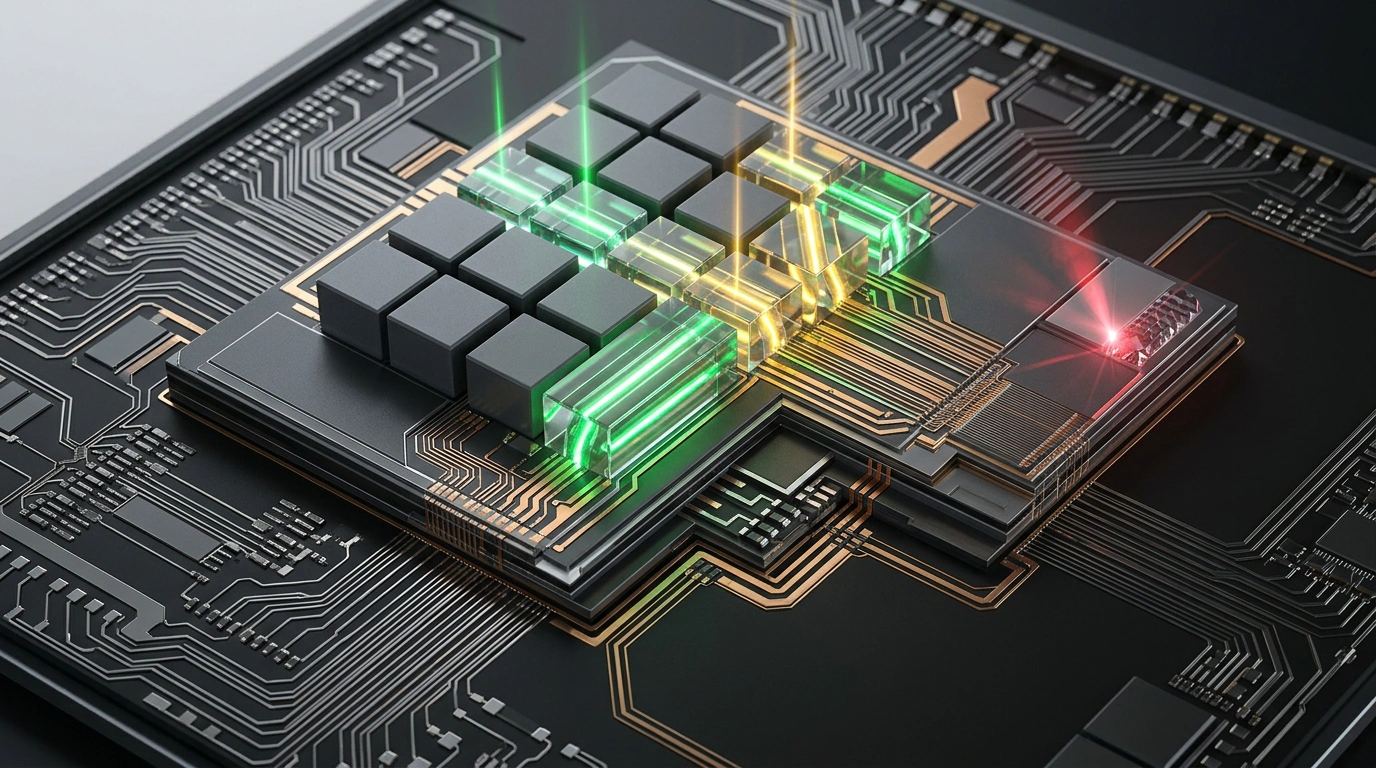
Cross-section of a silicon chip with layered MoE dies and directed streams of light
ArticleAILLMDevelopmentAI

NVIDIA Unveils Nemotron 3.5 Super VL: Multimodal MoE Coder with a 4x Speedup

Until now, AI-assisted coding has been almost purely text-based: you copy a snippet, paste it into chat, and hope the model guesses the context. Yet modern frontends, mobile screens, and system diagrams can't be captured by lines of text alone—visual perception is essential.

NVIDIA tackled this with the open multimodal model Nemotron 3.5 Super VL. Its 120B-parameter MoE architecture activates just 12B parameters per token, pairing Mamba-2 layers with the C-RADIO vision encoder. It ingests bug-repro videos, screenshots, and architecture diagrams to pinpoint codebase defects 4x faster than classic dense models. I break down the hardware requirements and real-world use cases.

👍 0
Julian Goldie SEONVIDIA Nemotron 3.5 Super VL Model Card on Hugging Face
October 20
News · October 208 news items

OpenAI Updates GPT Live 1.1 Voice Mode: 13 New Voices and Near-Zero Latency

OpenAI has rolled out a major upgrade to its GPT Live 1.1 voice mode: conversations are now full-duplex with near-instant response times and zero awkward pauses, and 13 new natural-sounding voices (including Bobby) have joined the lineup. The mode is already live across mobile apps, the web, Codex, and the developer Realtime API.

Ant Group Open-Sources Ling 3.1 Flash: 560B-Parameter MoE with a 1M-Token Context

Ant Group's Inclusion AI team has open-sourced Ling 3.1 Flash under the MIT license: its sparse MoE architecture packs 560B total parameters with 25B active per token, supports a 1M-token context window, generates UIs at high speed, and runs cleanly inside private enterprise environments.

Hermes Index Update: GPT-6.1 Sol Beats Astra on Cost-to-Quality in Agent Benchmarks

Nous Research has updated its Hermes Index agent leaderboard: the compact GPT-6.1 Sol outperformed the flagship GPT-6 Astra on accuracy while spending just 1.1% of the flagship's token budget (a 98% savings). Claude Opus 5.5 kept first place in complex reasoning, and sandbox isolation rules were tightened.

Google Updates Gemini for Workspace: End-to-End Slide and Doc Generation from Emails and Chats

Google has shipped a Gemini for Workspace update: the Gemini Side Panel can now generate Google Slides decks and Google Docs reports directly from Gmail threads, Drive project files, and Google Chat conversations while keeping enterprise data security intact.

Meta Releases Open-Weight Muse Spark Open for Local Workstations

Meta AI has open-weighted its flagship Muse Spark Open model under the Muse Model License: an 816B-parameter MoE architecture (42B active) with a 1M-token context window, NVFP4 quantization support, and local execution on two linked Mac Studios with 192 GB+ of memory via Apple MLX.

MiniMax Launches Design Agent: Full Creative Kits Powered by Hailuo H3

MiniMax has opened public access to Design Agent powered by Hailuo H3: the platform generates 15-second 2K videos with 32 kHz stereo audio in a single pass on an Infinite Canvas, coordinating subagents for scripting, graphics, and editing while keeping character appearance consistent across formats.

Multi-Agent Mode in ChatGPT: Parallel Execution via Subagent Delegation

OpenAI has built an Orchestrator-Worker architecture straight into ChatGPT: a lead agent decomposes your prompt and launches a parallel swarm of subagents with isolated context windows, while an interactive Task Inspector tree lets you track progress in real time.

Anthropic Establishes Public Benefit Fund, Pledging Up to 20% of Equity to Public Good

Anthropic has launched the Public Benefit Fund with an initial 5% equity tranche. An escalator provision will add up to 20% of company capital as valuation and founder pledges grow, targeting labor-market disruption and AGI safety research under a strict legal ban on political spending.

High-contrast poster graphic illustrating four stages of scaling work with artificial intelligence
ArticleAIProductivityLLMChatbots

Getting the Most Out of Claude: A Practical Guide from Anthropic Lead Engineer Felix Rieseberg

Why do most people use frontier models like Claude 3.5 Sonnet or Opus 5.5 at only 5% of their real capacity? Anthropic lead engineer Felix Rieseberg calls it Model Overhang: we keep handing brilliant systems trivial chores like fixing typos and writing boilerplate instead of trusting them with end-to-end engineering work.

In his landmark guide, Rieseberg maps out how to scale your AI workflow across four dimensions—from raw speed to altitude, specialist depth, and cross-disciplinary range. Most importantly, he lays down an iron law: never let a model judge its own work. Here are the key takeaways and environment principles from the guide.

👍 0
Julian Goldie SEOFelix Rieseberg — How to be more ambitious: A tutorial for humans with models
October 20
Multi-layered collage of film strips, vector timeline tracks, and generated video frames
ArticleAIVideo EditingAutomationShort Video

Automating Short-Form Video Editing: Pairing DeepSeek V4.1 Flash with Open Design Motion

Manual short-form video editing is a black hole for time and budget: hunting for B-roll, aligning captions, animating callouts, and waiting on endless After Effects exports. Video-as-Code changes the game by turning editing into a fully programmatic pipeline.

Three components power the workflow:

  • DeepSeek V4.1 Flash: generates a structured JSON timeline with scenes, pacing, and highlight keywords in a couple of seconds;
  • Open Design Motion: an open-source engine that assembles compositions from declarative HTML, CSS, and GSAP templates;
  • Headless renderer with FFmpeg: automatically compiles the final MP4 in under 90 seconds per clip.

I break down the working script-generation code and motion template.

👍 0
Julian Goldie SEOOpen Design Motion (nexu-io/open-design) Repository and Architecture
October 20
Minimalist assembly of graphite and white blocks with parallel batch-processing pathways
ArticleAI AgentsDevelopmentLLMAutomation

Reason Agent 1.1: A New Coding Agent Harness with Batch Tool Calling and 22% Lower Costs

We're used to thinking autonomous coding quality depends solely on the base model's raw smarts: pick Claude Opus or GPT-6 and get results, pick a smaller model and get a mess. Yet fresh results on the independent Coding Agent Index prove that the harness architecture matters just as much as the model itself.

Reason Machines unveiled Reason Agent 1.1, which scored 65.1 vs. 62.5 for standard Codex on the exact same GPT-6 Astra base model while cutting token costs by 22%. The secret is replacing one-by-one tool calls with Batch Tool Calling inside an isolated codemode runtime plus aggressive prefix caching. Here is how the config and batch script work.

👍 0
Julian Goldie SEOReason Machines — Reason Agent 1.1 Architecture and Coding Agent Index
October 20
Diorama showing neat rows of miniature helper robots working in sync on tasks
ArticleAI AgentsAutomationProductivityLLM

Moonshot AI's Kimi Work: An Autonomous Desktop Agent with a 300-Worker Swarm and Scheduled Runs

Handing an AI agent a massive job, closing your laptop, and waking up to finished deliverables used to fail on session timeouts, CAPTCHAs, and browser freezes. Chinese unicorn Moonshot AI just took a major step toward real "digital employees" with Kimi Work for macOS and Windows.

The app mounts local folders, drives your browser through the secure WebBridge extension without sending passwords to external servers, and spins up an Agent Swarm of up to 300 parallel workers. That delivers a 4.5x speedup on large-scale research, while a built-in Cron scheduler automates recurring reports in the background. I break down how it works and where to draw the security lines.

👍 0
Julian Goldie SEOMoonshot AI — Kimi Work Desktop Platform and Agent Swarm Architecture
October 20
Studio still life of seven interconnected geometric prisms and developer tools
ArticleAIAutomationProductivityDevelopment

7 Practical AI Tools for Production: From Local Agents to Serverless Triggers

SaaS subscription fatigue hits every builder eventually: $20 here for image generation, $30 there for video, another $50 for transcription—and still no unified pipeline. Practitioner Nate Herk tested over a hundred tools to assemble a lean, scalable production stack without the markup.

The architecture rests on three pillars:

  • Local coding agents: Claude Code and Codex handle software, scripts, and custom utilities right on your machine;
  • OpenRouter and a cheap VPS: a single gateway to hundreds of models with automatic failover plus background servers for 24/7 jobs;
  • Trigger.dev v3: a serverless TypeScript job framework that eliminates timeouts in long-running AI pipelines.

I share a production-ready worker implementation with automatic model routing.

👍 0
Nate HerkTrigger.dev v3 Documentation — Background Tasks and OpenRouter Integration
October 20
Game creator workstation displaying a procedural 3D world alongside creative sketches
ArticleAIDevelopmentLLMAI

Vibe Coding Video Games: How Solo Creators Build 3D Worlds with Claude Code, Codex, and Opus 5.5

Imagine someone with no CS degree, no C++ fluency, and no Metal or shader background building a 3D Earth sandbox with streaming maps, procedural buildings, tornadoes, and rockets completely solo. That's not sci-fi—it's Vibe Coding, the phenomenon Andrej Karpathy recently spotlighted.

Developer Charlie Chapman used Claude Code across three Macs to build a full physics engine rendered in Metal and Vulkan. Meanwhile, streamer Max Blade is building a Fortnite clone live on stream with Claude Opus 5.5 based on viewer chat requests. The barrier to entry in game dev has collapsed: architectural vision and taste now matter most while AI handles the syntax. Here is a look at the pioneers' real projects and where the approach hits its limits.

👍 0
Riley BrownCharlie Chapman — Earth Sandbox Engine and Claude Vibe Coding Case Study
October 20