Behind a slick AI-generated flyover of a city, you rarely see the chasm separating a flat video clip from a real game. Inside an actual engine, everything runs on solid collision meshes, landing-gear physics, light sources, and control scripts. A video generator just paints plausible pixels frame by frame—you can't grab the yoke or move the runway inside its scene.
That is exactly why Ernie 5.5 Flash Preview from Chinese tech giant Baidu made me pause my usual chatbot tests. Can a language model take a single sentence and build a working 3D scene directly inside a professional engine—complete with physics, camera, and controls—without a human stepping in?
From flat pixels to procedural code and a staff of 280 specialists
To drive pro software like Unreal Engine 5, Unity, Godot, or Blender over an API, a neural network has to write procedural Python and C++ code. Instead of guessing pixels, the model feeds the engine mathematical commands: where to sculpt terrain, where to place lights, and which script binds to which keys. Spread across hundreds of files, though, an ordinary model either loses track of coordinates or stalls for minutes on every step.
In its November 11, 2026 announcement, Baidu's engineers tackled this using a Sparse Mixture of Experts architecture. Ernie 5.5 Flash Preview totals 280 billion parameters, yet for each token the router activates exactly 14 billion. Picture an engineering firm with 280 specialists on staff—architects, physicists, programmers, lighting artists. When a job lands on the desk, only the 14 relevant experts step up to the drafting table while the rest stay on standby.
That selectivity gives you the breadth of a giant model at the speed of a compact crew—over 200 tokens per second. Meanwhile, a 1-million-token context window holds engine docs and every scene object's coordinates in working memory.
How two agents split building an airfield and a plane in Unreal Engine 5
Even with huge memory, building a complex 3D level solo is asking for trouble: if one bot tries to sculpt geometry and tune gravity at the same time, it drowns in mismatches. That's why Ernie 5.5 Flash Preview runs inside agentic environments, splitting roles across teammates.
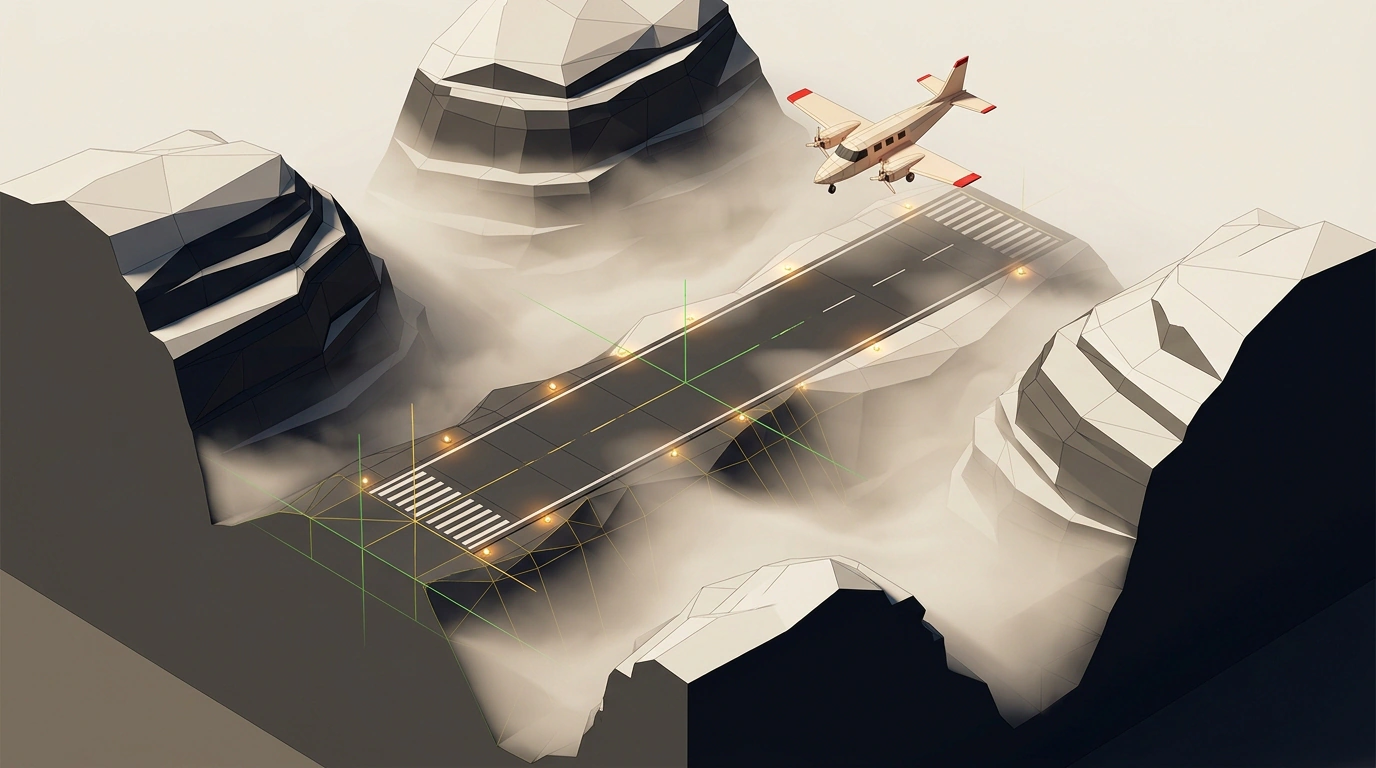
Take the scenario from Baidu's demo and Julian Goldie's breakdown. A developer gives a one-sentence brief: build an interactive Unreal Engine 5 scene of a plane landing in fog at a mountain airfield. The system divides the work between two subagents:
- The first agent procedurally builds the runway geometry, surrounding terrain, and volumetric fog.
- The second agent assembles the 3D aircraft model, calculates the descent path, and tunes the landing-gear physics.
The system then merges the assets into a single Unreal Engine 5 project, positions the camera, and compiles a playable build with controls. Using the same pipeline, Baidu showcased a continuous 11-hour coding cycle for a game prototype called Yunxiu Xing in Unreal Engine 5.8, plus an end-to-end educational video generated from one prompt—from script and voiceover to 3D animation without human intervention.
Where the pipeline saves weeks, and where you still need a 3D engineer
Watching that autopilot marathon, it's worth drawing clear boundaries around what it's actually good for. Pairing Ernie 5.5 Flash with game engines nails the early stage: rapid level prototyping, training simulations, and rough animations. Where a developer used to spend weeks placing blockout buildings by hand, a pair of agents delivers a live scene in one sitting.
Polishing shaders, optimizing high-poly meshes, and tuning complex game physics still require a 3D engineer's hands. There's also a hardware bar: the model itself runs in the Baidu Qianfan cloud and via OpenRouter, but local rendering in Unreal Engine 5 still demands a beefy GPU. We previously compared how script-driven assembly differs from streaming simulation in our look at interactive 3D world generation in Google Genie 4.
So, back to our opening question: yes, a neural network can spin up a working 3D scene in an engine from a single prompt by delegating build stages to specialized agents. As Julian Goldie put it in his review, AI has crossed the line from simple chat replies to executing multi-step work end to end—which means by the time the weights open under an Apache 2.0 license (slated for November 25), the edge will belong to teams already learning how to orchestrate agent crews.