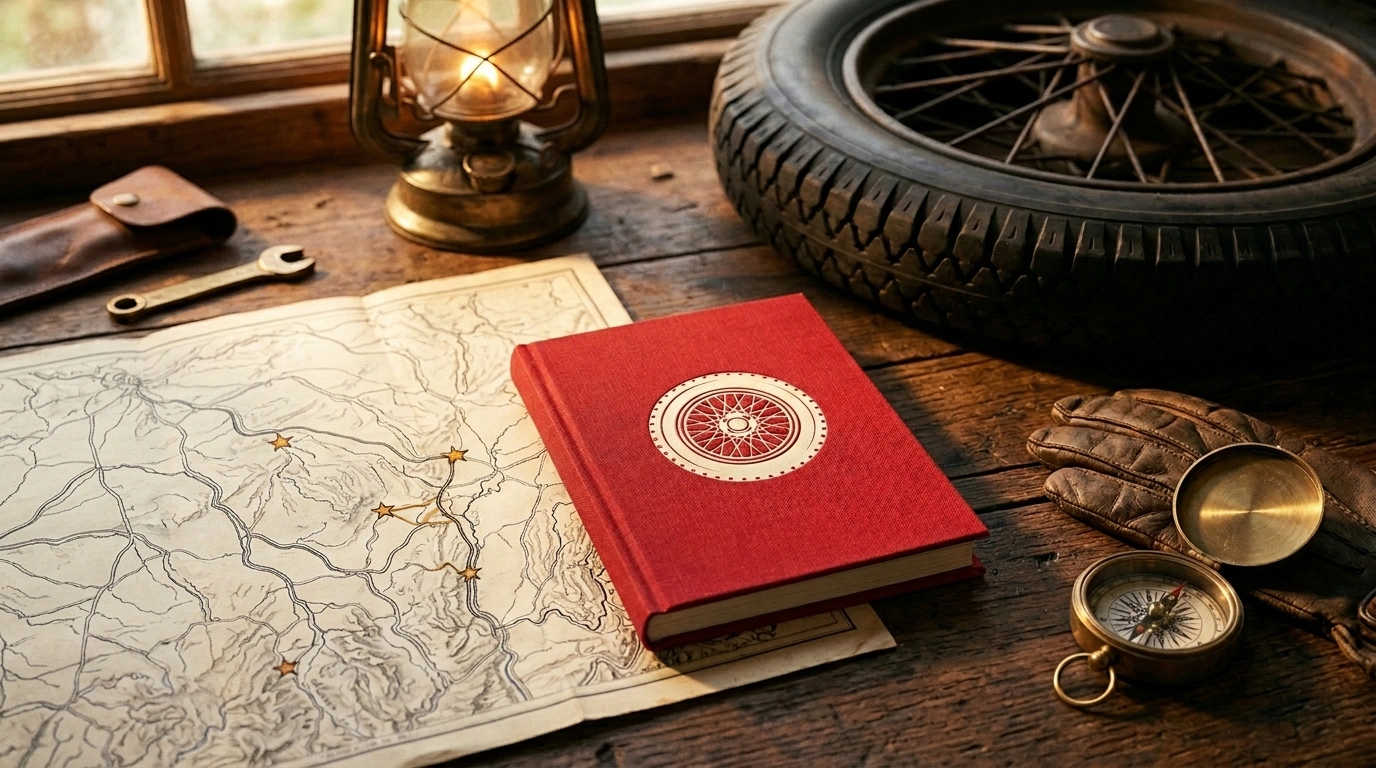
Picture Paris in August 1900. The World's Fair is in full swing, and two entrepreneurial brothers—André and Édouard Michelin—are running a small factory making pneumatic tires for bicycles and those brand-new horseless carriages.
The market is microscopic: barely 3,000 cars are registered in all of France. The roads are terrible, gasoline is sold in glass bottles at pharmacies, gas stations don't exist yet, and any breakdown ten kilometers outside town turns into a minor disaster. In that kind of market, an ordinary marketer would have bought a newspaper ad: "Buy durable Michelin tires—10% off!"
Instead, the Michelin brothers pulled a move that went straight into strategic marketing textbooks. They printed a free travel guidebook—nearly 400 pages long—with an astronomical print run of 35,000 copies. That worked out to more than ten copies for every single car in the country.
Why would a rubber manufacturer spend a small fortune publishing a travel directory? Let's unpack this brilliant piece of marketing engineering: how primary demand was created, why free content loses value, and how a century-old playbook still powers modern brand media.
The Indirect Demand Strategy: Sell a Lifestyle, Not Tires
The Michelin brothers' logic was crystal clear and mathematically airtight:
- If a driver is afraid to leave Paris for fear of running out of fuel or a place to sleep, their car sits gathering dust in the garage.
- If the car sits in the garage, the tires don't wear down.
- If the tires don't wear down, the Michelin factory sits idle with no orders.
To sell more tires, they had to get car owners driving farther and more often across the country. And to do that, they had to erase drivers' biggest anxieties.
The 1900 Michelin Red Guide was an absolute masterpiece of practical utility:
- Detailed road maps marking pharmacies where drivers could buy refined gasoline.
- Addresses of blacksmiths and mechanics capable of fixing a suspension.
- A list of vetted hotels with clean sheets and locked garages for cars.
- Step-by-step instructions on patching a punctured tire by the light of a kerosene lantern.
The Michelin brothers weren't selling rubber. They were selling the nerve to get behind the wheel, the spirit of exploration, and the freedom of the open road. The farther people drove over rough gravel roads, the faster their tread wore down—and the sooner they came back for a fresh set of Michelin tires.
The Workbench Legend: Why Content Must Carry a Price
For the first twenty years, the guide was handed out completely free at car dealerships and tire shops. Then, in 1920, an incident changed everything.
André Michelin stopped by a partner workshop for an inspection and saw something horrifying: workers had stacked a pile of his brand-new, lovingly printed guides under a workbench leg to stop it from wobbling on an uneven floor. Michelin walked out with a sharp philosophical takeaway: "People only truly value what they pay for out of their own pocket."
From that day on, the free giveaways ended. The guide went on sale for a respectable 7 francs. They stripped out all third-party advertising to make it a fiercely independent publication and hired their first full-time restaurant inspectors.
By the 1930s (officially codified in 1936), the famous three-star restaurant rating system was born:
- 1 star: A very good restaurant in its category.
- 2 stars: Excellent cooking, definitely worth a detour.
- 3 stars: Exceptional cuisine, worth a special journey.
Feel the phrasing on that third star: "worth a special journey"! Not just grabbing a nice meal, but driving 400 kilometers for dinner—wearing a couple millimeters of tread off your tires on the round trip.
Don't try to hard-sell your product in every single post or article. Find the activity that naturally comes right before someone buys your product—or follows right after—and become the top authority on that activity. Sell outdoor gear? Write about the best trekking routes. Build accounting software? Publish a clear guide to tax optimization.
The Core Lesson for Modern Business
Today, hundreds of companies try to launch their own brand media—starting blogs, hiring copywriters, shooting videos. Yet 90% of those projects die within six months, turning into dreary corporate bulletin boards announcing new branch openings.
The Michelin Guide proves that real brand media doesn't shout about how great the company is. It solves real customer problems and builds a new culture of consumption, expanding the entire market. Similar mechanics drive viral marketing and newsjacking, where brand awareness grows naturally by tapping into what the audience already cares about.
Build your customers a roadmap, show them an irresistible destination—and they'll show up at your door for the wheels.
