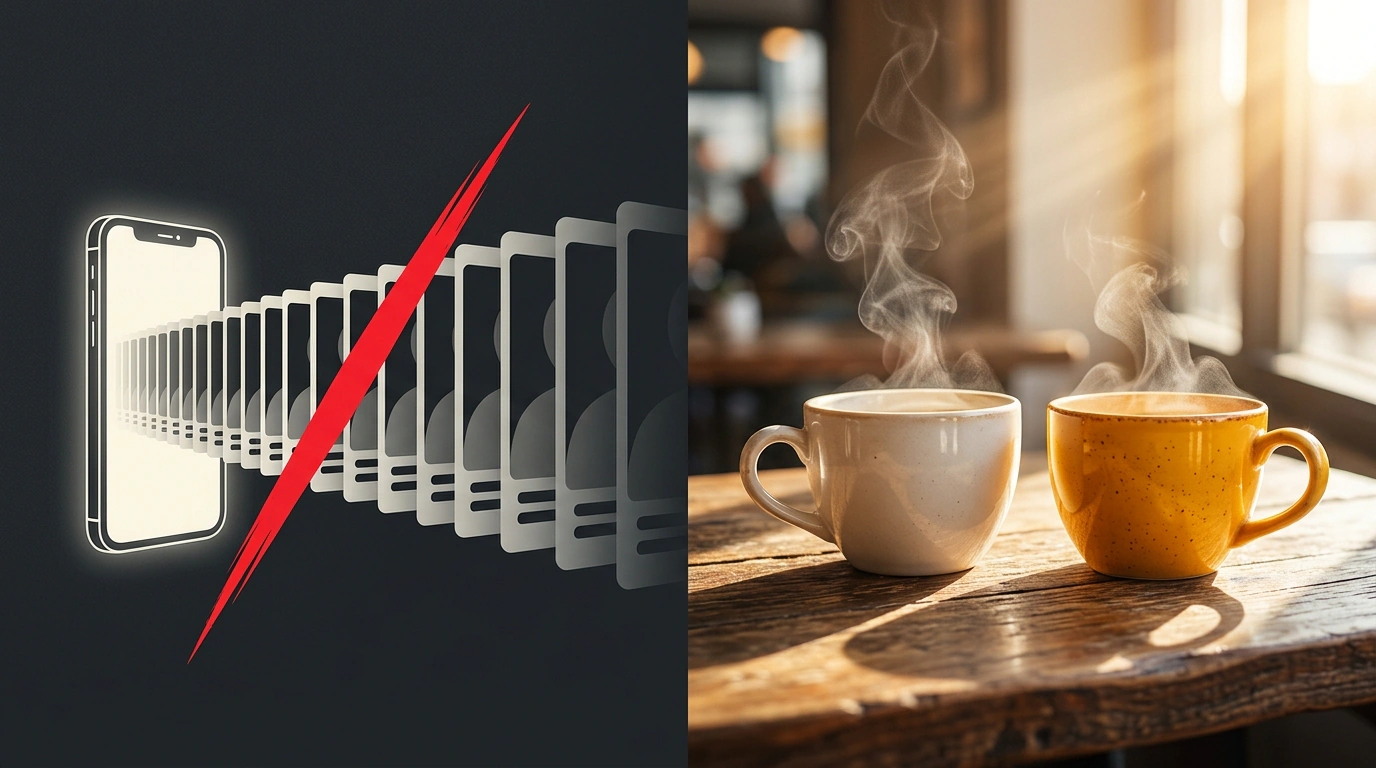
Sound familiar? It's late at night, you're stretched out on the couch, mechanically swiping profiles left and right. Dozens of polished photos, airbrushed faces, and clever bio one-liners. You hit a match, kick off the standard opener—'Hey, how's your week going?'—get a lukewarm reply six hours later, trade two empty messages, and then she vanishes into thin air.
After a couple of months of that 'dating,' all that's left inside is sticky cynicism and numb apathy. You start wondering if something is wrong with you, or if women today have simply forgotten how to hold a conversation.
In reality, you've run straight into classic dating app burnout. Writers at The Modest Man and behavioral psychologists explain that the problem isn't people. It's the architecture of the apps themselves, which deliberately short-circuits how human attraction actually works.
The Casino Trap: How Algorithms Profit from Your Attention
Let's take off the rose-tinted glasses: dating apps aren't built to help you meet a great woman and happily delete your account. Their business model runs on Time in App and paid subscriptions.
Every swipe-based app copies the mechanics of a classic slot machine. Psychologists call this intermittent reinforcement. You never know which swipe will trigger the reward—that flashing match notification. Your brain gets tiny hits of dopamine not from real human connection, but from the slot-machine pull itself. Before you know it, you're burning hours staring at a screen and draining the emotional energy you need for real-world dates.
The Paradox of Choice: Why 100 Options Beat You Down More Than Three
American psychologist Barry Schwartz nailed the second systemic trap in his book The Paradox of Choice. When you're given two or three options, you evaluate each one carefully and feel satisfied with your pick. When you're staring at an endless feed of hundreds of profiles, the perceived value of each individual person drops to zero.
That triggers a rejection mindset: instead of looking for reasons to be interested, your brain scans for any tiny excuse to swipe left. Head tilted weirdly in photo three? Next. Replied with an emoji instead of a sentence? Next. A toxic illusion takes over: 'Somewhere just three swipes away, an absolutely flawless partner is waiting for me.' Real people aren't made of glossy pixels.
In our piece on how to overcome dating app fatigue, we broke down why digital overload wrecks our ability to form genuine emotional attachment.
Why Ghosting Became the New Normal
Ghosting—disappearing mid-conversation without a word—stings the male ego harder than almost anything. Looked at soberly, though, it's a natural defense mechanism of an overloaded mind.
An in-demand woman on an app might have dozens of active chats sitting in her inbox at once. Writing out 'Hey, you seem like a great guy, but I don't feel a spark' to everyone takes massive emotional bandwidth—especially when guys frequently snap back with hostility or insults. When a person feels like a line of text rather than a human being sitting across from you, closing the app and hitting unmatch becomes the path of least resistance.
The 15-Message Rule: Moving the Spark Offline
To stop treating dating like an unpaid second job, put strict digital hygiene in place:
- Set a daily time cap. No more than 15–20 minutes a day. No mindless scrolling on your commute or in bed before sleep.
- Focus on two or three chats. Don't hoard a collection of matches. Pick a couple of profiles you genuinely like and stick to those.
- Ditch endless small talk. Your goal on an app isn't to become a virtual pen pal—it's to confirm basic compatibility and move the interaction into the real world.
If a chat flows easily with good banter after 10–15 messages, invite her out for a short offline meetup right away: 'Hey, we could text for weeks, but coffee in person is way better. Want to grab a quick cup tomorrow after work downtown?' Dragging a chat past five days slashes your odds of actually meeting by 70%—the momentum simply dies.
Treat dating apps like a phone book, not a substitute for a social life. Match fast, move offline without hesitation, and remember: real chemistry only happens face-to-face.