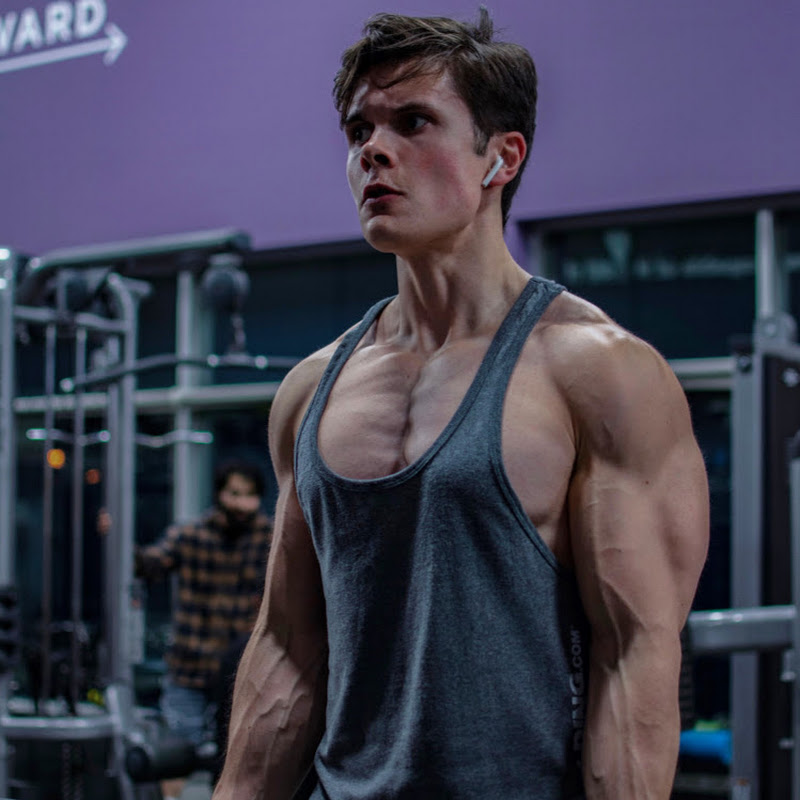
Open any social feed and you're hit with an endless wall of visual pressure. Massive, unnatural cannonball delts, vascular arms as thick as a normal person's thigh, paper-thin skin with zero body fat, and a vacuumed waist.
For a 19- or 22-year-old guy, that look easily becomes the gold standard of masculinity and attractiveness. You look in the mirror after two years of honest lifting, see a solid, athletic frame—and instead of feeling proud, you feel a bitter sting of disappointment: 'Why am I still so small? Why don't I have that granite density?'
Right at that vulnerable moment, tens of thousands of young guys decide to run their first 'cycle.' Steroids look like a shortcut—a magic button that lets you cut the line and become an unstoppable alpha overnight.
Behind the glossy stage reels, however, sits a grim reality. Popular fitness creator Will Tennyson released a deep documentary investigation into the shadow side of professional bodybuilding. Let's strip away the hype and look at what chasing extreme muscle mass actually costs.
Logan Dishman's Faustian Bargain: Inside a Distorted World
Will Tennyson's investigation features a chillingly candid interview with young pro athlete Logan Dishman. He started taking anabolic-androgenic steroids at seventeen and a half—practically still in high school.
Today, his weekly doses of testosterone and heavy derivatives run into hundreds of milligrams, stacked during prep with growth hormone, insulin, and estrogen blockers. When Will asked him point-blank: 'If someone offered you a choice—win Mr. Olympia, become a legend, and die at exactly 45, or live a long, full life to 85 without the title—which would you pick?', Logan didn't hesitate for a second. He answered flatly: 'I'd take the win and die at 45.'
That isn't ancient warrior bravery. It's a deep psychological distortion built on an addiction to validation. Their entire existence revolves around weighing rice, dozens of weekly injections, nonstop bloodwork monitoring, and a panicked terror of losing half a centimeter off their biceps.
Bigorexia: When 110 Kilos Still Feels Scrawny
Psychiatry classifies this condition as muscle dysmorphia—often called bigorexia. It's the mirror opposite of anorexia. A guy carrying 110–120 kilos (240–265 lbs) of lean mass steps in front of a mirror and genuinely sees a frail, undersized teenager.
Social media has blown this neurosis up to epidemic scale. Algorithms push extreme anomalies, while filters, downlighting, and camera angles manufacture a look that's flat-out impossible naturally. Before long, a young guy loses his grip on reality.
In our breakdown of the dangerous obsession with extreme leanness and chemical shortcuts, we covered how chasing artificial screen ideals warps basic self-perception. But while extreme dieting is often reversible, in competitive bodybuilding the stakes are lethal.
Anatomy of Cardiovascular Collapse: Dallas McCarver's 833-Gram Heart
Over the past decade, the average age of sudden deaths among pro bodybuilders has plunged into terrifying territory: 26 to 38 years old. Dallas McCarver (dead at 26), Jo Lindner (dead at 30), Cedric McMillan (44), George Peterson (37), Rich Piana (46)—that grim list grows longer every season.
Infographic diagram comparing a healthy heart with pathological left ventricular hypertrophy in an athlete
What's the main medical culprit? Your heart is a hollow muscle packed with androgen receptors. When an athlete floods their system for years with hormone doses dozens of times above natural levels, it's not just delts and quads that grow. The heart itself enlarges.
This triggers concentric left ventricular hypertrophy (concentric LVH). The heart's muscular walls thicken inward instead of outward, shrinking the chamber's usable volume. Healthy muscle tissue gets replaced by stiff fibrosis, the heart loses its ability to relax between beats, and blood pressure spikes toward 180/110.
The official Palm Beach County medical examiner's report recorded that 26-year-old Dallas McCarver's heart weighed 833 grams at the time of death—compared to the normal 300–350 grams for an adult man of his build. Cardiomegaly was nearly 2.5 times the physiological limit. The cause of sudden death was acute heart failure driven by myocardial fibrosis and severe coronary atherosclerosis of the left anterior descending artery. His liver weighed 4,593 grams (extreme hepatomegaly), and his kidneys showed nephrosclerosis.
Anabolic steroids also crash 'good' HDL cholesterol near zero while spiking artery-clogging LDL. As a result, a 25-year-old lifter's arteries end up lined with calcified plaque like a 75-year-old lifelong smoker with diabetes.
Kidney Knockout and Diuretics: The Deadly Illusion of Stage Dryness
If steroids wreck the heart over years, diuretics can kill athletes in a matter of hours right before they step on stage.
To achieve that shrink-wrapped skin and razor-sharp muscle separation, bodybuilders take loop diuretics (furosemide and similar drugs) 24–48 hours before a show and cut water completely. The goal is to flush every drop of subcutaneous fluid.
Your body, however, can't drain water selectively. Diuretics slash circulating blood volume, thickening your blood like sludge. Vital electrolytes—potassium, sodium, magnesium—get washed out. When the sodium-potassium pump fails, violent cramps set in, kidney filtration shuts down, and fatal heart arrhythmias strike. Backstage at every major show, paramedics stand by to pull dehydrated athletes back from blackouts.
Sex Drive, Testosterone, and Stage Exhaustion
Let's bust the biggest myth driving guys into this trap: 'If I get huge, women will go crazy for me.'
First, a competitive bodybuilder on show day is a wreck when it comes to actual male vitality. At 4–5% body fat and severe dehydration, energy levels hit rock bottom. Libido flatlines: scrambled prolactin, crashed estradiol, and adrenal burnout often shut down erectile function completely. The athlete can barely climb a flight of stairs and dreams of nothing except a glass of water and sleep.
Second, repeated sociological surveys and evolutionary psychology studies confirm that the vast majority of women find extreme bodybuilding mass off-putting. Overblown traps, bulging veins, and heavy breathing just from walking trigger a subconscious sense of disproportion and threat. What actually attracts women is balanced proportion, ease of movement, and functional vitality.
Natural Aesthetics: The Gold Standard for Real Life
So what actually makes a guy look attractive, confident, and strong in the real world?
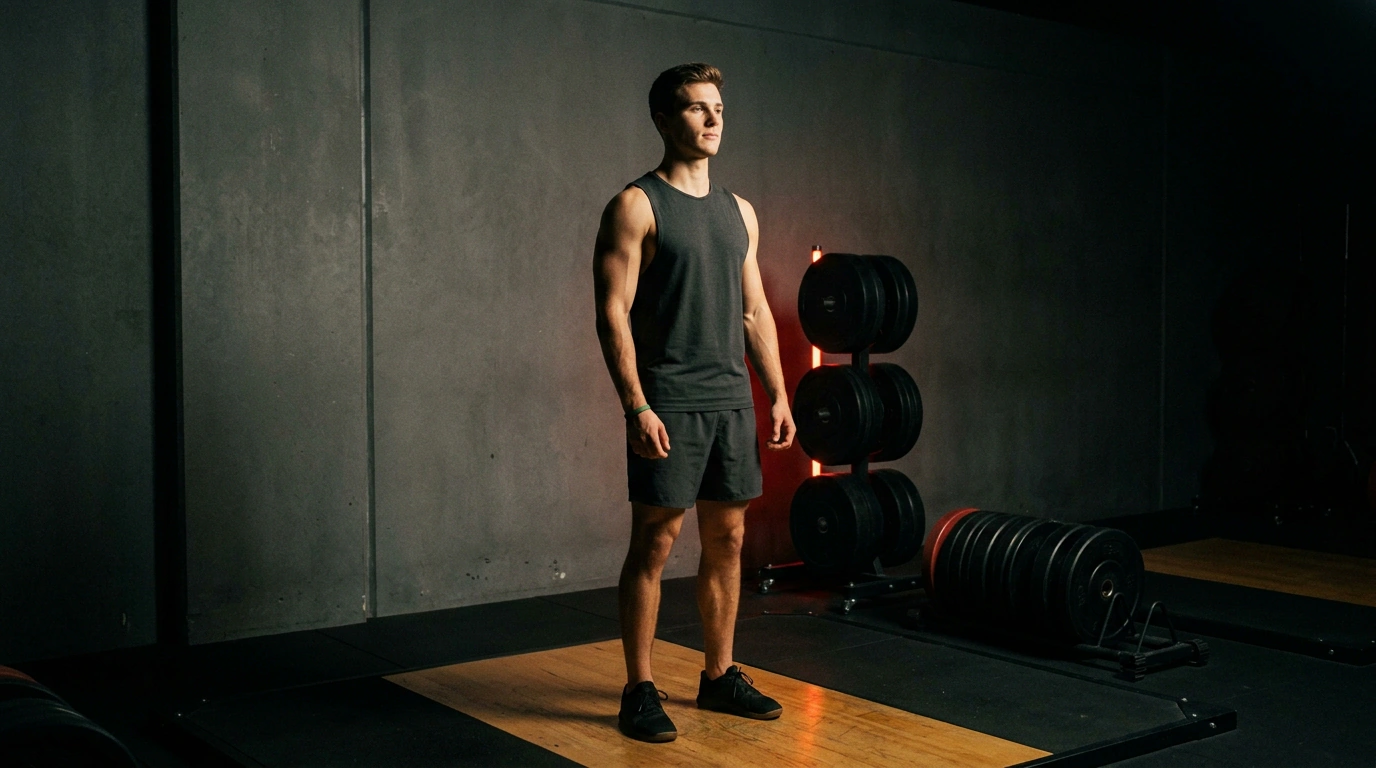
The answer is simple: natural athleticism. It's a physique you can maintain year-round without trashing your organs, riding hormonal rollercoasters, or dreading every blood test.
Benchmarks of a Healthy Natural Physique
- Body fat stays comfortably in the 10–14% range without starving or blacking out
- Shoulders sit noticeably wider than your waist (a V-taper that makes everyday clothes hang well)
- Upright posture, an open chest, and a light, springy stride instead of waddling from side to side
- Strong natural free testosterone, steady libido, and high morning energy
- Resting heart rate of 55–65 bpm and clean blood pressure around 120/80
When you train naturally—with free weights, pull-ups, dips, and smart cardio—your body works like a tuned engine. You look sharp in a fitted shirt or a structured coat, your eyes are clear, your energy is contagious, and you have plenty in the tank for dates, work, and life.
Don't fall for cheap plastic hype on social media. Real male attractiveness is health, energy, and self-reliance—not a number on the scale bought at the cost of your own heart.