Winter in the city is an obstacle course: salty slush on the sidewalks, slick tile at subway entrances, hidden ice under fresh snow, and freezing puddles at every crosswalk. Wearing clunky hiking boots every day gets old fast—your feet roast in the car or office, and your legs feel wiped out by lunch.
You want to stay in light, agile sneakers. The problem is that standard summer or fall pairs surrender to winter in five minutes: water seeps through the seams, the soles turn into ice skates on packed snow, and ugly white salt stains ruin the uppers.
The team at Men Today and gear testers at Gear Patrol put leading winterized sneaker silhouettes through real-world testing to nail down the formula for an ideal cold-weather pair.
The Tech Trio: Membrane, Insulation, and Outsole
To handle real city winters from 0°C down to -15°C, a winter sneaker needs three non-negotiable engineering features:
- Gore-Tex membrane (or proven equivalents like eVent or DryVent). A microporous bootie sits lined inside the upper. Its pores are 20,000 times smaller than a water droplet yet 700 times larger than a water-vapor molecule—meaning melting slush stays out while sweat vapor escapes freely. Plain leather sneakers without a membrane start leaking at the seams after 15 minutes in wet snow.
- Low-bulk synthetic insulation (100–200 gsm PrimaLoft or Thinsulate). Skip thick shearling linings inside sneakers: they pack down flat in two weeks, trap moisture, and turn your shoes into a swamp. Thin synthetic insulation keeps trapping heat even if damp and keeps the silhouette sleek.
- Vibram Arctic Grip rubber. Regular sneaker rubber freezes rock-hard around -3°C, turning your soles into skates. Vibram Arctic Grip blends microscopic fiberglass particles into the rubber compound so it bites into wet ice without metal spikes. Paired with 4–5mm multidirectional lugs, the tread sheds packed snow cleanly with every step.
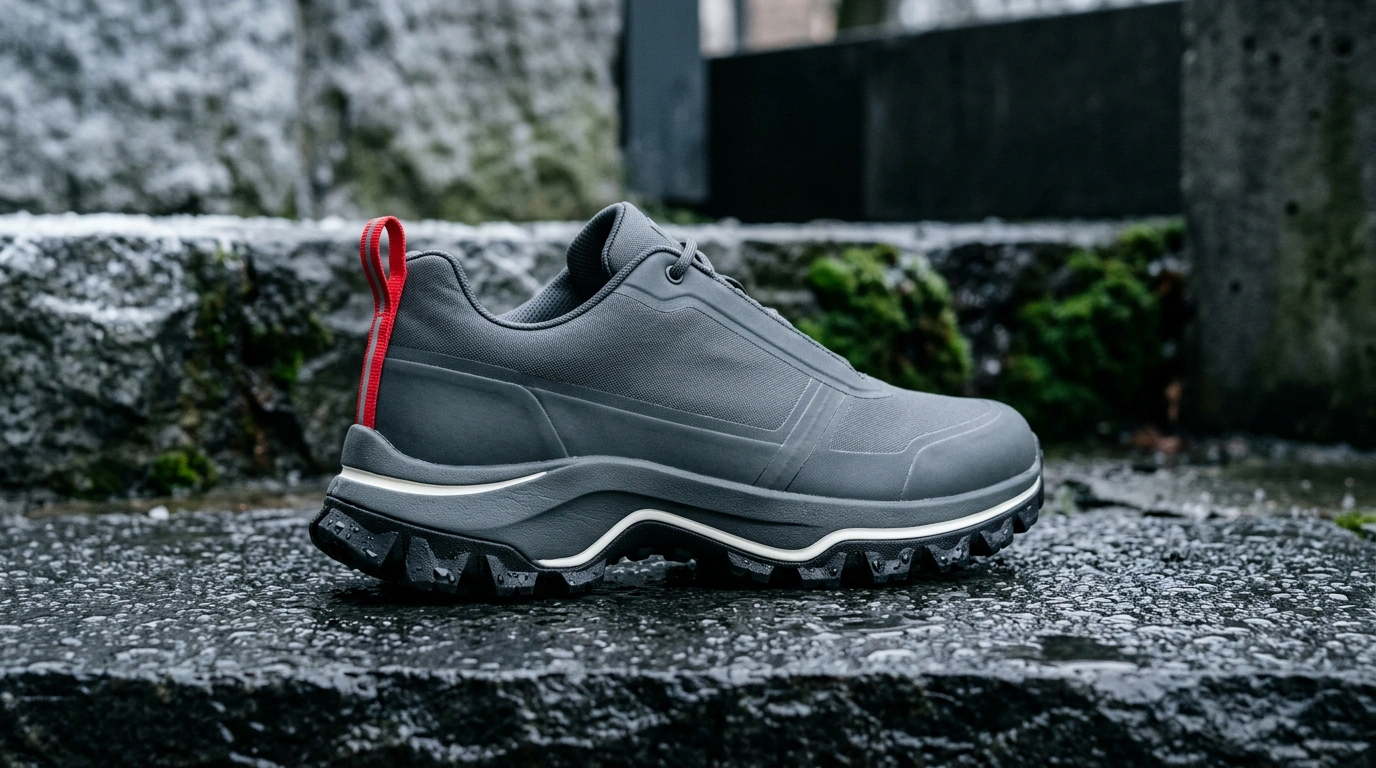
Pick a mid-cut profile that covers your ankle bone so snow doesn't spill inside when you step off a curb. Stick to tonal, low-key colors—matte black, charcoal, deep olive, or dark brown—with a rubberized mudguard wrapping the lower edge. That kind of pair works effortlessly with straight wool trousers, heavy denim, and a clean puffer.
The right technical winter sneaker keeps your feet bone-dry and warm so you can move through the city fast, sharp, and steady on your feet.