You stand in front of the mirror in a crisp white dress shirt, throw on a sturdy jacket, lace up fresh sneakers, and figure you've put together a clean outfit. The catch is that in the mirror you judge each piece on its own and remember its price tag, while a woman across from you reads only your silhouette, harsh lines of contrast, and fabric creases in the first three seconds. Even an expensive wardrobe breaks down in those blind spots. Men's stylist Aaron Marino from alpha m. points to two pillars of a sharp look: proper fit and restraint with details. Let's inspect a put-together outfit from top to bottom to see where the image usually slips and how to fix it without spending extra.
Up Top: Collar Clashes, Buttons, and the Invisible Undershirt
The first thing that catches the eye is the neck area, where two similar collars collide. Under a jacket with a short fold-down collar, skip a collared shirt, polo, or polo sweater with the same small collar: the two edges bump into each other and sit in a messy step. Pair that jacket with a classic crew-neck tee or a henley—a collarless shirt or long-sleeve with a three-button placket. If you really want to wear a polo or dress shirt, pick outerwear with different geometry: a ribbed-collar bomber, a blazer with classic lapels, a driving jacket, or a peacoat. A shirt collar should sit firmly inside the jacket instead of spilling out over the shoulders.
The next slip-up is how you handle buttons and undershirts when skipping a tie. Leaving only the top button undone under a blazer makes your neck look stiff, as if you barely survived a dress code. Two undone buttons give a clean, relaxed line. Marino personally prefers three, though that depends on your shirt's cut and the setting. Either way, one iron rule holds: your undershirt must never show at the chest opening or through the fabric itself.
Here's the paradox: a bright white undershirt glows stronger under a thin white dress shirt than any other color. As UnderFit explains, it comes down to light contrast. Where a single semi-sheer shirt layer rests over bare skin, your skin tone creates a natural muted shadow. Over your chest and sleeves, where a white undershirt sits underneath, two white layers stack together and reflect far more light. Eyes immediately lock onto that sharp white outline at the sleeves and collar. A light gray or skin-tone deep V-neck undershirt reflects less light and blends with your skin's undertone, making the border disappear. Light gray or beige works best for light to medium skin, while warm tan, brown, or dark gray blends seamlessly on darker skin.
Fit Without Illusions: Extra Fabric and the Slim-Fit Trap
Once the top looks clean, eyes drop to your sleeves and trousers, where excess fabric cheapens the whole look in seconds. Guys often hem their pants for their shoes, yet forget shirt sleeves completely. Stand straight with your arms at your sides: if thick folds bunch up like an accordion above your wrists, the shirt sleeves are too long. The same goes for trouser hems—when fabric pools heavily over your shoes, your silhouette immediately looks sloppy and baggy. One trip to a tailor is cheaper and smarter than wearing designer labels with bunched-up fabric for years.
Another common trap hides behind the slim fit tag, when people confuse tailored cuts with skin-tight clothes. A tailored silhouette follows the natural lines of your shoulders, chest, and legs while leaving a bit of air between fabric and body. If your shirt pulls tight across the chest like a second skin and the buttons strain every time you breathe, it looks cramped and highlights every extra inch.
The fastest giveaway of bad sizing is the side pockets on chinos or dress trousers. When pants fit right, the pocket opening lies completely flat along your hip. When pockets flare outward into triangles, the fabric is stretched to its limit. That's a clear sign the waist or hips are too tight, either from weight changes or the wrong cut. No belt or "breaking them in" will fix it—you simply need to size up.
Suiting Details Where Most Guys Trip Up
In a business or evening outfit, taste shows in small details guys rarely check before walking out. If you wear a bow tie, skip pre-tied versions on an elastic band and anything with feathers or novelty prints. A real bow tie is tied by hand; otherwise it looks like a school play costume. With a regular necktie, the rule is just as clear: ultra-skinny ties are long out of style, and your tie's width and knot size must match your shirt collar's spread.
For a narrow or standard collar, go with a compact four-in-hand knot. It's quick to tie and fills a narrow triangle cleanly. If your collar is wide with spread-out points, use a fuller Windsor knot and pinch a subtle vertical dimple underneath. As Aaron Marino reminds viewers, there's no such thing as a "double Windsor"—only a half Windsor and a full Windsor.
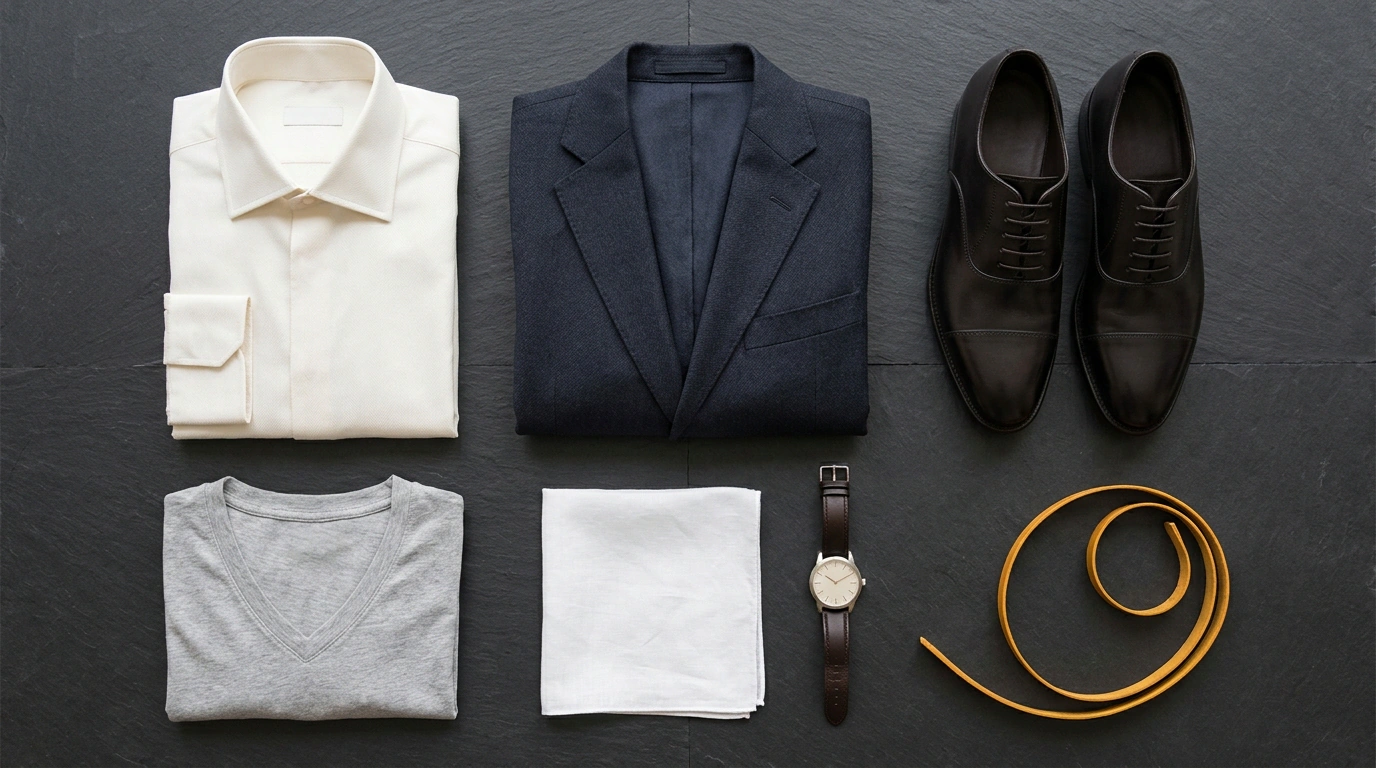
The next quick check is jacket buttons and pocket squares. On a two-button blazer, fasten only the top button and always leave the bottom one open—it's tailored not to be buttoned. When you sit down at a table, unbutton the jacket so the front doesn't bunch up over your stomach. For the chest pocket, a crisp white pocket square in a flat presidential fold is plenty, leaving a clean straight edge above the pocket. Leave matching tie-and-pocket-square sets on the store rack: a 100-percent fabric match looks stiff and artificial.
From the Ankles Down: Restraint and When Rules Bend
Moving down to your ankles, ditch loud novelty socks with cartoons and short white ankle socks. Athletic white socks belong in the gym, yet in town with shorts or chinos they cut off your leg line and look sloppy—opt for no-show socks or mid-calf socks instead. With suit trousers, match your socks to your pants, such as charcoal socks with a gray suit, and never pair black socks with brown shoes. In summer with a casual suit, loafers, or monk straps, going sockless works—on one strict condition: your trousers must be hemmed right above the ankle bone with zero bunching.
Matching your belt and shoes depends on the occasion. In a formal suit or dressed-up evening look, your belt leather should match your shoes in color, texture, and formality. In relaxed everyday wear, as Marino notes, that rule loosens up: a braided or canvas belt works fine with chinos and sneakers without an exact shade match. Another sharp move with trousers is skipping a belt altogether if the waistband has no belt loops and relies on an extended tab or side adjusters. Without a belt, your torso isn't cut in half by a horizontal stripe, leaving a cleaner line. If your pants do have belt loops, however, wear a belt.
Shoes always set the tone for the entire outfit: everything you wear should look like it's heading to the same event. Dress shoes with distressed jeans and a tee clash just as badly as running sneakers with a sharp suit. And the simplest zero-budget rule of all: every pair must be clean, with bright white soles on sneakers and scuff-free toes on leather boots.
Finally, the last boundary is how many accents you wear at once. Pair a blazer or suit with a classic analog watch, and save your silicone-strap smartwatch for runs, hoodies, and streetwear where it actually fits. Everywhere else, knowing when to stop saves the look: don't stack multiple rings, bracelets, and chains on one wrist, don't crowd a lapel with a flower, pin, pocket square, and loud cufflinks all at once, skip giant logos, and retire clothes with pilling or holes. Marino even dislikes men's earrings, though that's personal taste—what objectively ruins an outfit is visual clutter.
Quick Outfit Check Before Heading Out
- Under a short-collar jacket, wear a crew-neck tee or henley; keep shirt collars crisp inside, never spilling over the shoulders.
- Under a light dress shirt, wear a light gray or skin-tone V-neck undershirt with no visible outline at the chest or sleeves.
- Shirt sleeves at the wrists and trouser hems at the ankles don't bunch up, and trouser side pockets lie flat on your hips.
- Only the top button of a two-button jacket is fastened, and your pocket square sits in a straight fold without matching your tie fabric.
- Socks match your trousers, short white ankle socks are off, and both shoes and white sneaker soles are clean.
- A classic watch is paired with your blazer, and rings, chains, and logos don't turn your outfit into a display case.