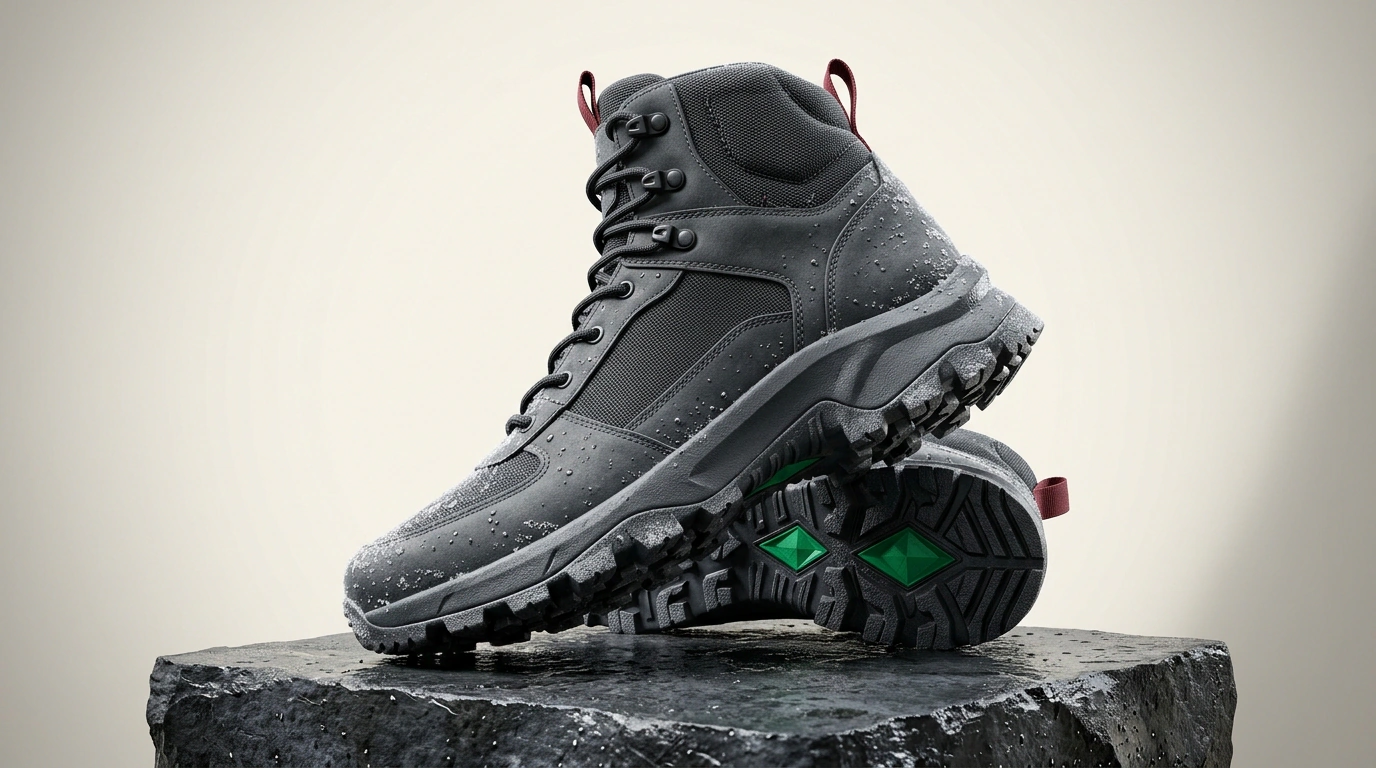
With the first November snow, walking out the door turns into a daily trade-off. Put on your usual sneakers, and you look light on your feet until icy slush and road salt soak through the mesh in five minutes, leaving your toes frozen by the time you arrive. Switch to heavy winter boots, and your feet stay warm, yet by noon you're dragging two bricks around that look like polar expedition gear under straight-leg jeans.
That exact dilemma is why hiking sneakers caught on in the city—a hybrid of running shoes and trail boots offering a lighter last, weather protection, and grippy lugs. A recent MEN TODAY roundup promised ten pairs for the 2026/2027 season, though it actually covers nine models priced from 14,000 to 23,000 rubles. They range from plush urban hybrids to rigid ice-ready tanks—plus one trap model that can leave your feet soaked for serious money.
What You're Paying For: Membrane, Outsole, and Last
Before dropping around 20,000 rubles on fancy mesh or stiff leather, inspect three core parts. First is the membrane: a thin layer packed with billions of microscopic pores per square centimeter that blocks water droplets outside while letting foot vapor escape indoors or on the subway.
The gold standard here is Gore-Tex, and newer releases feature updated Gore-Tex ePE made from expanded polyethylene. As the official GORE-TEX site explains, this replaces the older fluoropolymer to eliminate PFAS—persistent chemicals that barely break down in nature. Outer water-repellent coatings have also shifted to PFAS-free formulas. The film is thinner and lighter, cutting bulk without sacrificing waterproofing. Some brands rely on their own tech, such as Columbia's seam-sealed Omni-Tech and Xero's quick-drying PFAS-free XeroTex.
Second is cushioning and rubber. Impact against frozen pavement is absorbed by EVA foam—the springy, porous midsole foam borrowed from running shoes. Traction on wet tile and packed snow comes from the outsole: Italian Vibram compounds like sticky Vibram Megagrip or all-around Vibram TC5+ set the benchmark. Proprietary outsoles like Columbia's Omni-Grip and On's Missiongrip aim to compete, though their grip on sheer ice varies.
Third is last stiffness and collar height. A mid-height padded collar gives you a sneaker-like stride, while tall, stiff nubuck locks your ankle steady over icy ruts and off-road trails.
Three Camps of Hiking Sneakers: Breaking Down All Nine Models
The nine pairs fall neatly into three tiers. Note that the source warns ruble prices are approximate and vary by size, colorway, seller, and shipping.
In the first camp are the lightest city-ready pairs. Swiss-engineered On Cloudrock Mid Waterproof (from 20,000 rubles) feel and look like everyday sneakers, combining soft Plush Helion superfoam, a Missiongrip outsole, and a waterproof membrane. They look sharp for the office and evening plans, though the price stings.
Close in softness are the Hoka Mafate (around 16,500 rubles), and here hides the roundup's biggest catch. Comfort-wise they feel almost like slippers thanks to dual-layer EVA foam, breathable Ariaprene collars, a flexible heel tab, tough Matryx mesh, and a full Vibram Megagrip outsole. However, the Hoka Mafate has no waterproof membrane—great in dry freezing cold, yet guaranteed to soak through in the first thaw. Rounding out the light tier is the minimalist Xero Scrambler Trail Mid WP (around 14,000 rubles). Its wide "barefoot" toe box never pinches, thin EVA needs zero break-in, and its PFAS-free XeroTex membrane and vegan build dry fast. The trade-off for that featherweight feel is weaker ankle support and a niche look.
The second camp offers practical value without hype tax. The Columbia Transverse acts as a budget alternative to pricey Gore-Tex pairs, though no exact ruble price is listed in the source. For less money you get leather and mesh, a padded collar, a sneaker-like fit, and a fully seam-sealed Omni-Tech membrane, though its Omni-Grip outsole has simpler traction than Vibram.
Right beside it sits a proven workhorse: the Merrell Moab 3 Mid Gtx (around 16,000 rubles). It packs real Gore-Tex, grippy Vibram TC5+, a pigskin leather and mesh upper, and removable contoured insoles with heel cushioning. A gusseted tongue keeps slush from sneaking under the laces. The only caveat is that the upper doesn't suit every foot shape, so ordering without trying them on is risky.
The third camp brings heavy-duty pairs built for ice and weekend trails. The trail-runner-meets-boot La Sportiva Ultra Raptor 3 Mid Gtx (around 18,000 rubles) locks your ankle in nubuck and uses the new Gore-Tex ePE membrane, balanced by a high price and muted color choices. Built for brutal cold and ice, the burly Oboz Bridger 8 (around 19,000 rubles) pairs stiff nubuck with triple-density EVA and deep lugs—and there's an even warmer Bridger 10, though options are limited to just two colorways.
At 20,000 rubles and up, the Salomon Quest 5 Gtx stands out: with a 15-centimeter collar height, full Gore-Tex, and a roomy toe box, the pair weighs just 900 grams. It's a strong pick if you walk plenty around town on weekdays and head into nature on weekends. Capping the budget at around 23,000 rubles, the Arc'teryx Konseal Trek delivers a sleek silhouette with Gore-Tex, Vibram Megagrip, EVA cushioning, and serious ankle support, though its last feels stiffer than softer rivals.
Which Pair Fits Your Routine and Budget
Instead of getting lost in model codes, tie your choice to where you actually walk this winter. The table below narrows all nine pairs down to five everyday scenarios.
| Winter Scenario | Models to Consider | Price Guide | The Trade-Off |
|---|---|---|---|
| City walking without bulk | On Cloudrock Mid / Xero Scrambler | from 20,000 ₽ / from 14,000 ₽ | On is pricey; Xero has lighter ankle support |
| Slush with solid durability | Merrell Moab 3 Mid Gtx / Columbia Transverse | from 16,000 ₽ / budget tier | Merrell needs a try-on; Columbia has simpler rubber |
| Dry cold with no puddles | Hoka Mafate | from 16,500 ₽ | No membrane—will soak through in slush |
| Ice and long freezing days | Oboz Bridger 8 or Bridger 10 | from 19,000 ₽ | Bulky look and only two colorways |
| City + weekend trails | La Sportiva Ultra Raptor 3 / Salomon Quest 5 / Arc'teryx Konseal | 18,000 to 23,000 ₽ | High price; Arc'teryx has a stiff last |
For commuting between home, the subway, and downtown meetings, heavy nubuck is overkill—go with the Merrell Moab 3 Mid Gtx or light On Cloudrock Mid. If your sidewalks rarely get shoveled and turn into skating rinks, you'll be safer in the Oboz Bridger 8 or taller Salomon Quest 5 Gtx.
How to Style Hiking Sneakers and Keep the Membrane Alive
Even a great pair ruins your silhouette if you tuck skinny jeans into them—in the city, that look immediately screams you got lost on the way to a trailhead. Pairs like the On Cloudrock Mid or Merrell Moab 3 Mid look natural with relaxed straight-leg jeans, heavy chinos, or cargos worn over the collar, paired with a modern puffer or parka. Black, charcoal, olive, and sand colorways with a modest collar height blend right into casual outfits, even at a bar in the evening.
The second mistake that kills a waterproof membrane in one winter is tossing boots into a washing machine or drying them on a radiator. Road salt clogs the micropores, while high heat destroys adhesives and leather. Follow this quick protocol from the official GORE-TEX care guide to protect both your waterproofing and your wallet:
Winter Care for Membrane Hiking Sneakers
- Pull out the laces and insoles, then brush off dried mud and road salt with a soft brush.
- Hand-wash in warm water using a mild liquid detergent—never use a washing machine or bleach.
- Air-dry at room temperature stuffed with paper or on gentle airflow away from radiators and heaters.
- Once water stops beading and the upper darkens when wet, clean and dry the pair, then apply a water-based DWR spray.
- Never rub heavy greases or thick waxes into membrane boots unless the leather maker specifically requires it—they clog the pores.