You spot a countdown timer on a course landing page, recognize the cheap urgency trick right away, and ten minutes later you're reaching for your credit card anyway. On an episode of Mark Manson's podcast Solved, Mark and his co-host Drew admit to that exact split. Both guys have spent years dissecting sales psychology, spot every hook from the opening line, and still catch themselves wanting to hit "buy" while admiring a slick pitch.
Intuition tells you a simple plan: memorize the playbook, and your brain will slam the door on any manipulator. In practice, the opposite happens. Book knowledge lives in your conscious logic, while pressure targets hardwired social reflexes where compliance fires before deliberate checking.
From Toothpaste to 'The Engineering of Consent': How Edward Bernays Reinvented Influence
In the early 20th century, ads read like toaster manuals and sold dry numbers: this toothpaste prevents cavities 3.8% better. Nobody tied products to status, emotion, or personal identity.
Everything changed in April 1917. U.S. President Woodrow Wilson had just won reelection promising to stay out of World War I, then abruptly sent troops to Europe. Public backlash was fierce, so the White House created the Committee on Public Information. That's where Edward Bernays—Sigmund Freud's own nephew—made his mark.
Bernays spent summers with "Uncle Siggy" and was the first to fuse psychoanalysis with the press. After the war he opened a PR agency, laid out his method in the 1928 book Propaganda, and called it "the engineering of consent." In 1929, American Tobacco complained that social stigma kept women from smoking. Bernays linked cigarettes to the suffragist movement, turning a smoke on the street into a symbol of women's freedom, and sales skyrocketed.
A similar stunt worked for bacon. Bernays surveyed 5,000 doctors, got 90% to agree a hearty breakfast was healthy, and launched ads backed by "4,000 physicians." He also pioneered celebrity endorsements, paid articles disguised as journalism, and events like Ivory Soap kids' carving contests. Ever since, marketing has targeted emotion and identity instead of dry spec sheets.
Cialdini's Six Levers: The 'Free' Massage, the VIP Table, and the Three-Day Timer
Half a century later, psychologist Robert Cialdini mapped out how influence works. As a college student, he kept buying useless encyclopedias from door-to-door salespeople with his last dollars, got mad at himself, and went on to study the science of compliance. In Influence, he identified six core mental shortcuts, later adding a seventh in Pre-Suasion: unity with "your own kind."
Reciprocity exploits the ancient rule of "I scratch your back, you scratch mine." In one study, students asked flat-out to buy raffle tickets mostly refused. When handed a free bottle of Coke first, sales jumped dramatically. That's why restaurants drop mints with the check and supermarkets hand out free samples.
Manson's co-host Drew walked straight into this trap at an all-inclusive resort. He accepted a free one-hour massage, and right afterward got stuck in a six-hour sales pitch for a $10,000 timeshare. The clearest red flag here is a lopsided gap between a small favor and the ask that follows. Dating works the same way: a guy buys a woman expensive drinks or showers her with early gifts, quietly putting her in debt for attention and intimacy.
Commitment and Consistency weaponize our fear of breaking our own word. In a 1960s experiment, homeowners happily put a tiny safe-driving sticker in their window, and two weeks later were far more likely to allow a huge, ugly billboard on their lawn. Without the sticker first, almost everyone said no. Online sales use the same upsell ladder: you buy a $20 course, try on the identity of "someone investing in growth," and soon pay $150 much more easily. Social media makes the trap tighter—with public archives everywhere, people hate admitting they changed their minds.
Social Proof pushes us to follow the crowd. A hotel sign saying "most guests reuse their towels" beats a generic pitch about saving the planet, and planted actors staring up at a skyscraper quickly draw a crowd craning their necks. A friend of Manson's in a half-empty Boston club pulled an ordinary table near the dance floor, wrapped it in four velvet ropes, and set down a "Reserved" sign. Nobody was sitting there, yet guys immediately lined up for the "VIP table." Online, the same reflex gets hacked with fake reviews, bot-inflated follower counts, and betting ads fronted by LeBron James or Brazil's top World Cup streamer.
Authority silences skepticism at the sight of a lab coat, uniform, or title. In Stanley Milgram's early-1960s experiments (the podcast misremembered them as the 1970s, though the real trials ran in 1961–1963), ordinary people delivered electric shocks simply because a scientist with a clipboard told them to. Today, phone scammers use the exact same playbook posing as tax officers or law enforcement. Nassim Taleb offers a clean filter called "skin in the game": trust an expert whose own income and reputation burn if they're wrong. A seasoned plumber pays out of pocket for a flood; an armchair theorist risks nothing.
Liking and Unity work quietly—we naturally give in to people who seem similar to us and feel like part of our tribe. Scarcity, by contrast, hits hard through fear of missing out. A fake countdown timer on a website resets when you refresh the page, yet Manson admits a single line—"offer expires in 3 days"—literally doubles sales. In relationships, that same tactic turns into playing hard to get: "I'm leaving town tomorrow," constant cancellations, and deliberate ghosting to inflate perceived value.
Three Pricing Tiers, an Empty 'Because,' and Gaslighting: Hidden Everyday Tricks
In chats and negotiations, a few extra tactics stack onto the core six. Anchoring sets your reference point with the first number you hear: quote $3,000 before dropping to $1,000, and a grand suddenly feels like a bargain. That's why websites almost always show three tiers: the expensive one anchors high, the cheap one looks bare, and the middle one feels smart. Cialdini tested this "door-in-the-face" pullback on students in the 1970s. Almost everyone refused to take troubled teens to the zoo for a day, yet after hearing an absurd request to volunteer two hours a week for two years, far more students agreed to the single zoo trip.
Framing and the illusory truth effect work right beside it. The exact same data presented as "100 dead" versus "400 saved" flips your gut reaction. And repeat any claim—or a funded myth about dietary fat—hundreds of times, and your brain starts treating the familiar line as fact.
In relationships, projection and gaslighting hit hard: a manipulator blames you for their own flaw ("I'm not selfish, you're the one only thinking about yourself"), putting you on defense. For everyday favors, the "because" effect does the heavy lifting. Manson credited Cialdini, though Harvard psychologist Ellen Langer and her colleagues ran the famous 1978 study. Asking to cut a copy-machine line with five pages and no reason worked 60% of the time. A real rush got 94%, while the empty excuse "because I have to make copies" still got 93%. The word "because" flipped on autopilot. Yet with twenty pages, that empty excuse collapsed to roughly 24%, matching no reason at all: when the cost rises, the brain demands real substance.
Finally, two short phrases pack a punch. Adding "but you are free to refuse" melts resistance by restoring a sense of choice. And an identity label—like "Drew, you're such a great cook and loyal friend, can you make dinner?" or a salesperson praising your refined taste—pressures you into paying off the compliment with your wallet or time.
Why Knowing the Tricks Doesn't Save You—and What Holds the Line in Real Time
Compare expectations with real life, and the picture is sobering. At the end of the chapter "Can You Even Defend Yourself?", Manson and Drew admit that even sales pros fall for familiar moves because knowing terminology barely slows fast reflexes. The episode cuts off with a teaser for part two, so for practical defenses let's turn to Robert Cialdini's own guidance.
Against reciprocity, use cognitive relabeling without getting paranoid. Turning down every small treat is silly—just spot a lopsided exchange and mentally reclassify Drew's "free" massage or a pushy gift as a sales tool. Once you strip off the "gift" label, the sense of debt vanishes.
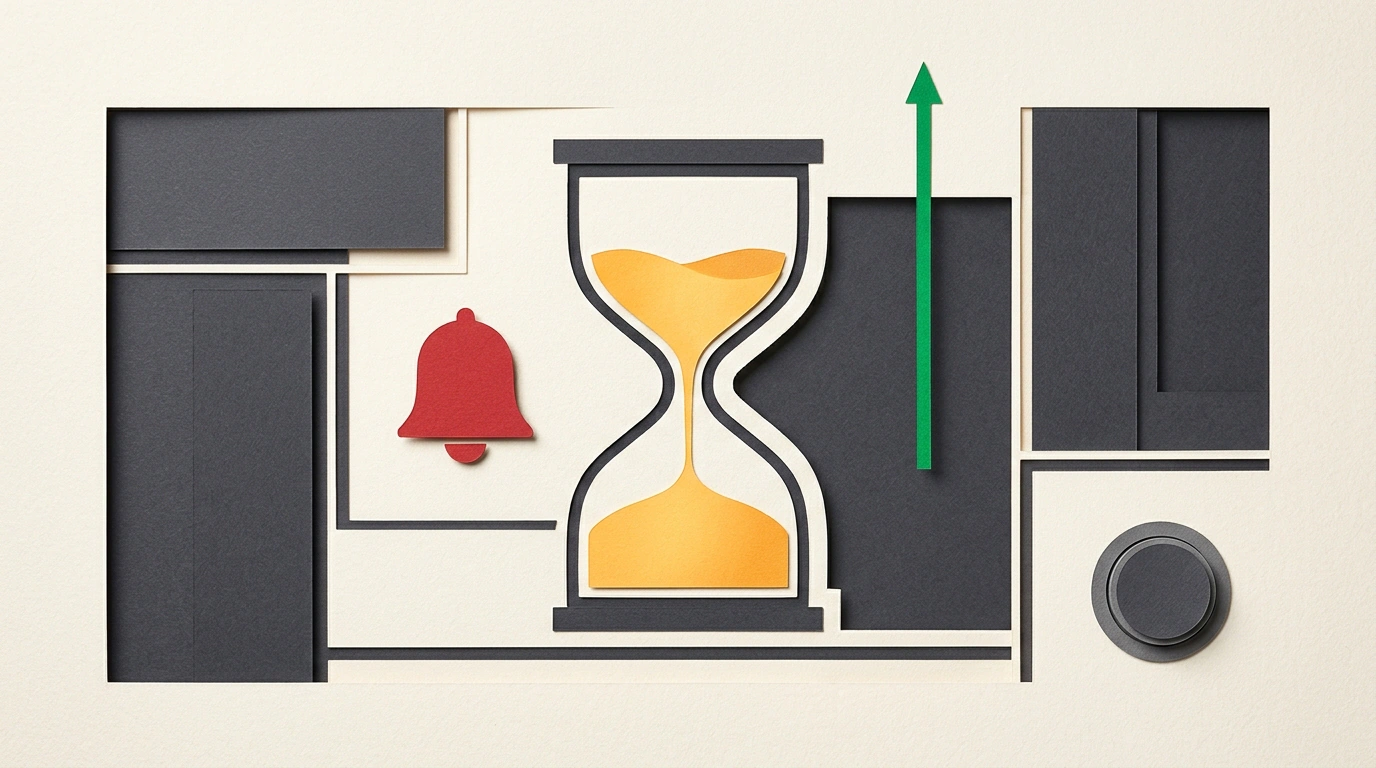
Against scarcity, reframe the spike of anxiety. When a timer ticks down on your screen or a woman in chat drops a "decide right now" ultimatum, your pulse jumps and logic shuts off. Treat that rush of urgency as a flashing red stop sign and ask one question: "Do I actually need this on its own merits, or did the 'limited' tag just hook me?"
The third step is moving the decision off someone else's stage. As long as you're sitting in a sales pitch, standing at the register, or heated in an argument, the other person controls the frame. Close the tab, step outside for air, and push every "yes" to tomorrow—in a cool head, social reflexes lose their grip.
- Strip the 'gift' label: call an unsolicited freebie, drink, or compliment a sales move and check whether the favor matches the ask.
- Catch the urgency spike: the second you feel rushed to act 'right now,' pause and judge the real value without timers or scarcity.
- Change context before answering: wait at least until the next day and step out of the room, call, or chat where emotions are running high.