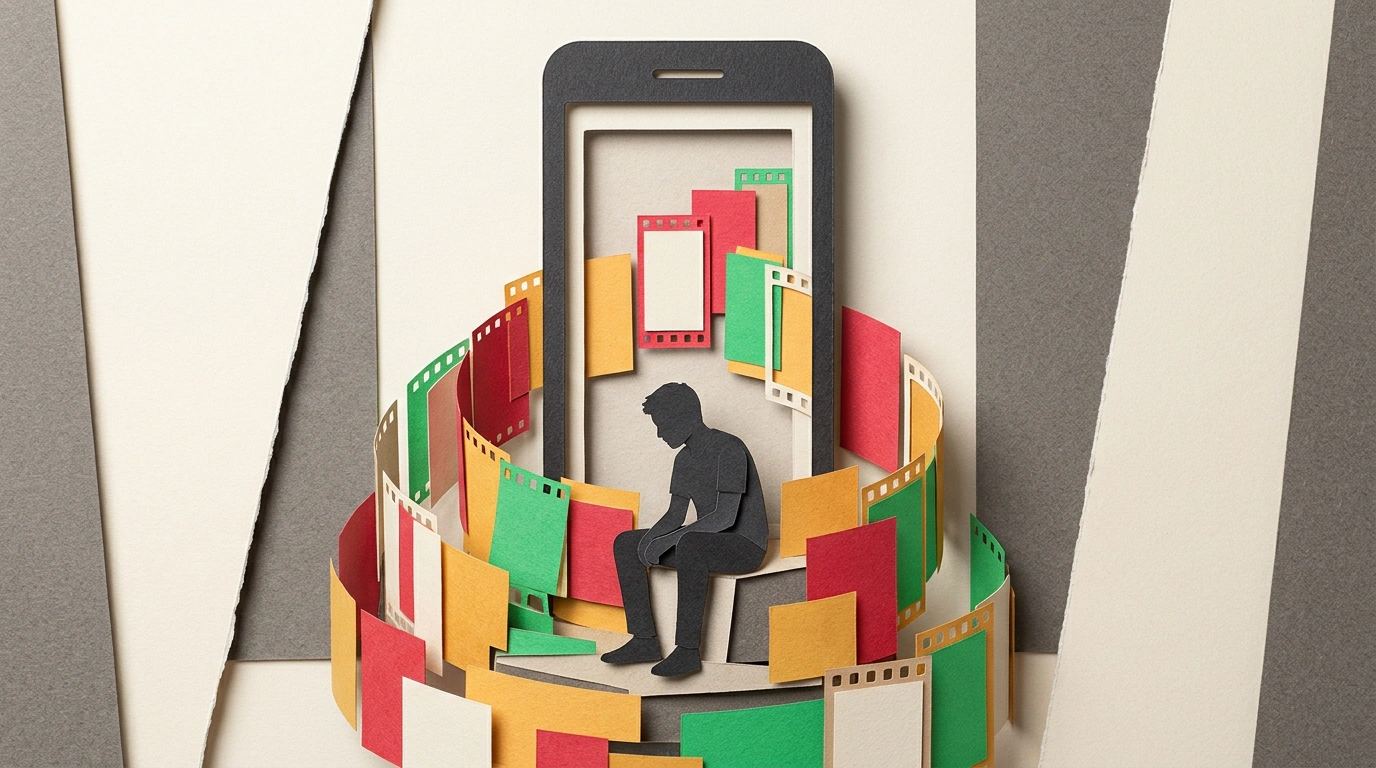
On paper, things look great: 93% of young people have close friends in real life, and nearly half rate those relationships as top-notch. So where would loneliness come from? Yet in the same study cited by MEN TODAY, among those glued to their smartphones, 40–42% report severe loneliness — twice the normal rate. You have people around you, yet inside you feel empty and anxious. It's not because everyone shut you out. It's about where your screen time goes.
For a guy under 25, this hits confidence and social energy hard. When you burn your fuel scrolling late at night, you show up to a date or a new group feeling drained. Let's see which digital habits actually drain your battery and which ones are harmless.
Online buddies vs. in-person hangouts
Texting feels easy: drop a joke, send a meme, trade voice notes. 37% of participants in the MEN TODAY survey report having online-only friends, yet only a quarter of them (25%) call those bonds truly high-quality.
Even when an internet buddy feels close, purely virtual friendships tend to sit alongside loneliness, anxiety, and low mood. Meeting face to face, by contrast, is linked to lower anxiety and higher confidence. Your brain reads real connection through eye contact, tone of voice, and shared laughter in the room, not emojis. Chatting gives a cheap substitute: it feels like you socialized, yet you get zero real grounding or spark.
'I'm just relaxing with Reels': why short clips hit harder than long videos
It's natural to ask: "Wait, I just watch short clips after class or work to unwind. Do a couple dozen videos really hurt anything?"
The internet itself doesn't break people. According to the MEN TODAY report, studying, solving tasks, and creating content slightly lift mood, while looking up info and watching long-form videos do almost no harm. The one online habit that clearly drags well-being down is short-form video. 72% of young people watch it.
Systematic reviews and meta-analyses on PMC explain why. Researchers separate casual viewing from compulsive scrolling, where your thumb pulls the feed on autopilot. That compulsive scrolling is steadily linked to loneliness (correlations reach r ≈ 0.33), anxiety, and falling attention spans.
An algorithmic feed serves a fresh emotional hit every fifteen seconds. Your brain gets used to rapid sparks, loses its brakes, and runs out of patience for slow, real conversations. A displacement effect kicks in too: the feed quietly eats the evening hour that could have gone to sleep, the gym, or meeting a friend. The link runs both ways: boredom pushes you into the feed, and the feed cuts you off further from real life.
The Digital Attachment Index and the 'always online' trap
The MEN TODAY review highlights a Digital Attachment Index. It tracks three everyday signs: how much time goes into apps, whether you take your phone to bed before sleep, and whether panic hits without your device. That high-attachment group shows the exact 40–42% spike in severe loneliness, while anxiety and depressive symptoms hit more than half of them — twice as often as among relaxed users.
Digital pressure adds the final blow: feeling forced to check chats constantly and reply fast so you don't fall out of the loop. One in four (25%) admits to feeling this, and loneliness shows up twice as often in this group too. When you twitch toward your screen every three minutes waiting for a ping, your brain lives in low-grade panic.
You don't need to move to the woods with a flip phone. Just plug the two biggest leaks draining your energy.
- Keep your phone out of bed. Charge it across the room: thirty screen-free minutes before sleep bring back real rest and a clear head in the morning.
- Drop the 'always available' mode. Mute push notifications for extra chats and social apps. Replying every couple of hours is completely normal.
- Swap short feeds for long-form or real life. Trade half an hour of evening scrolling for a long YouTube video, a workout, or calling a friend to set up a meetup.