Issue October 29Daily digest · 8 items
In this issueReviewed 68 sources, gathered 8 items
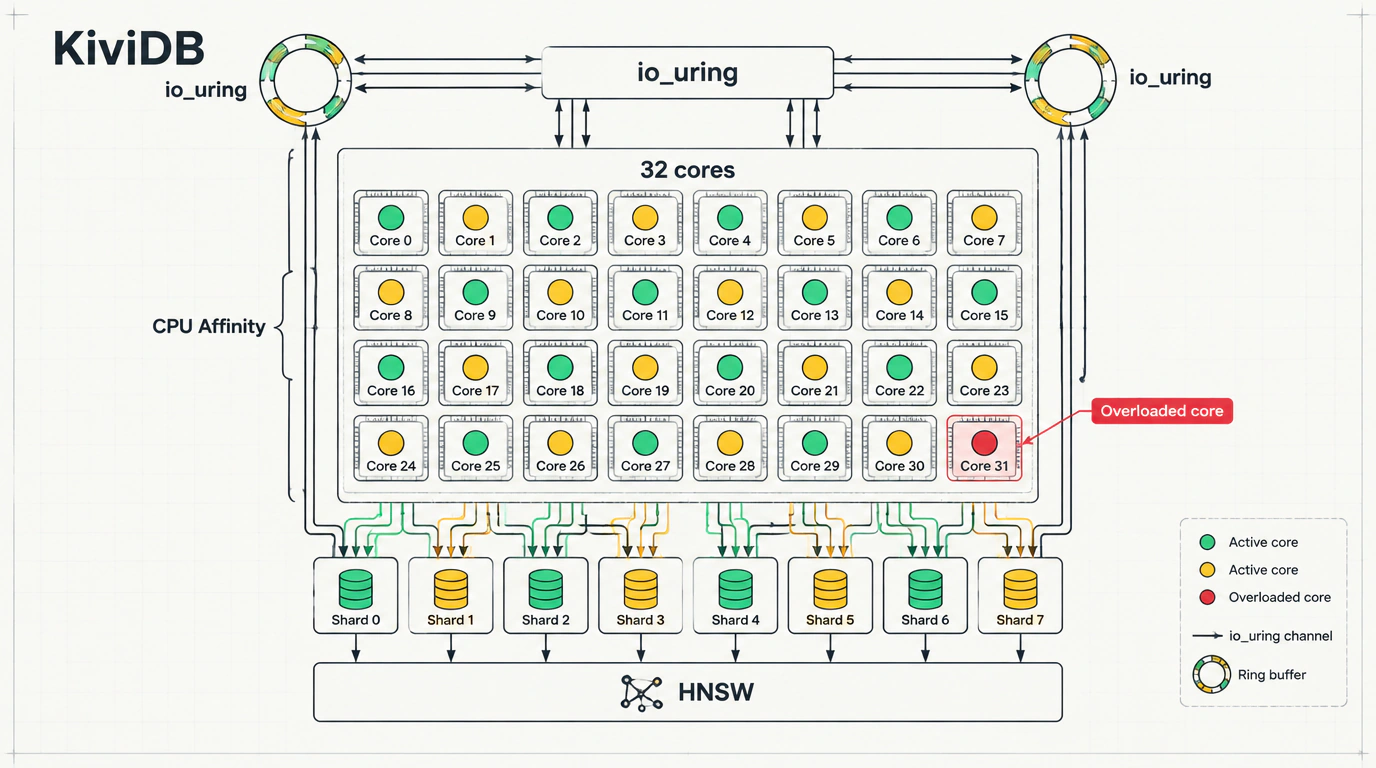
Infographic architectural blueprint of KiviDB sharding showing threads pinned to CPU cores and io_uring ring buffers.
ArticleDevelopmentOpen SourceDatabasesRust

KiviDB: A Multi-Threaded Rust Alternative to Redis and Valkey

Under heavy load, Redis's single-threaded event loop often pins a single CPU core at 100%, forcing engineers to maintain sprawling clusters across dozens of ports. Built in Rust, KiviDB introduces core-sharded memory, asynchronous io_uring I/O, and native RESP2/RESP3 protocol support.

It sustains over 20 million requests per second and stores vector indexes directly in binary snapshots. That speed, however, comes with AGPL-3.0 licensing caveats and specific container security profile requirements.


👍 0
DevOps&SRE LibraryKiviDB GitHub Repository
October 29
Isometric 3D model of the SPACE hardware sandbox featuring an isolated KVM-backed Firecracker microVM.
NoteAI AgentsSafetyAutomationSandboxes

SPACE: A Firecracker microVM Sandbox for AI Agents

Many teams still naively assume standard Docker containers are enough to contain risky code generated by AI agents. Because containers share the host's kernel, a single kernel vulnerability turns that isolation into Swiss cheese.

I dug into SPACE from Perplexity AI, where every agent session runs inside a hardware-isolated Firecracker microVM with sub-second cold starts and external secret injection. Running your own microVM cluster, though, requires KVM support and rethinking your network perimeter.

👍 0
DevOps&SRE LibraryPerplexity AI SPACE Repository
October 29
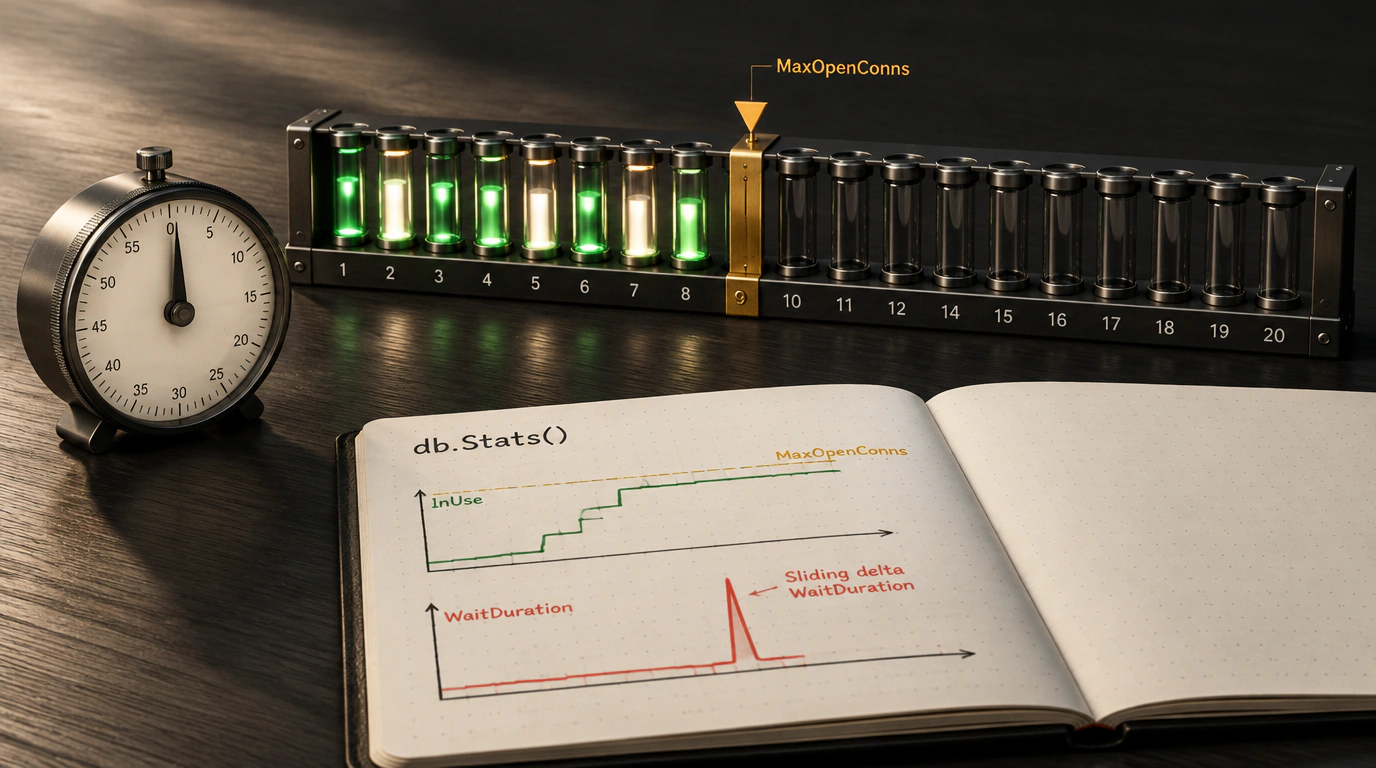
Minimalist studio still life with a mechanical timer and transparent capsules representing the Go database/sql connection pool.
NoteDevelopmentDataOptimizationBackend

Diagnosing Connection Pool Queueing in Go's database/sql

A classic high-load paradox in Go services: database logs show every SQL query finishing in a brisk two milliseconds, yet user-facing endpoints take 1.5 seconds to respond.

The culprit is hidden pool starvation inside database/sql, where goroutines spend seconds waiting for a free socket inside the process before a single byte hits the wire. Tracking sliding deltas of WaitCount and WaitDuration from db.Stats() exposes the queue immediately. Blindly raising the open-connection ceiling, however, will quickly crash the database itself.

👍 0
Библиотека Go-разработчикаGo Documentation: Managing connections
October 29
Isometric architectural model of a scalable software platform with orderly modular blocks and parallel wiring buses.
LongreadDevelopmentArchitectureAutomationEngineering

Millions of Lines of Code: Designing Large Enterprise Systems Without Spaghetti

Once a codebase crosses a million lines, familiar frameworks and heavy OOP turn architecture into a tangled web of implicit dependencies.

I broke down the engineering insights of Dmitry Kmaladze from HowProgrammingWorks, showing how long-lived systems rest on three disciplines:

  • Strictly separating pure business logic from network transports and databases;
  • Isolating system wiring into a single composition root;
  • Replacing implicit annotation magic with explicit contracts.

Enforcing that discipline across hundreds of developers, however, proves harder than writing any code.

👍 0
HowProgrammingWorksИнтервью Дмитрия Кмаладзе: Миллионы строк кода на YouTube
October 29
Cinematic night-time still life of an engineer's desk with dual screens running CLI Aider and the visual Cline extension.
ArticleAI AgentsDevelopmentAutomationLLM

Aider vs. Cline: Two Architectures for Autonomous AI Coding Agents

Which is safer for autonomous AI coding: letting the agent commit straight to your repository or isolating edits inside a shadow copy?

CLI-based Aider bets on clean Git history and an Architect/Editor split that cuts token spend by up to 80%. The Cline extension for VS Code uses a shadow-git repository with visual approval for every diff. Real production safety, though, depends less on the UI and more on strict guardrails in AGENTS.md.

👍 0
DevOps by REBRAINAider GitHub Repository
October 29
Modern editorial poster illustration featuring PostgreSQL tools for vector search, transaction rollback, and data masking.
Thematic roundup4 sectionsDataOpen SourcePostgreSQLSafety

New PostgreSQL Tools: From Fast Vector Search to Transaction Rollback

Every time a new paradigm sweeps the industry, analysts predict the demise of relational databases—and PostgreSQL keeps proving them wrong.

Instead of adopting niche datastores, the community ships extensions: pg_vectorsearch indexes 100 million vectors in under two hours, pgVolvra rolls back a botched UPDATE by transaction ID, and PostgreSQL Anonymizer 3.3 seals data leaks. Keeping this stack fast without hurting write throughput, however, demands careful tuning.

👍 0
Postgres WeeklyPostgreSQL NewspgVolvra GitHub Repository
October 29
Dynamic vector poster composition of the Vite+ 1.0 frontend toolchain with Oxc linting modules and the Nuxt DevTools overlay.
Thematic roundup3 sectionsDevelopmentOpen SourceFrontendTools

The Vue and Nuxt Ecosystem: Vite+ 1.0, Nuxt DevTools v4, and Faster Nuxt Icon

Frontend developers have spent years paying a fragmentation tax: juggling incompatible ESLint, Prettier, TypeScript, and Vitest configs on every commit.

VoidZero's Vite+ 1.0 changes the game by unifying linting and formatting on the fast Rust-based Oxc engine under a single config. Meanwhile, Nuxt DevTools v4 embeds Devframe for deeper component debugging, and Nuxt Icon v2.6.2 eliminates SSR hydration mismatches. Leaving behind legacy ESLint plugins, however, still requires auditing custom rules.

👍 0
VueDigestNuxt Icon GitHub Releases
October 29
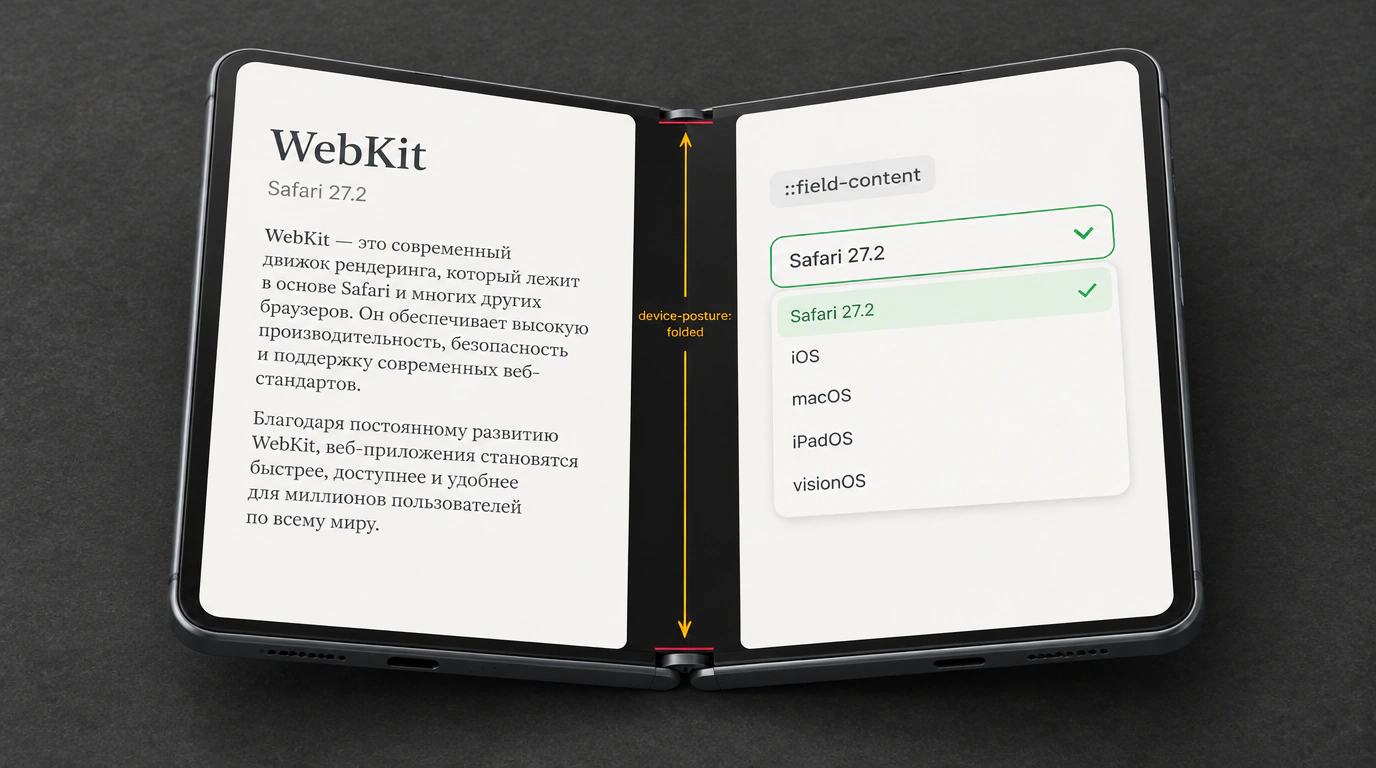
Photorealistic 3D render of a book-style foldable smartphone displaying an interface adapting to the hinge alongside a styled Safari select.
ArticleDevelopmentFrontendBrowsersStandards

What's New in WebKit for Safari 27.1 and 27.2: Foldable Screens and Styled Selects

For two decades, the HTML select dropdown remained the web's most frustrating control: styling it meant JavaScript libraries that broke accessibility and screen readers.

I examined the WebKit updates in Safari 27.1 and 27.2, where the ::field-content pseudo-element lets you style the selected option in pure CSS without hacks. Meanwhile, Device Posture API media queries handle dual-screen foldables in three lines of code. Production adoption, however, still depends on how fast browsers roll out updates.

👍 0
Веб-стандартыWebKit Features for Safari 27.2
October 29