Issue October 30Daily digest · 9 items
In this issueReviewed 68 sources, gathered 9 items
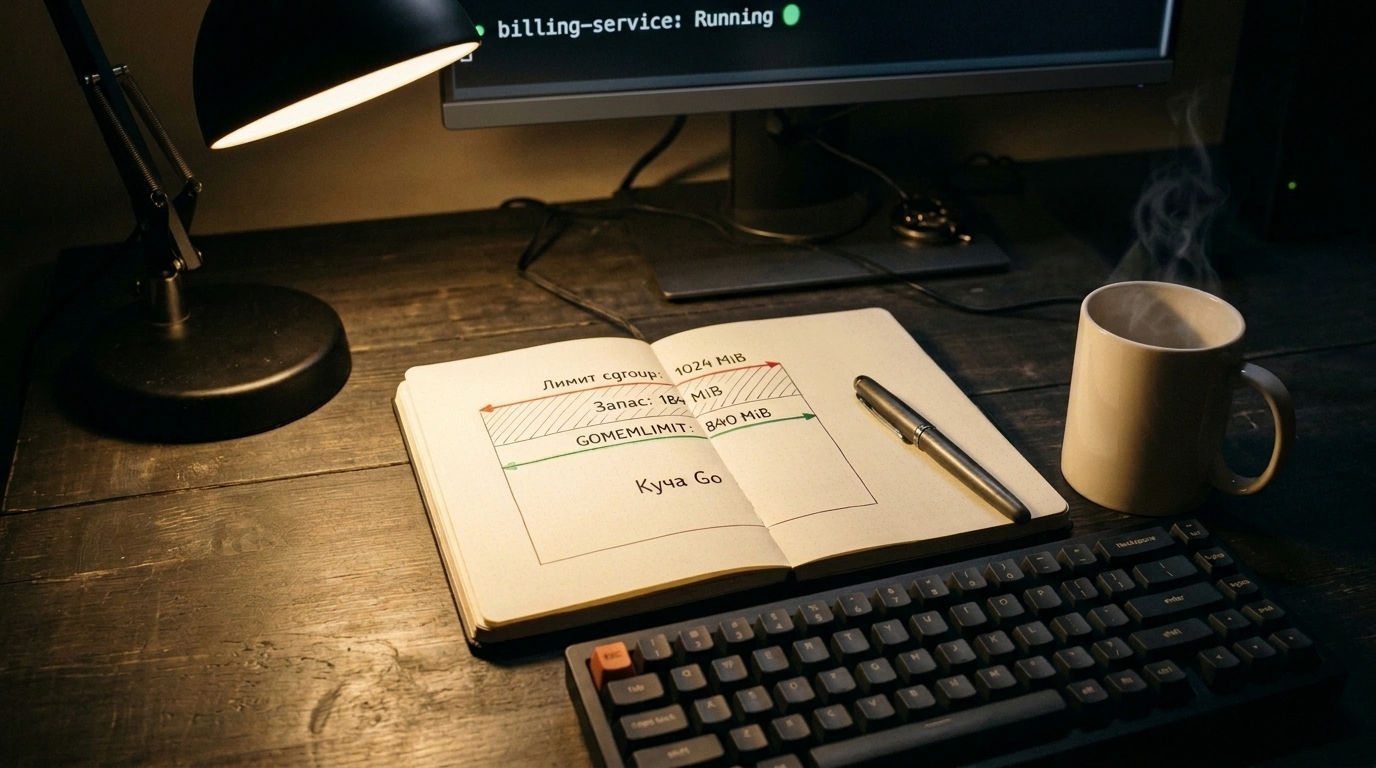
Still life of an engineer's desk featuring a notebook with GOMEMLIMIT memory calculations, a mechanical keyboard, and a monitor displaying a healthy Kubernetes pod status.
LongreadDevelopmentDataKubernetesGo

Go in Kubernetes: How Requests, Limits, and GOMEMLIMIT Prevent OOMKilled

A Go service container suddenly crashes with exit code 137 even though your RAM charts showed no signs of trouble. The classic trap is that the Go runtime cannot see cgroups limits and happily grows the heap until the Linux kernel's OOM Killer shoots the process down.

Pairing a carefully sized GOMEMLIMIT buffer with the native GOMAXPROCS container awareness introduced in Go 1.25 solves this cleanly. Yet calculating a safe headroom between the heap and the pod limit rarely succeeds on the first try.


👍 0
DevOps&SRE LibraryLearnKube — Go CPU and Memory Requests and Limits in KubernetesGo Runtime Documentation: GODEBUG Settings
October 30
European ligne claire BD comic illustrating a frontend developer watching CrUX metrics shift from red penalties to the green zone with SPA soft navigations.
ArticleDevelopmentAnalyticsFrontendChrome

CrUX for SPAs: How Chrome Measures LCP, INP, and CLS Across Soft Navigations

Core Web Vitals reports carried an unfair bias for years: Single-Page Applications built with React or Vue received artificially low scores in Google Search Console simply because CrUX telemetry could not track route changes without a full page reload. Every click and delay across a long session got piled onto the initial landing screen.

With Chrome 151, that changed as the browser team rolled out experimental metrics supporting Soft Navigations. For mobile SPAs, the share of sites with a Good LCP score jumped from 26% straight to 87%. Still, the search engine will not rewrite its ranking rules until May 2027.

👍 0
Библиотека фронтендераweb.dev — Experimental soft navigation metrics now available in CrUX
October 30
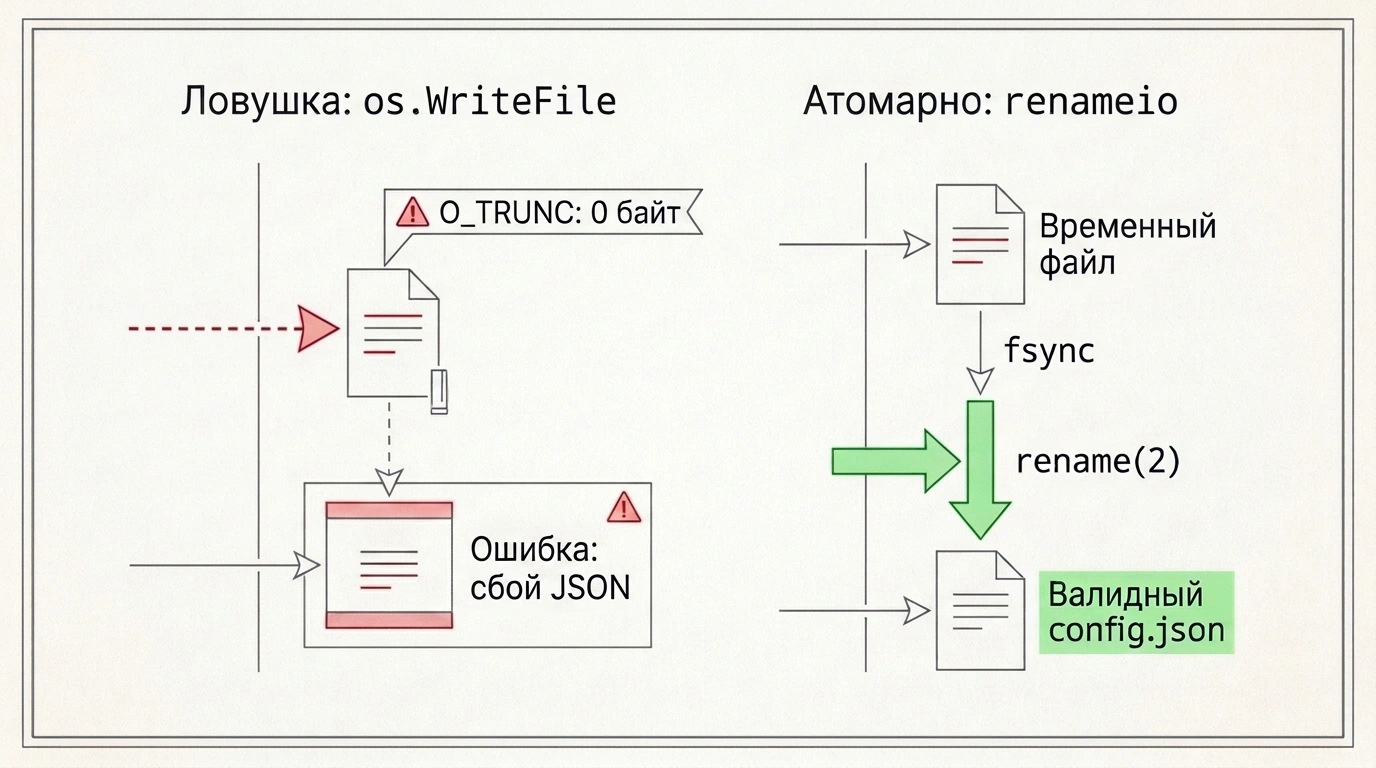
Infographic patent-style blueprint showing atomic file writes in Go using a temporary file and the POSIX rename syscall to prevent O_TRUNC race conditions.
NoteDevelopmentSafetyGoStorage

Atomic Config Writes in Go: Why renameio Beats Plain Overwrites

Overwriting a configuration file with the standard os.WriteFile seems trivial until a race condition hits production. The O_TRUNC flag zeroes out the file on disk immediately, leaving a concurrent service reading a completely empty config for a fraction of a second.

The google/renameio/v2 library fixes this by writing to a temporary file on the same disk partition, calling fsync, and swapping atomically via the POSIX rename syscall. Even this mechanism, however, cannot always guarantee safety during a sudden server power loss.

👍 0
Библиотека Go-разработчикаgithub.com/google/renameio — Atomic file replacement for Go
October 30
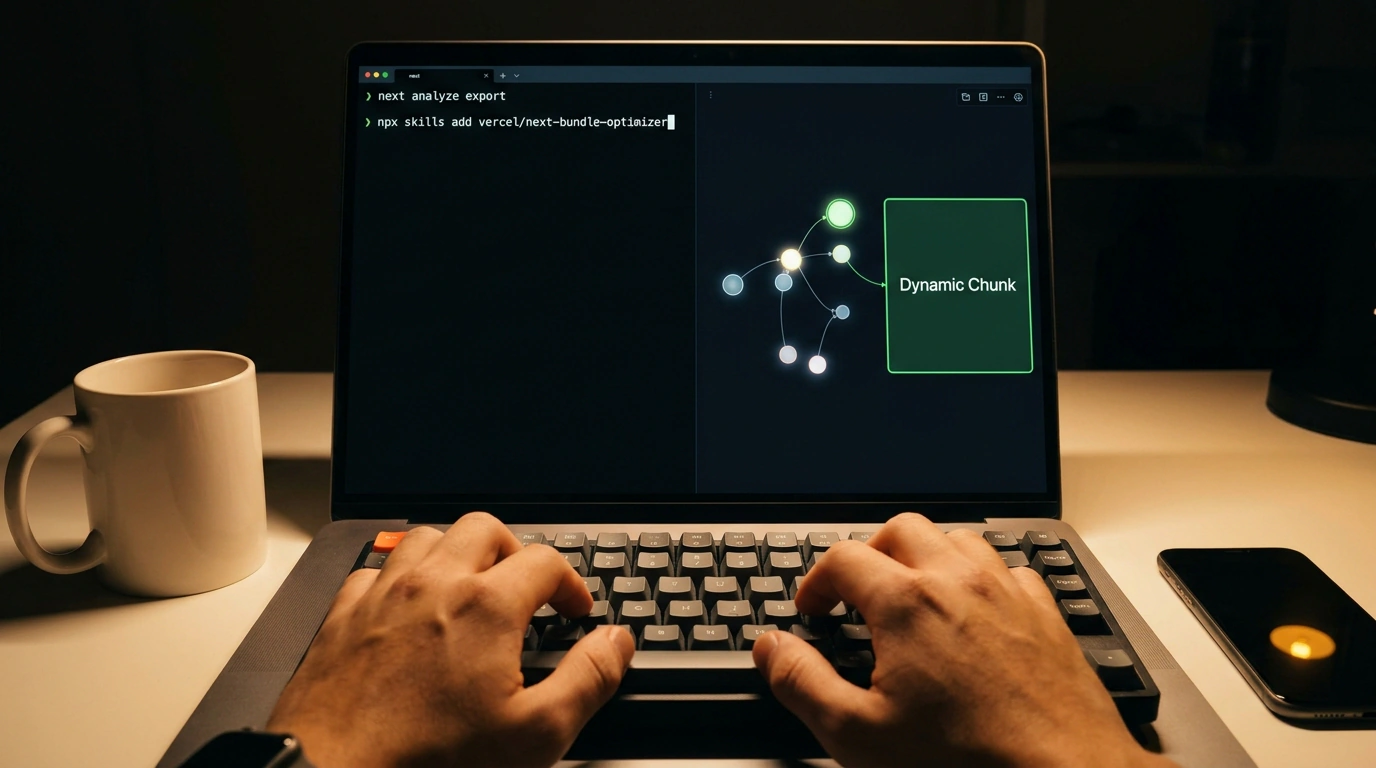
Cinematic first-person POV shot at an engineer's laptop showing a terminal run of a Next.js bundle-optimization AI skill alongside a module dependency graph.
NoteDevelopmentAI AgentsNext.jsFrontend

Optimizing Next.js Bundles with AI Agents and Turbopack Bundle Analyzer

Staring at colorful Webpack Treemap rectangles by hand is nobody's idea of fun, especially when a modern Next.js app sprawls across hundreds of chunks. One careless utility import in a client tree can quietly drag megabytes of dead weight along with it.

Turbopack Bundle Analyzer's ability to export the module graph as structured JSON lets AI agents take over this grunt work. They trace bloated branches on their own and open pull requests with targeted optimizations. Teaching an agent not to break your architecture, though, takes more than one attempt.

👍 0
Next.js BlogNext.js Documentation — Turbopack Bundle Analysis and Agent Skills
October 30
Staged still life featuring four modular blocks representing TypeScript and Node.js tools on a dark textured desk.
Thematic roundup4 sectionsDevelopmentOpen SourceTypeScriptNode.js

Node.js and TypeScript Tools: Typed SQL, Virtual FS, Telemetry, and Graph Linting

The Node.js and TypeScript ecosystem is steadily shedding heavy build steps and extra abstractions, shifting reliability guarantees onto the compiler and built-in platform primitives:

  • Direct strict typing for .sql files in TypeScript 7.1 with zero code generation;
  • Running packaged Node apps from a single signed ZIP archive via node:vfs;
  • Unified distributed tracing inside a single OpenTelemetry JS 3.0 SDK.

The fourth tool in this roundup puts strict guardrails around architectural boundaries in monorepos.

👍 0
Node WeeklyReylo — Typed SQL in TypeScriptbundle — Single-file signed Node appsOpenTelemetry JS 3.0 Migration Guide
October 30
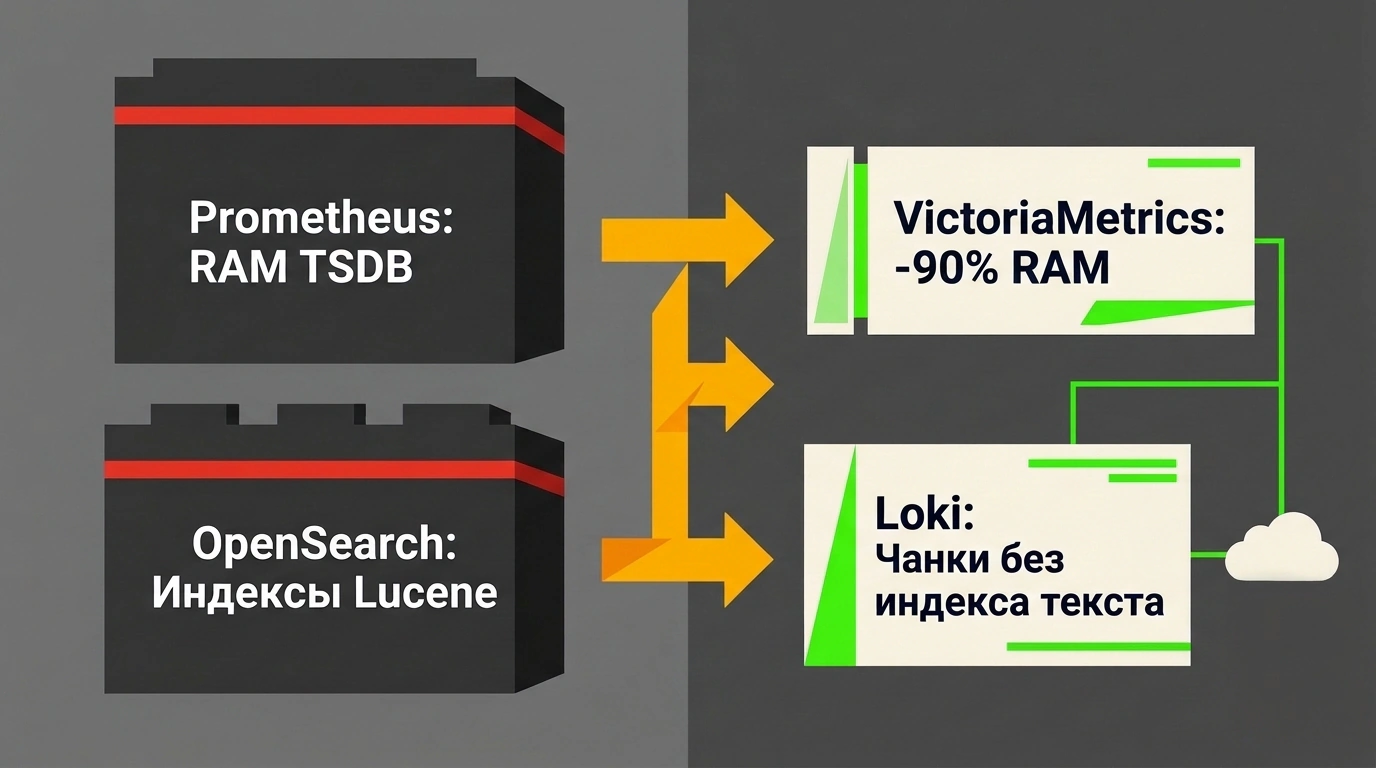
Modern editorial vector illustration contrasting heavy monolithic Prometheus and OpenSearch stores with compact VictoriaMetrics and Loki.
NoteDevelopmentDataInfrastructureMonitoring

Prometheus vs. VictoriaMetrics and Loki vs. OpenSearch: Choosing an Observability Stack

Which observability stack fits a growing microservice infrastructure best: battle-tested CNCF standards or leaner modern alternatives? On one side stand classic Prometheus and OpenSearch with full-text inverted indexes; on the other, VictoriaMetrics and Grafana Loki built for dramatic RAM and disk savings.

With millions of dynamic series and cardinality spikes, VictoriaMetrics uses up to 15x less RAM, while Loki cuts log storage bills by 80%. Even so, not every architect is ready to give up instant full-text search.

👍 0
DevOps by REBRAINVictoriaMetrics Documentation — High-performance TSDBGrafana Loki Documentation — Like Prometheus, but for logs
October 30
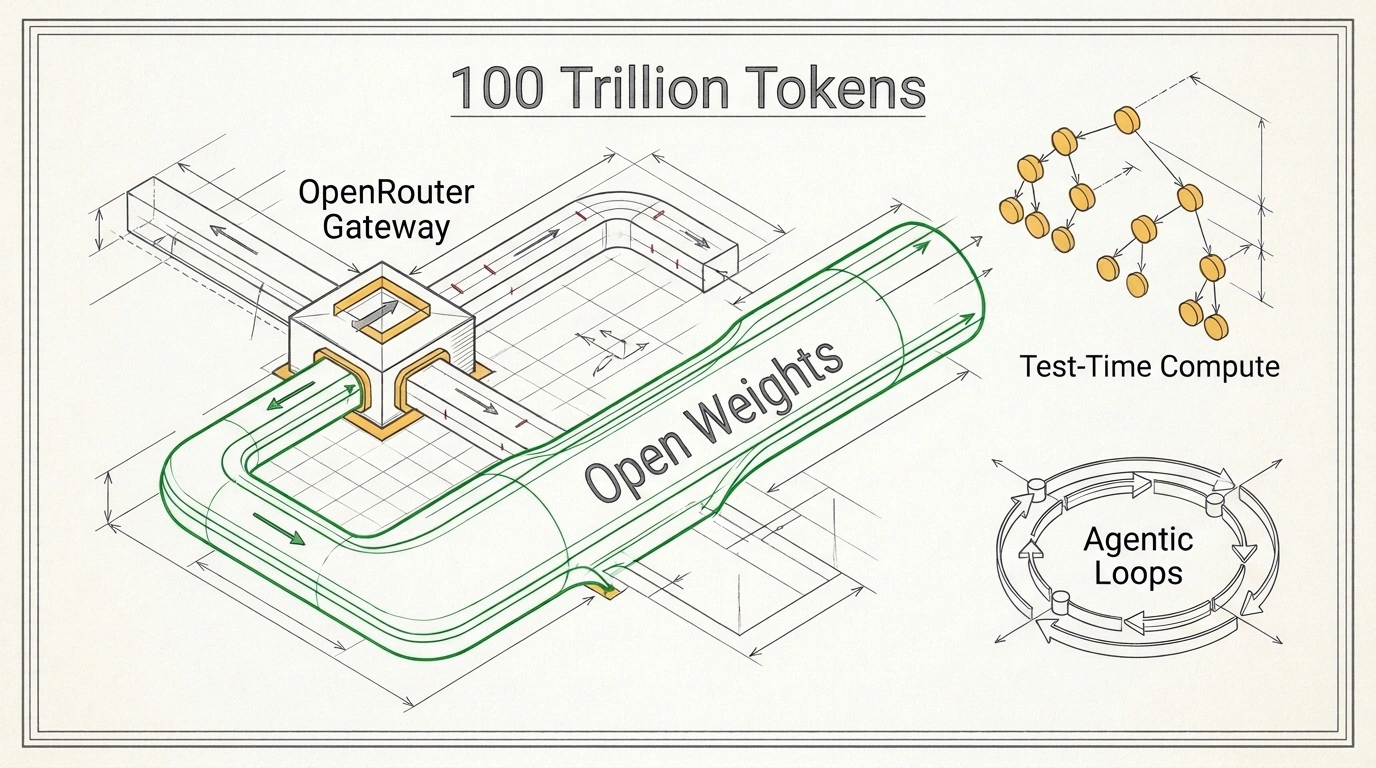
Infographic blueprint of a 100-trillion-token global inference architecture showing request flows through the OpenRouter gateway and open-model nodes.
LongreadAILLMAnalyticsOpen Source

Anatomy of 100 Trillion Tokens: How Open Models and Agentic Compute Are Reshaping AI

A joint study of 100 trillion inference tokens by a16z and OpenRouter shattered the biggest corporate AI myth. Despite predictions of total dominance by closed US giants, open-weight models led by DeepSeek and Qwen captured the lion's share of real-world traffic.

Inference is no longer simple text generation: the shift to reasoning models and agents triggered Jevons Paradox, where falling prices sparked a hundredfold surge in usage. Overcoming legacy prompt inertia in live backends, however, remains a steep hurdle for many teams.

👍 0
System Design & HighloadState of AI: An Empirical 100 Trillion Token Study with OpenRouter (a16z)arXiv:2601.10088 — An Empirical 100 Trillion Token Study
October 30
Dramatic chiaroscuro still life of a database engineer's workstation breaking down PostgreSQL latency between lock waits and CPU execution time.
NoteDevelopmentDataPostgreSQLOptimization

Diagnosing PostgreSQL Bottlenecks: From p95 Latency to pg_stat_statements

Why does a service crawl at p95 latency when database monitoring shows the CPU is barely busy? Throwing a bigger server at the problem will not help: the real culprit is usually hidden transaction locks and buffer cache eviction rather than a lack of cores.

Instead of blindly restarting PostgreSQL, a step-by-step workflow splits execution time from wait time via pg_stat_activity, while pg_stat_statements isolates the top three offending queries. Clearing a lock without disrupting neighboring sessions, though, takes careful precision.

👍 0
SQL PortalPostgreSQL Documentation — pg_stat_statements
October 30
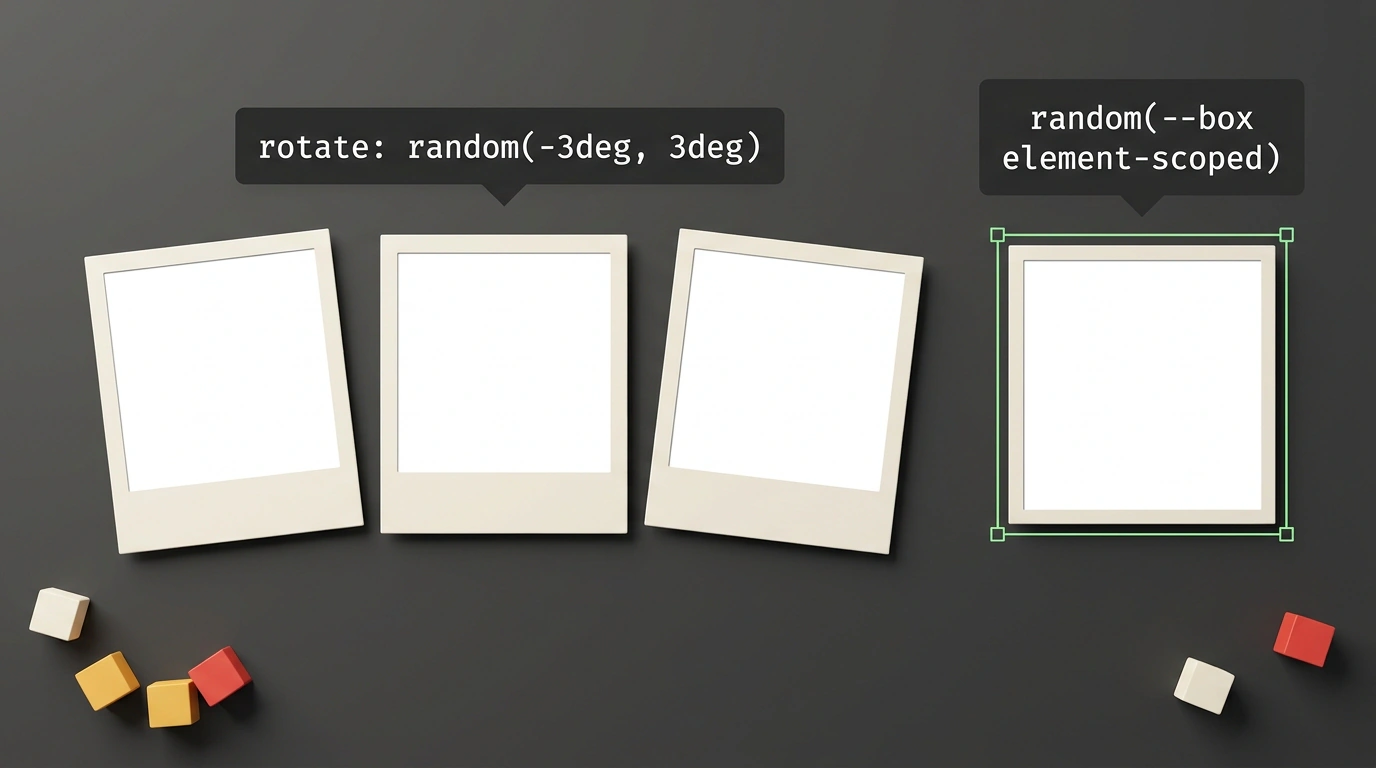
Surreal still life with Polaroid prints scattered at organic random angles alongside a perfect square governed by CSS random() rules.
ArticleDevelopmentDesignCSSFrontend

Controlled Chaos in CSS: What the New random() Function Can and Can't Do

Sterile mathematical perfection on web pages has long been a quiet curse of digital design. To add organic warmth and subtle analog imperfection, engineers had to choose between Math.random() scripts that hurt initial paint latency or preprocessors churning out hundreds of bloated CSS lines.

The CSS Values and Units Level 5 spec introduces a native random() function with modular grid steps and shared keys for synced dimensions. Getting the generator to behave identically across every browser, however, is still a work in progress.

👍 0
Веб-стандартыSmashing Magazine — Embracing Playful Imperfection With The CSS random() FunctionW3C CSS Values and Units Module Level 5 Specification
October 30