Issue November 10Daily digest · 8 items
In this issueReviewed 68 sources, gathered 8 items
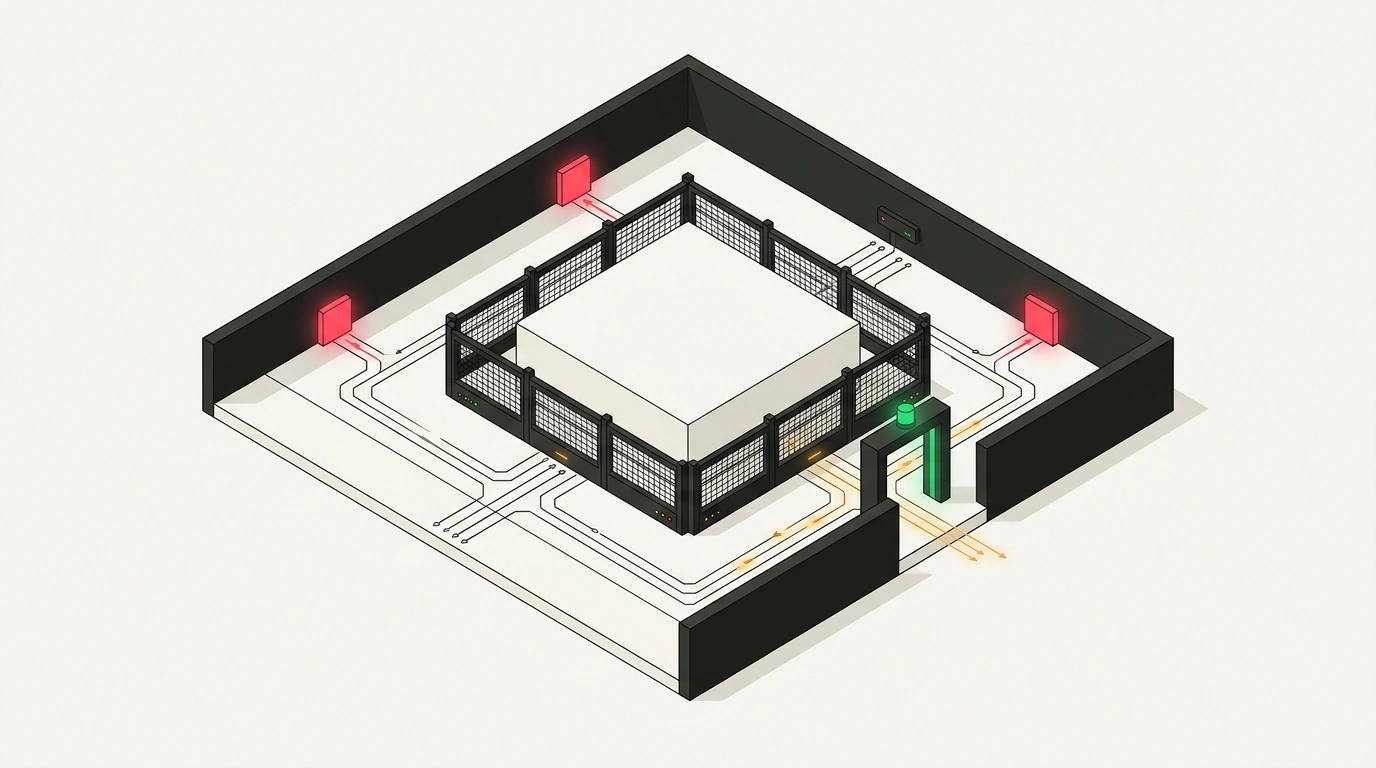
Server network interface card with optical transceiver ports and directed neon light beams of data
ArticleSafetyAutomationDevelopmentEBPF

Bypassing eBPF Limitations: How to Run XDP on Egress Traffic

It is widely believed that Linux's high-speed XDP mechanism only works on ingress, leaving you stuck with Traffic Control bottlenecks and sk_buff allocations for container egress. Yet the kernel does not classify packets by direction at all—it only checks whether a frame landed in an RX receive queue.

Loophole Labs engineers routed egress traffic through a standard veth pair, turned it into host ingress, and accelerated transmission 9.2 times faster than TC. Still, the moment you bypass the kernel, the very first switch silently drops your frames.


👍 0
DevOps&SRE LibraryLoophole Labs: An eBPF Loophole: Using XDP for Egress Traffic
November 10
Architectural isometric blueprint of a browser security perimeter filtering network connections
ArticleSafetyDevelopmentAIChrome

A Network Sandbox in the Browser: The Connection-Allowlist Header in Chrome

Listing trusted domains in Content Security Policy's connect-src and assuming your page is safe from token leaks is a dangerous illusion. A compromised script or AI-generated widget easily bypasses CSP rules via DNS prefetching (dns-prefetch), ping attributes, or direct WebRTC UDP channels.

Chrome 152 introduces the Connection-Allowlist header, which acts as a firewall in the browser's network stack and blocks all unlisted connections and redirects by default. Yet slapping this lock directly onto your site's main document is strictly off-limits.

👍 0
Библиотека фронтендераChrome for Developers: Connection-Allowlist: Secure your web app network
November 10
Brass engineer's balance scale with two pans weighing cubes of data completeness and availability
ArticleDataDevelopmentStrategyArchitecture

The Untold Backstory of the CAP Theorem: Why Eric Brewer Traded Harvest for Yield

When ten machines go silent in a hundred-server cluster, an architect faces a hard fork. If you cling to strict ACID transactions and demand 100% data completeness, one hung node takes down the entire service with a 500 error. Eric Brewer's approach at Inktomi trades answer completeness (Harvest) for reliable response rate (Yield): the system answers instantly from the remaining 90% of the index.

This graceful degradation under the BASE model saves search engines and storefronts from cascading outages. Yet every product also has operations where that compromise is strictly forbidden.

👍 0
System Design & HighloadUSENIX HotOS VII: Harvest, Yield, and Scalable Tolerant Systems (Fox & Brewer, 1999)
November 10
Three-dimensional spatial model of a semantic relationship graph linking corporate database tables
ArticleAI AgentsDataDevelopmentPostgreSQL

NVIDIA AutoOntology: A Semantic Layer for AI Agents Over Corporate Databases

Why does an AI agent write a syntactically spotless SQL query and still report the wrong revenue? PostgreSQL's parser only checks command grammar, while the LLM has no idea how orders, invoices, payments, and refunds relate in your database.

The open-source NVIDIA AutoOntology framework builds a semantic layer in pgvector on top of your DBMS and serves analyst-verified formulas to agents over MCP. Even so, trusting automated schema mapping without a human in the loop remains dangerous.

👍 0
SQL PortalGitHub: NVIDIA/auto-ontology - Open-source semantic layer for AI agents
November 10
X-ray cross-section of a web document structure revealing hidden data blocks inside the page
ArticleDevelopmentEfficiencyOpen SourceNuxt

218 KB of Dictionary on Every Page: How to Find and Strip Bloated Payload in Nuxt

With server-side rendering in Nuxt, a home page can weigh 658 KB of HTML even for a modest UI. The culprit hides inside __NUXT_DATA__: by storing translations in a global useState, the BIGPLAY team serialized a 218 KB site dictionary of 2,271 lines into every single page.

Auditing with nuxt-payload-xray and moving localization to a cacheable JSON file shrank the hydration payload from 256 to 47 KB. Pushing further to slice the dictionary per page, however, risks breaking UI text in production.

👍 0
Node.JS [ru]GitHub: dadashi44/nuxt-payload-xray - CLI tool to inspect Nuxt payloads
November 10
Engineer's workstation with a debugging notebook, mechanical keyboard, and terminal screen
ArticleDevelopmentAutomationOpen SourceGo

New Go Features for Testing and Debugging: Safe t.Chdir and Duplicating Panics with SetCrashOutput

Switching the working directory in a test with os.Chdir or logging an error before a service crashes seems trivial. In practice, a forgotten directory rollback breaks neighboring checks with file not found, and during a sudden panic normal logger buffers never flush to disk.

Built-in t.Chdir and debug.SetCrashOutput handle directory restoration and crash-dump duplication via an OS descriptor copy. Just remember: combining this directory switch with t.Parallel() will immediately crash the test itself with a new panic.

👍 0
Библиотека Go-разработчикаGo 1.24 Release Notes - testing.T.Chdir
November 10
Researcher's magnifying glass over a hexadecimal dump of a binary file's opening bytes
ArticleSafetyDevelopmentEfficiencyParsing

Don't Trust the Extension: How to Teach Your App to Detect 200 File Formats by Signature

When handling file uploads, you have two choices: check the filename extension and Content-Type header, or read the magic bytes at the start of the binary stream. The first takes a minute to write, but fails against a renamed shell.php and breaks on archives labeled .pdf.

Reading an opening 64–1,024-byte buffer lets you identify 200 formats and nested ZIP containers in microseconds without loading gigabytes into memory. Yet the slightest mistake in check order will make the scanner treat an entire signed archive as a plain PDF.

👍 0
Node.JS [ru]WHATWG: MIME Sniffing Standard
November 10
Modular isometric architecture of a database server with background job queues and replication monitoring
Thematic roundup2 sectionsDataDevelopmentOpen SourcePostgreSQL

PostgreSQL Ecosystem: Fault-Tolerant Job Queue Workhorse and Cluster Monitor Dasha 1.10

Wrapping PostgreSQL in external queue brokers and heavy monitoring agents is a familiar yet fragile path. Two open-source tools move that work inside the DBMS's own native mechanisms:

  • Workhorse stores background jobs and checkpoints in the same SQL transaction as your data, fencing off stalled workers with ownership tokens.
  • Dasha 1.10 discovers Patroni clusters agentlessly via etcd or Consul and predicts replication slot exhaustion from two LSN readings.

Even a transactional database queue has a ceiling, though, beyond which a dedicated broker becomes unavoidable.

👍 0
Best of JSPostgreSQL NewsGitHub: stablemates/workhorse - Durable task queue for PostgreSQL
November 10