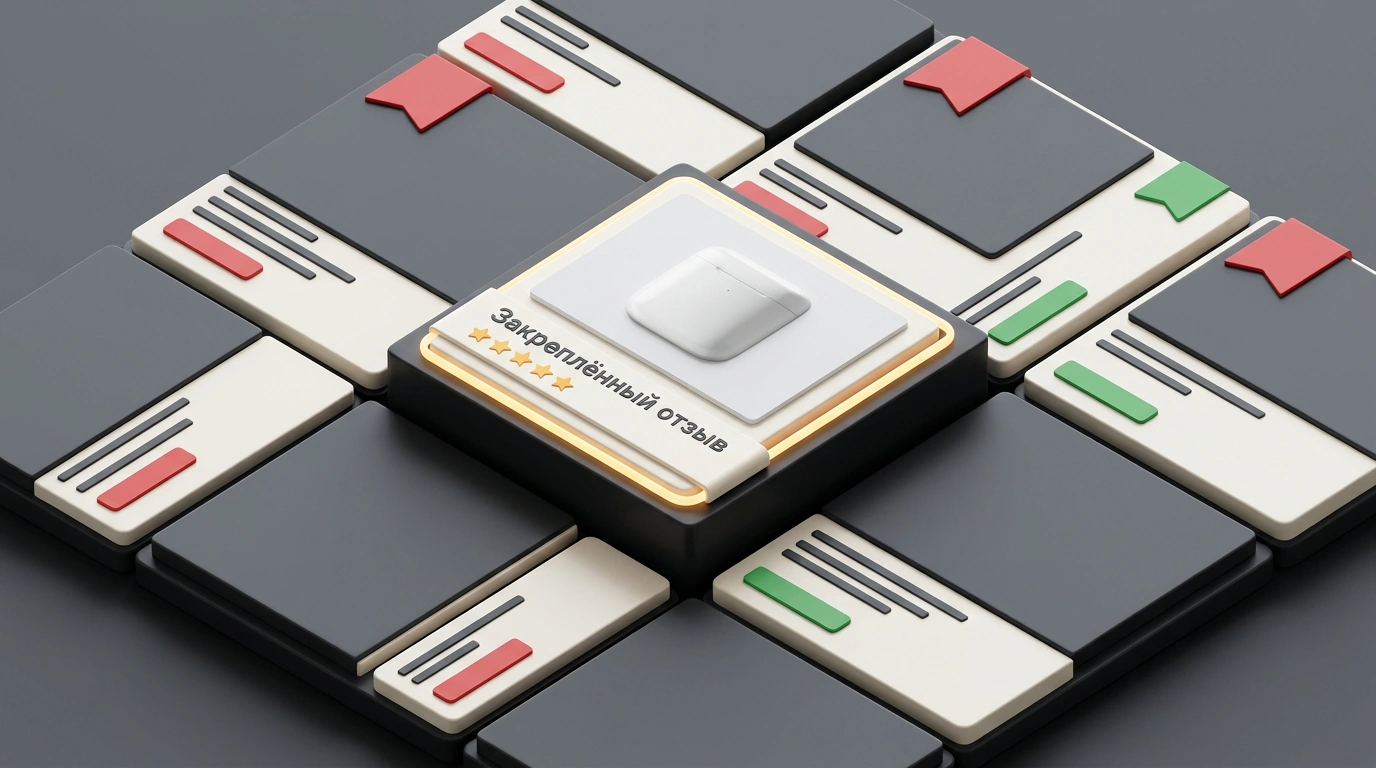
A shopper scrolls through search in the Ozon app, hasn't even opened your card yet, and a glowing comment already shines under the product photo. That's a pinned review in search—a customer quote Ozon places right on the product tile before the click. According to Ozon, this block lifts purchase conversion by up to 24%.
You can't put your best review on the search tile for free. The pin button is only available to sellers paying for one of two Ozon services: the 'Review Management' subscription or the 'First Reviews Collection' campaign. As Marketplace_biz notes, a court recently banned a third-party review-selling service, and Ozon followed up by building its own paid layer around reputation. On top of ad spend for search rank, sellers now pay for trust before a user even opens the card.
How the Paid Reputation System Works
The system has two tiers. The first helps build a starting showcase from scratch, while the second manages it every month.
In 'First Reviews Collection', Ozon's top creators buy your product, test it, and film a review. Only 5-star reviews with video, text longer than five characters, and from a non-anonymous user count, as SelSup explains. Ozon automatically pins such a video at the top of the card for up to 30 days without an ongoing subscription. According to Ozon, a top creator's first video review boosts sales by 5.8 times, and the third by 6.5 times.
For each accepted review, the seller pays a formula: a fixed service fee of around 300 rubles, plus the product price and creator points, multiplied by a VAT-inclusive coefficient. On an inexpensive item, one paid video can easily cost more than the profit from your first batch of orders.
The second tier is the 'Review Management' subscription. Per official Ozon Seller docs, the fee is tied to the price of every item sold: 0.8% in the first month and 1.3% from month two onward. With an active Premium Pro subscription, those rates are halved to 0.4% and 0.65%.
The subscription's headline feature is a 4-day conditional hold on negative reviews. You see the bad rating in your dashboard right away, while shoppers don't see it on the card yet—giving you four days to contact the buyer and fix the issue. The plan also lets you hide up to three bad reviews per month, pin a review across all card variants at once, turn on auto-replies with templates or AI, view pros-and-cons analytics, get a verified badge next to replies, and display your store rating on cards with no reviews.
Ozon's claimed +24% conversion boost and 5.8–6.5x sales growth are platform figures without disclosed sample details. Such jumps are typical for brand-new cards moving from zero ratings to their first three video reviews. On a mature item with hundreds of reviews, a search pin won't multiply sales—and if competitors all use it, the edge in search fades.
Cost vs. Benefit: When the Subscription Pays Off and When It Eats Margin
The main trap in 'Review Management' shows up in unit economics. The subscription charges 1.3% on every sold item in your store, not just the SKUs with pinned reviews. If you have a broad catalog with thin margins after fees and logistics, giving up a percentage of total revenue for a couple of cards doesn't pay. It turns into a permanent visibility tax on top of search ads.
The second risk hides in 'First Reviews Collection'. New cards can be added to the campaign automatically, and early creator buyouts and fees can exceed revenue from initial sales. According to Ozon Seller instructions, you must manually turn off extra products under 'Products → First Reviews Collection' by stopping collection or removing them from the campaign. You manage pins under 'Products → Pinning a Review', and cancel the plan via 'Manage Subscription → Cancel Subscription'.
The choice is simple. Using 'First Reviews Collection' and the 0.8% first-month subscription makes sense selectively when launching a high-margin new product to break the zero-trust barrier and get a video review into search. For a mature catalog with tight margins, it pays better to invest in packaging and defect control than to give up a cut of all revenue every month for a four-day buffer on bad reviews.