Imagine a scenario that feels all too familiar: for several weeks now, your stomach has been acting up unpredictably—bloating after lunch, dull cramps, or a sudden dash to the bathroom. You step on the scale in the morning and see the number has dropped by a couple of kilos. A cold dread washes over you, and your mind immediately jumps to the darkest conclusions: cancer, ulcerative colitis, or tissue damage.
I have seen even the most level-headed people spiral into deep health anxiety in this exact situation. You start frantically searching symptoms online and end up diagnosing yourself with a dozen fatal conditions. Yet in real-world gastroenterology practice, the picture looks completely different. As gastroenterologist Andrey Kharitonov emphasizes, in 95–99% of outpatient cases of weight loss alongside functional GI disorders, the culprit is not an organic catastrophe—it is a simple, hidden calorie deficit.
Let's break down how this mechanism works and see why your gut isn't failing to absorb food—fear of your own plate is.
The Sitophobia Trap: How Fear of Pain Shrinks Your Plate
When eating regularly ends in cramping or bloating, your brain quickly wires a protective association: "food equals pain." In gastroenterology, this is known as sitophobia—the fear of eating.
Little by little, you start methodically stripping items from your diet:
- Ate an apple and your stomach rumbled? Out go all fresh fruits.
- Had coffee with milk and had to run to the restroom? Cut out all dairy.
- Read something scary about gluten online? Eliminate grains and bread.
- With functional dyspepsia causing early fullness, or bile acid diarrhea after gallbladder removal, portions intuitively shrink to child-sized servings.
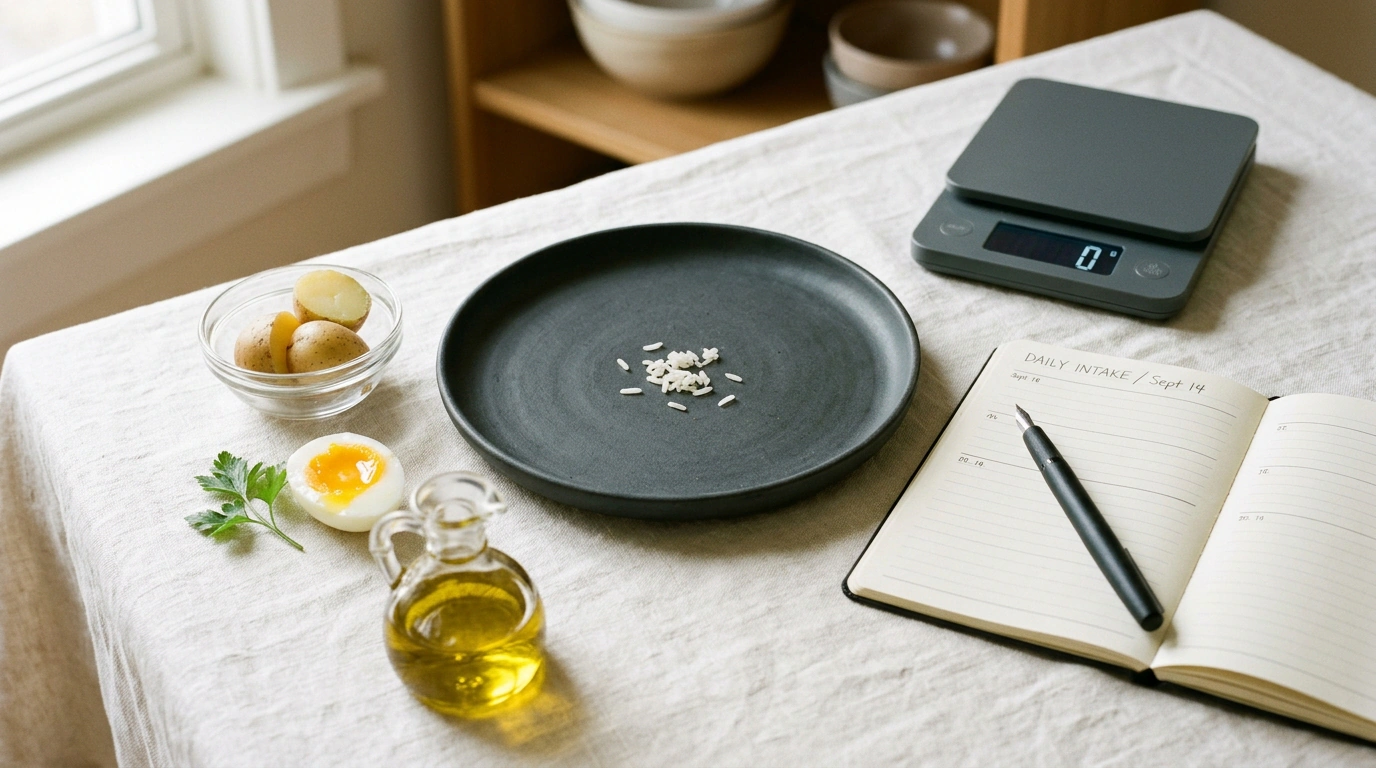
Eventually, you genuinely believe you are eating normally: "I eat three times a day! Plain buckwheat in water, a piece of steamed turkey, and a plain cracker." But if you tally up the actual energy value of that menu, it barely reaches 900–1,100 kcal a day. The laws of thermodynamics are unforgiving: even a 500 kcal daily deficit reliably strips off about 500 grams (roughly a pound) of body weight per week. Over a month, that adds up to two or three kilos of pure weight loss. No disease is "eating away" at your body—your organism is simply burning its own fat and muscle reserves because it isn't getting enough fuel. This kind of trap of the 'ideal' regimen is often worsened by food anxiety, turning an ordinary meal into psychological stress.
Organic Malabsorption vs. Functional Deficit
The nagging question remains: what if food just "isn't being absorbed"? In medicine, that is called malabsorption. However, there is a vast biological divide between true malabsorption and irritable bowel syndrome (IBS).
In organic conditions—such as celiac disease with flattened intestinal villi, Crohn's disease, or severe chronic pancreatitis—the machinery of digestion and absorption itself is damaged. Lab work reveals clear signs of systemic inflammation: sharply elevated C-reactive protein (CRP), skyrocketing fecal calprotectin, dropping total blood protein, worsening deficiencies in fat-soluble vitamins, and undigested fats and fibers in the stool.
In classic IBS, the lining of the small intestine remains completely healthy and intact. Your intestinal villi work flawlessly and are ready to absorb every single molecule of nutrients. The problem is simply that nothing is reaching the gut. It is functional under-eating, not a broken cellular assembly line.
There are validated clinical 'red flags' where weight loss must never be written off as functional IBS. See a doctor promptly for an upper endoscopy and colonoscopy if you notice:
- Visible fresh blood in your stool or a positive occult blood test.
- Nighttime pain or urgent bowel movements that regularly wake you from sleep.
- Unexplained fever, persistent low-grade temperature, or anemia (low hemoglobin and ferritin).
- New GI symptoms appearing for the first time after age 45–50.
- A family history of inflammatory bowel disease (IBD) or colorectal cancer in close relatives.
How to Break the Vicious Cycle and Regain Weight
If your complete blood count, basic metabolic panel, CRP, and fecal calprotectin are normal, and you have no red-flag symptoms, the treatment strategy isn't hunting for new diagnoses—it is gradually bringing food back.
Many people get stuck on a strict low-FODMAP elimination diet for months, terrified to take a step off the path. Yet evidence-based gastroenterology guidelines state clearly: the strict elimination phase should last no longer than 2–6 weeks. Prolonged restriction erodes microbiome diversity and only heightens visceral hypersensitivity in the gut's nerve endings.
The way out is calm, structured reintroduction:
- Keep a weighed food diary for 3–5 days so you can see your true calorie intake objectively rather than relying on guesswork.
- Reintroduce excluded foods one at a time every three days in small portions, tracking how your body responds.
- Top up your calories with neutral, well-tolerated foods—a drizzle of vegetable oil, white rice, baked potatoes, eggs, and lean poultry.
Your gut isn't broken—it is just spooked by stress and prolonged under-eating. Once your body starts getting enough nourishment, your weight will stabilize and those anxious cramps will begin to fade.