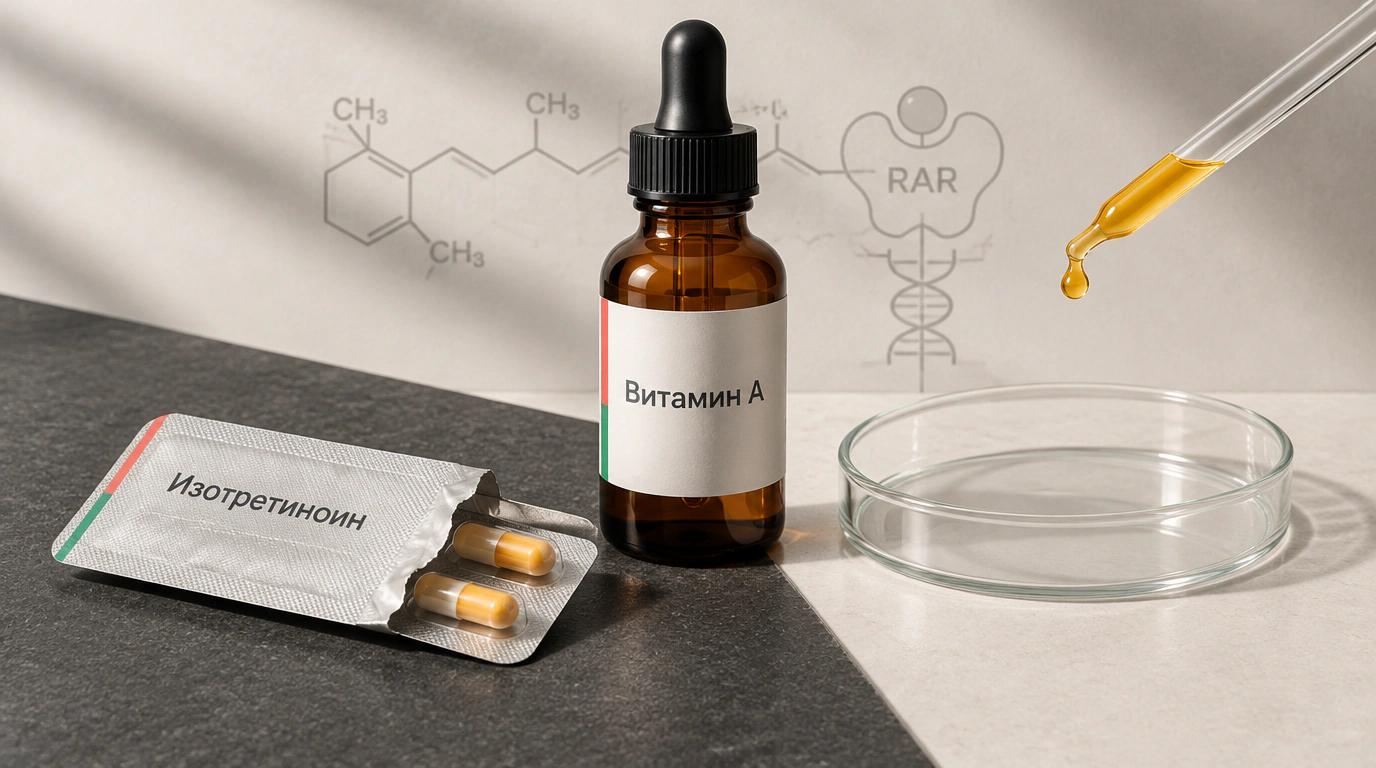
A dangerous piece of advice still makes the rounds in online forums and comment sections: why shell out for expensive prescription Accutane (Roaccutane) and endless blood panels when you can grab cheap over-the-counter vitamin A oil drops and take a massive course? On the surface, the logic sounds tempting: the active ingredient in systemic retinoids (isotretinoin) is derived from retinol. So why not treat yourself "naturally"?
Boris Tsatsulin from the CMT (Scientific Approach) project breaks down why this shortcut is so perilous. Behind that apparent simplicity lies a serious misunderstanding of pharmacology: natural vitamin A isn't gentler than prescription medication—in megadoses, it becomes an uncontrolled toxin for your liver and nervous system.
Cousins With Very Different Personalities
Isotretinoin (13-cis-retinoic acid) really is a chemical relative of vitamin A. When scientists developed the first retinoids, they hoped to find a molecule that could clear skin inflammation without hitting the rest of the body with toxicity. No miracle happened—systemic toxicity remained high. What they did achieve, however, was pharmacological selectivity.
Isotretinoin binds to nuclear receptors inside sebaceous gland cells (sebocytes), triggering them to shrink and undergo programmed cell death (apoptosis). It targets all four drivers of acne at once: it cuts sebum production by 90%, calms inflammation, normalizes skin cell shedding inside the follicle, and starves Cutibacterium acnes bacteria of their fuel.
Natural vitamin A (retinol), at normal dietary or physiological levels, handles essential jobs like supporting vision and immunity. An adult needs a modest 700–900 mcg per day (about 2,300–3,000 IU), with a safe upper daily limit of 10,000 IU. But to make plain retinol have any noticeable effect on severe nodules and cysts, you would have to take hundreds of thousands of IU every day for months.
The Liver Accumulation Trap
That is where the biochemical trap snaps shut. Vitamin A is fat-soluble. Unlike vitamin C, which washes out in your urine the next day, excess retinol builds up in the liver—specifically inside hepatic stellate (Ito) cells. Once that storage "warehouse" overflows, free retinol starts acting like a harsh solvent: it breaks down liver cell membranes, triggers toxic hepatitis, sends ALT and AST enzymes soaring far above normal, and leads to progressive liver scarring.
Instead of clear skin, someone trying to "save a buck" ends up with pounding headaches from intracranial hypertension, hair loss, painfully cracked lips, and organ damage. Worse still, their acne doesn't even stay gone, because plain retinol lacks the targeted mechanism needed to shut down sebaceous glands.
In evidence-based dermatology, systemic isotretinoin follows a strict protocol: daily dosing is calculated by body weight (typically 0.5–1.0 mg/kg), and treatment continues until reaching a target cumulative dose of 120–150 mg/kg. Hitting that total dose over 6–9 months under regular lab monitoring is what delivers lasting, often lifelong protection against relapse. We've already covered retinoid pharmacology and systemic acne monitoring in detail.
Both systemic isotretinoin and megadoses of vitamin A are severely teratogenic, causing major birth defects in over 20–35% of exposed pregnancies. Pregnancy must be strictly avoided throughout the entire course using reliable contraception. Taking prescription retinoids alongside vitamin A supplements is strictly forbidden—it doubles the toxic load on your liver.
In medicine, "natural" has never been a synonym for safe. Severe acne deserves proper care from a qualified dermatologist, not DIY experiments on your own liver.