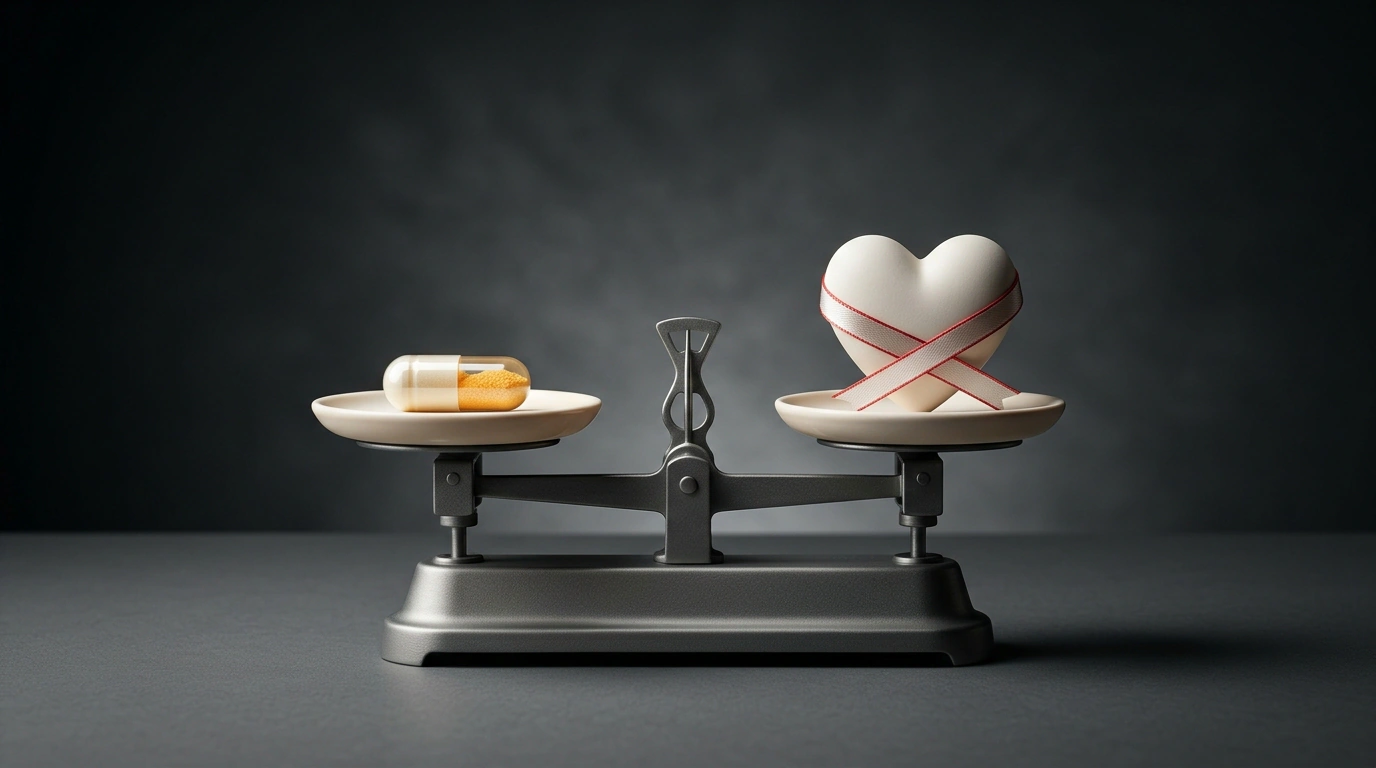
In the anti-aging and eternal-youth industry, another trend is gaining momentum: menopausal women are increasingly being urged to "balance their hormone profile" with testosterone. The promises sound tempting: a surge of energy, restored muscle tone, protection against fatigue, and mental clarity. However, cardiologist Алексей Утин reminds us of the harsh flip side of trendy prescriptions: hormone therapy isn't an energy vitamin, but a potent intervention with strict safety boundaries.
Testosterone is indeed synthesized in the female body by the ovaries and adrenal glands. Yet in clinical guidelines from international endocrinology and gynecology societies (including consensus statements from the Endocrine Society and The Menopause Society), there is only one evidence-based indication for prescribing it: hypoactive sexual desire disorder (HSDD). This isn't just a dip in libido, but a condition that causes deep personal psychological distress for the woman herself.
Moreover, before prescribing the hormone, a doctor must rule out common external causes: depressive episodes, use of SSRI antidepressants, chronic work stress, or dyspareunia—pain during intercourse caused by mucosal thinning, which is treated with local estrogen suppositories rather than systemic androgens.
Lab Traps and Speculation on Fatigue
The most common marketing trap is sending a woman for a commercial blood test for "testosterone deficiency." In evidence-based endocrinology, such an isolated diagnosis simply does not exist in women. First, standard laboratory immunoassay systems have huge margins of error at low female hormone concentrations (accurate results require LC-MS/MS mass spectrometry). Second, science knows no numerical testosterone threshold below which medical intervention would be needed when a woman feels well.
Prescribing the hormone for "low energy," "tone," or "against depression" is pure off-label use with no evidence base. In the US and most European countries, regulators like the FDA and EMA haven't even approved female formulations of testosterone. In practice, doctors are forced to split male gels into microdoses, risking overdose, acne, voice deepening, scalp hair loss, and irreversible unwanted body hair growth.
Cardiovascular Signal and Strict Safety Boundaries
Long-term vascular risks are of particular concern to cardiologists. At The Menopause Society scientific conference, Drexel University researchers presented an analysis of the TriNetX database: following 3,164 women over age 45 showed that over five years, the cumulative incidence of heart attacks, strokes, and heart failure was 3.8% versus 0.5% in the control group without hormone therapy (hazard ratio HR = 8.08). Although the authors emphasize the observational nature of the data, for clinicians this is a serious warning signal.
We have already examined the medical indications and hidden risks of testosterone therapy in detail, and when it comes to women's health, those cautions apply doubly.
When testosterone therapy is legitimately prescribed for a confirmed HSDD diagnosis, strict rules apply: only microdoses of transdermal gels are used (injections and subcutaneous pellets are strictly prohibited), lipid profiles and blood hematocrit are monitored regularly, and if there is no effect within 6 months, the medication is permanently discontinued.