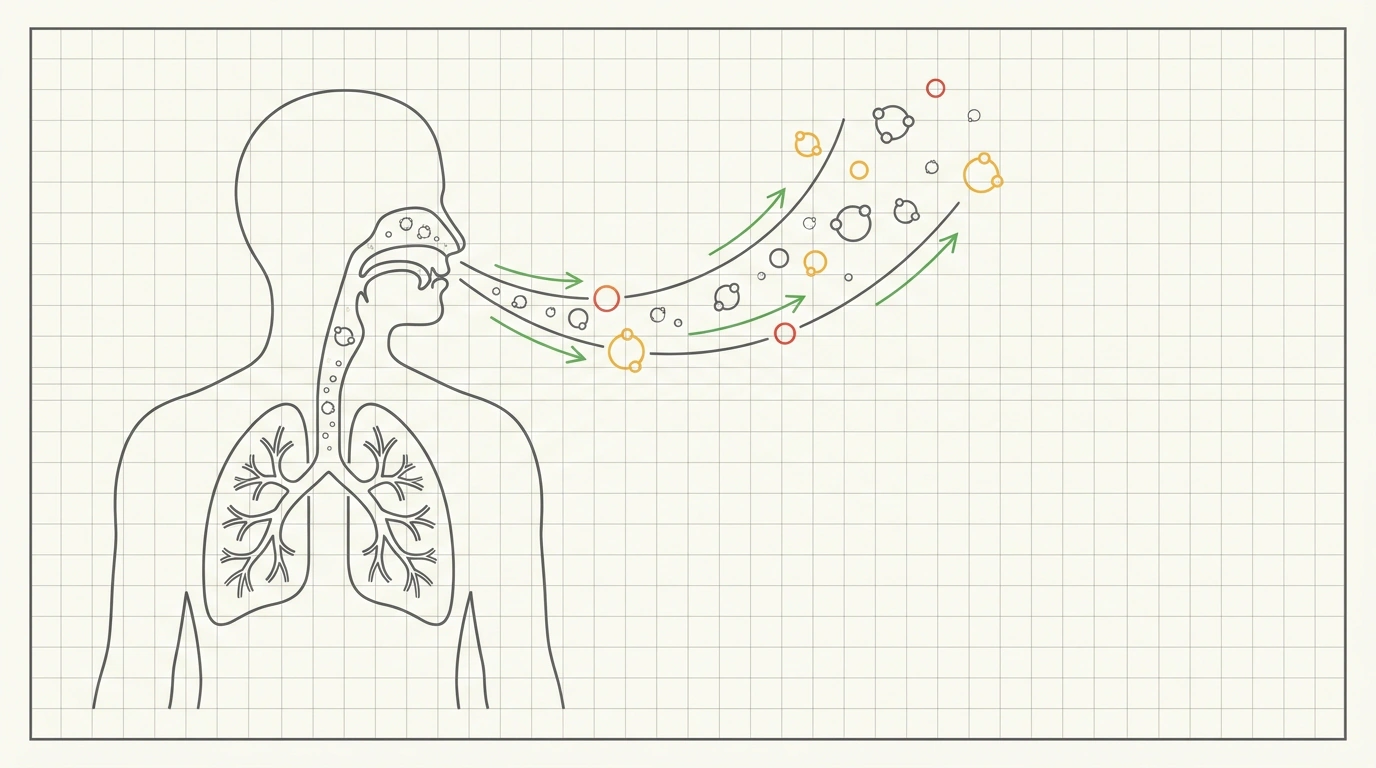
Ask any gym regular where fat goes when you lose weight, and you'll hear the classic myths: "it turns into pure energy," "it melts into muscle," or "it pours out in rivers of sweat." Fitness coach Артём reminds us of basic high school science: nobody repealed the Lomonosov–Lavoisier law of conservation of mass. The carbon, hydrogen, and oxygen atoms that make up our fat stores can't simply vanish into thin air.
In a landmark paper by Australian researcher Ruben Meerman and biochemistry professor Andrew Brown published in The BMJ, the authors surveyed 150 doctors, trainers, and dietitians. More than half of the specialists genuinely believed mass turns into heat. Yet the chemical stoichiometry of triglycerides sets the record straight.
An average human fat molecule is described by the formula C55H104O6. To oxidize 10 kilograms of this fat, the body must inhale 29 kilograms of oxygen. This biochemical reaction produces 28 kilograms of carbon dioxide (CO2) and 11 kilograms of water (H2O).
Our Lungs Are the Primary Excretory Organ
When you recalculate the atoms by mass, the breakdown is astonishing to anyone used to trusting fitness marketing:
- 84% of the mass of burned fat (8.4 kg out of 10 kg) leaves our body through the airways as carbon dioxide. We literally exhale our own subcutaneous fat atom by atom.
- The remaining 16% of the mass (1.6 kg) turns into endogenous water and is excreted by the kidneys in urine, through the skin, and via breath.
This makes the futility and danger of barbaric methods like "sweating it out in plastic wrap" or running in heavy winter coats obvious. Sweating was designed by nature strictly to cool the body. There are no fat molecules in sweat—only water, sodium, and salts. Wrapping yourself in cellophane drains precious blood plasma, thickens the blood, and overloads the heart, while the kilogram "lost" on the scale returns right after two cups of tea.
Why the Scale Jumps by a Kilogram Overnight
The physiology of lipolysis doesn't rush. At a moderate calorie deficit of 500 kilocalories per day, an adult body can break down only 55–60 grams of pure fat per day.
When the morning scale suddenly shows an extra 1.5 kilograms after a salty dinner, that isn't "fat gained overnight." It's fluid retention: one gram of glycogen in the liver and muscles holds 3–4 grams of water, and salt retains sodium. We already broke down this paradox in an article on why the scale deceives you at the start of training, and the key here is to stay calm. You can't exhale fat faster by sighing rapidly on the couch either: without muscular demand, hyperventilation only causes dizziness.
Don't weigh yourself every day with anxiety in your eyes. Compare your weekly average weight, track your waist circumference, and pay attention to how your clothes fit: a calorie deficit and regular movement do their work quietly with every breath you exhale.