Anyone who has tried to convince an older relative with type 2 diabetes to give up tea-time candies or favorite pastries knows how tough a battle that is. Decades-old eating habits don't break at the snap of a finger, and harsh ultimatums or pantry raids only trigger resentment, stress, and secret trips to the bakery aisle. Endocrinologist Максим Кузнецов suggests changing the tone: a capable adult won't accept a drill-sergeant voice, but is ready to hear caring, well-reasoned arguments.
Diabetes in later life isn't dangerous because of abstract numbers on a glucometer, but because of vascular damage—the risks of heart attack, stroke, vision loss, and kidney disease. The main goal isn't to lock someone in barracks-like conditions, but to protect the pancreas's beta cells from complete exhaustion so they can avoid needing injected insulin.
Safe Sugar Alternatives Without Glucose Spikes
In modern clinical guidelines, including the American Diabetes Association (ADA) standards, non-caloric sweeteners are recognized as a reliable compromise for reducing glycemic load:
- Erythritol: a natural sugar alcohol with a zero glycemic index and just 0.2 kcal per gram. Up to 90% of erythritol is absorbed in the small intestine and excreted unchanged by the kidneys, without affecting blood sugar or insulin at all. Unlike sorbitol or xylitol, it barely ferments in the colon and doesn't trigger bloating or upset stomach.
- Allulose: a rare monosaccharide that tastes like classic sugar (about 70% of sucrose's sweetness). It behaves just like regular sugar in the kitchen—dissolves easily, holds volume, and caramelizes when baked, while having a zero glycemic index.
- Sucralose: a concentrated, heat-stable sweetener hundreds of times sweeter than sugar that doesn't break down during baking and isn't absorbed by the digestive tract.
The "Diabetic Shelf" Trap
The biggest mistake relatives make is sweeping supermarket shelves for factory-made sweets from the diet-food aisle. "Sugar-free" labels on wafers, gingerbread, and chocolate lull you into a false sense of security while hiding a massive fat bomb.
To preserve familiar texture and flavor without sugar, manufacturers generously pack these desserts with hydrogenated fats, palm oil, and nut pastes. As a result, an older adult gets a massive dose of saturated fats and extra calories. That immediately spikes triglycerides, cholesterol, and visceral fat. And for someone with diabetes, atherogenic plaque buildup in blood vessels is often far more dangerous than a single modest rise in blood sugar.
We have already broken down how blood sugar management in type 2 diabetes works, and the main takeaway is simple: the overall composition of the plate matters, not just a label on a box.
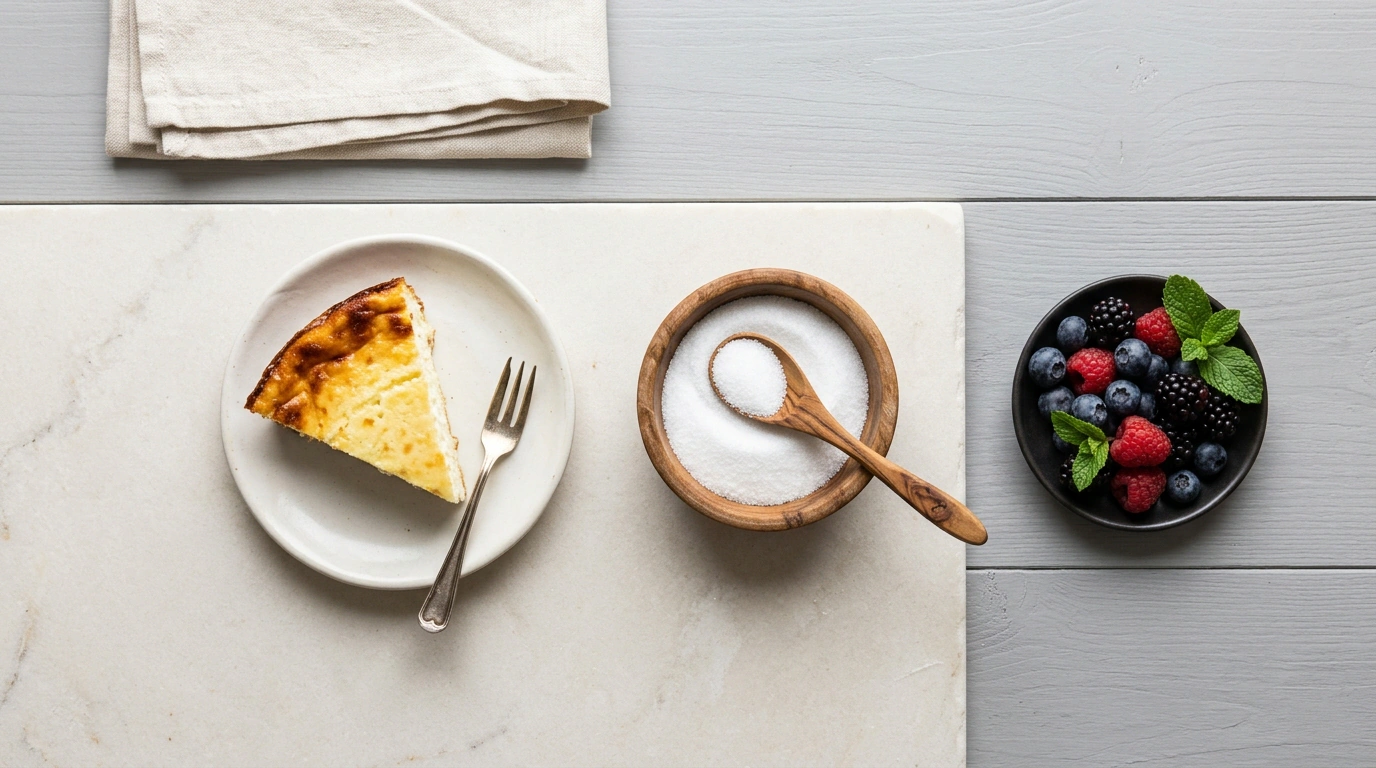
Make homemade cottage-cheese bakes or berry mousses with erythritol or allulose, where you control the fat content yourself. And agree on a simple rule: one candy or one bar made with the right sweetener alongside favorite tea instead of polishing off pastries by the pack.