What should you put in your cart when your kid brings home a cold from school and the whole house starts sniffling? It's tempting to grab lemons, honey, and fizzy vitamin C at the checkout, even though those buys won't block viruses. Endocrinologist Maxim Kuznetsov notes that there is no magic food for colds, and "just-in-case" complexes don't work without a real deficiency. You build resilience at a regular supermarket.
Five pillars instead of a magic bottle
Your immune system spends resources renewing cells and building antibodies—the protein molecules your body uses to spot and bind viruses. When meals are sparse, raw materials run short. A balanced plate closes nutrient gaps and supports a normal immune response, even though it can't guarantee you won't catch anything.
Maxim Kuznetsov divides a grocery cart into five core groups. It starts with protein: meat, poultry, fish, eggs, cottage cheese, beans, lentils, and chickpeas supply building blocks for tissue repair and immune proteins. Next come vegetables, fruit, and berries, including frozen options: cabbage, carrots, bell peppers, apples, and citrus bring vitamins plus fiber for gut bacteria.
Third are grains and legumes like oats, buckwheat, brown rice, and whole-grain bread for steady energy and dietary fiber. Fatty fish, oils, nuts, and seeds provide unsaturated fats, which you need to absorb fat-soluble vitamins A, D, E, and K. The fifth pillar is water for transporting nutrients and regulating body temperature, with soups and drinks contributing part of that fluid.
A schoolkid's sample menu from the same cheat sheet stays simple. Breakfast could be an omelet with bread and cucumber, or oatmeal cooked with milk, banana, and nuts. Lunch pairs vegetable soup with a chicken patty, mashed potatoes, and carrots—or chicken noodle soup, turkey meatballs, pasta, and tomato. Dinner might be buckwheat with beef and tomatoes, or chicken pilaf with vegetables, with portion sizes matched to age and appetite.
Everyday vitamins without overpaying for exotic foods
Once your core plate is set, you easily get seasonal vitamins from ordinary groceries. Even kitchen rules are simpler than strict advice makes them sound. Vitamin A and beta-carotene need fat to absorb, yet you don't have to drizzle oil directly onto grated carrots—fat from another dish in the same meal does the job.
| Vitamin | What it does | Where to find it |
|---|---|---|
| A | Vision, immune cells, skin, and mucous membranes | Carrots, pumpkin, sweet potato, bell peppers, spinach, apricots, liver, eggs, dairy |
| C | Immune cells, collagen, plant iron absorption | Bell peppers, broccoli, cabbage, citrus, berries, kiwi, tomatoes, potatoes |
| E | Cell protection, hormone and immune regulation | Vegetable oils, seeds, almonds, hazelnuts, peanuts, avocado, spinach |
| B12 | Red blood cells, DNA synthesis, nervous system | Meat, poultry, fish, seafood, eggs, milk, yogurt, cottage cheese, cheese |
| D3 | Calcium absorption, bones, immune responses | Herring, mackerel, salmon, trout, sardines; smaller amounts in egg yolk and liver |
Fish vs. sun and supplements: an honest look at vitamin D
Vitamin D is trickier because few foods pack high amounts. In a video breakdown, Maxim Kuznetsov rules out sunbathing for health: ultraviolet radiation is a known carcinogen that raises skin cancer risk. UV-exposed mushrooms don't solve it either, since their vitamin D content is still too low.
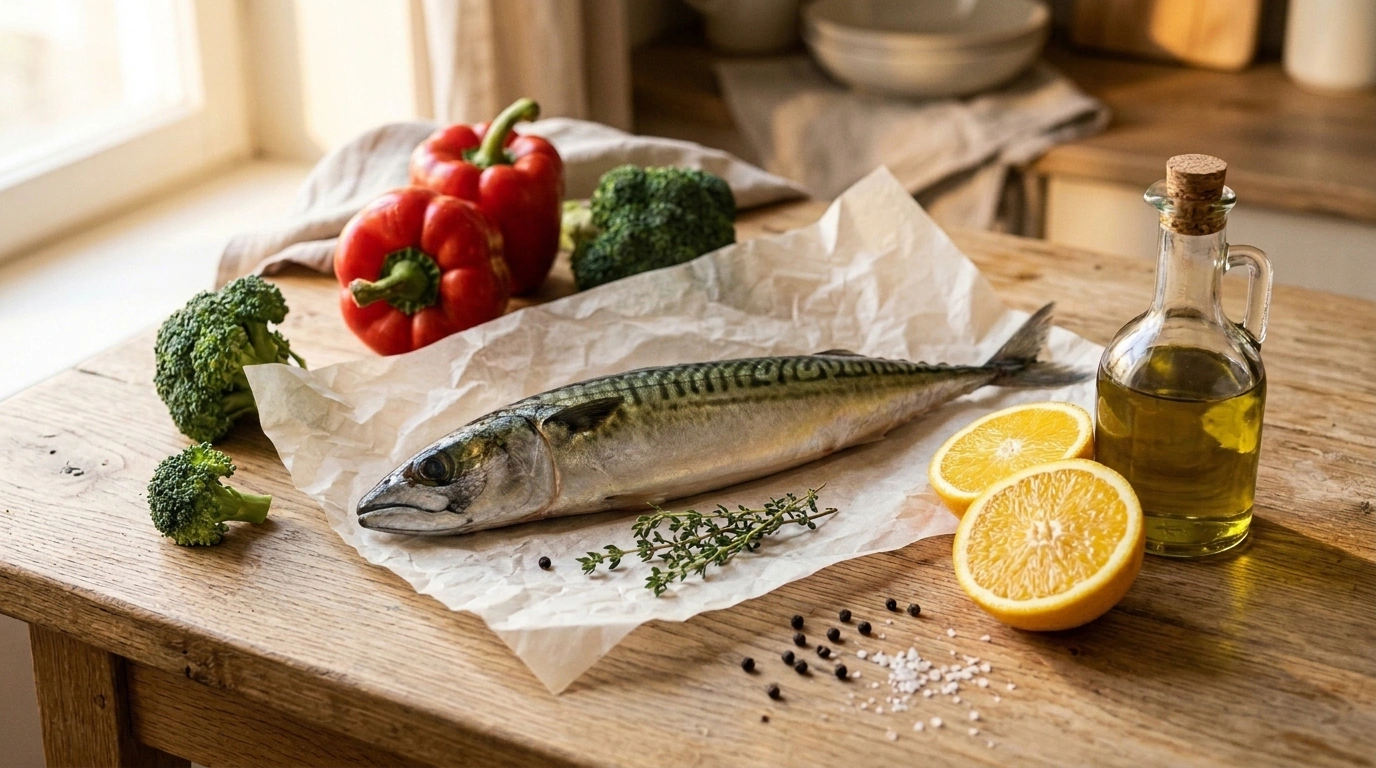
Unless you have a severe fish allergy, your best bet is fatty sea fish at least twice a week. Budget-friendly canned saury, mackerel, herring, and sardines all count, while lean white fish like pollock contains much less. Fortified foods—milk, plant drinks, and cheeses with added vitamin D—help bridge the gap.
According to the NIH ODS fact sheet, the daily requirement is 15 mcg (600 IU) for kids over age 1, teens, and adults up to 70, rising to 20 mcg (800 IU) after 70. Even in salmon, levels vary between wild and farmed fish, and in winter at northern latitudes skin synthesis nearly stops.
That's why the UK's NHS advises adults and children over age 1 to consider taking 10 mcg (400 IU) a day from October through early March. Meanwhile, the 2024 Endocrine Society clinical guideline advises against routine blood testing or mega-doses for healthy adults aged 18–74. It singles out preventive supplementation specifically for children aged 1–18, adults 75+, pregnant women, and people with prediabetes. Keep fatty fish and fortified foods on your table regularly, and check with your doctor on whether you need a D3 supplement and at what dose.