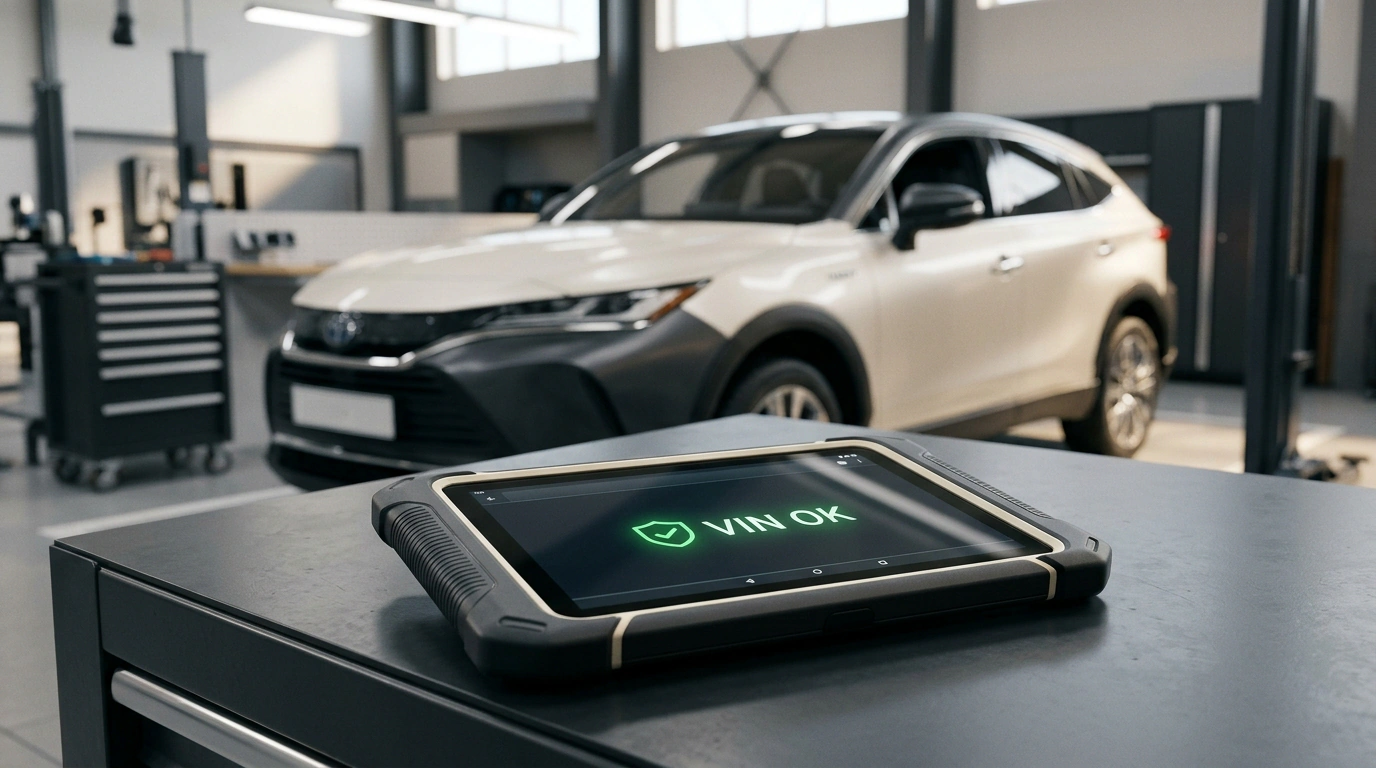
Russia's used car market is going through a major structural shift: the days when buying secondhand meant endlessly hunting for a well-kept Japanese classic or a bare-bones budget sedan are fading fast. Fresh Q3 analytics from Avito Auto and the vehicle-history service Avtoteka highlight three parallel tectonic shifts: rapid electrification in everyday garages, Chinese brands cementing their spot as mainstream resale staples, and pre-purchase history checks becoming standard practice for nearly every second buyer.
Let's walk through each trend and see how real prices, demand, and safe-buying habits are changing.
EVs and Hybrids
The fastest-growing corner of the classifieds was used hybrids and pure electric vehicles. In Q3 2026, buyer interest in electrified cars jumped 79% year-over-year, while available inventory grew 21%.
The average ticket in this segment settled at 3.8 million rubles. Surveys show 45% of drivers are already considering a hybrid or EV: one in five is actively browsing listings right now, and a quarter plan to make the switch within the next couple of years.
Toyota, Li Auto, Zeekr, Nissan, and Voyah lead the brand rankings (Voyah alone now holds a hefty 5.8% share on the platform). Across the lineup, the market splits cleanly into two poles:
- High-tech premium crossovers from China: Li Auto L7 (averaging 6 million rubles), Voyah Free (4 million rubles), and the flagship Li Auto L9 (6.7 million rubles). Buyers are gravitating toward series hybrids, where a gas engine acts as a generator for the battery—eliminating range anxiety on rural highways.
- Proven, budget-friendly classics: the evergreen Toyota Camry (3.8 million rubles), hybrid pioneer Toyota Prius (around 1 million rubles), and affordable city EV Nissan Leaf (1.1 million rubles). In the domestic and Western niches, the Evolute i-PRO (1.5 million rubles) and Tesla Model S (3.5 million rubles) stand out.
As supply catches up, prices on several models are softening. Over the past year, used Changan models dipped 8.3% (to 2.5 million rubles), GAC fell 4.6% (to 3.5 million rubles), and Honda edged down 2.3% (to 1.3 million rubles), while the compact Toyota bZ3X saw the steepest drop at 11.8% (down to 2.8 million rubles). We spotted early signs of this when covering Avito Auto trends and rising hybrid demand: modern powertrains are no longer a big-city novelty.
The Chinese Segment
Alongside electrification came a milestone: in summer 2026, Chinese brands exceeded 7% of all used car listings on Avito Auto for the first time. Vehicles bought new two to four years ago are now hitting the resale market in force.
Three brands form the core of Chinese resale: Geely (17.8% of all buyer attention toward Chinese makes), Chery (16.6%), and Changan (10.3%)—together capturing nearly 45% of the segment. On brand recognition, HAVAL leads at 61%, followed by Chery (54%) and Geely (47%).
The top five best-selling used models are:
- Geely Monjaro — the undisputed leader at an average price of 3.2 million rubles;
- HAVAL Jolion — the popular urban crossover (1.8 million rubles);
- Geely Coolray — a favorite among younger buyers (1.7 million rubles);
- Chery Tiggo T11 — an affordable first-generation veteran (345,000 rubles);
- Chery Tiggo 7 Pro Max — a roomy family option (1.9 million rubles).
Rounding out the top ten are the time-tested LIFAN X60 (495,000 rubles), sleek Changan UNI-Z (1.6 million rubles), OMODA C5 (1.8 million rubles), HAVAL F7 (2 million rubles), and ultra-budget LIFAN Solano sedan (292,000 rubles). Predictably, older models took the biggest price hits over the year: the Geely Emgrand EC7 dropped 12.4% (to 348,000 rubles), and the Chery Tiggo T11 fell 8.3%.
Avtoteka and Transparency
As complex hybrids and electronics-packed crossovers gain share, buyers are getting much more cautious. Avtoteka data shows a new record: vehicle history report requests rose 15% year-over-year, and the share of cars checked before a deal reached 49.8% (up 5.8 percentage points in a year).
Used Chinese cars are the hardest to sell sight unseen. Report requests jumped 81.7% for HAVAL, 80.3% for Geely, and 60.3% for Chery. At the model level, checks surged 2.5x for the Geely Monjaro, 2.1x for the HAVAL Jolion, and nearly doubled (+98.7%) for the Geely Coolray.
Among European and Japanese makes, history checks are routine hygiene: requests grew 28.4% for Land Rover, 23.7% for Lexus, 23% for BMW, 21.1% for Mercedes-Benz, 20.2% for Toyota, and 11.5% for domestic LADA. By share of checked listings, Renault (69.8%), Skoda (63.8%), and Kia (61.1%) top the list, led by workhorse models like the Renault Duster (77.4% checked) and Kia Rio X-Line (74.4%).
What This Means for Sellers and Buyers
The Q3 picture couldn't be clearer. For sellers, the era of blurring license plates in photos and writing "no accidents, never painted, any inspection at the hood" is over. Posting an open VIN and attaching a clean green Avtoteka report speeds up a sale by 30–40%—buyers simply won't waste a trip on a questionable listing.
For buyers, the lesson is even simpler: if you're shopping for a complex series hybrid like a Li Auto or Voyah—packed with high-voltage batteries, air suspension, and advanced driver assists—skipping a history report is pure folly. Insurance payouts, post-crash bodywork, and true odometer readings from control modules are all out in the open now, making the used market a far more mature and transparent place.