If you've looked into web analytics reports lately, you've probably noticed an unpleasant trend: page impressions may hold steady, while real clicks and visits from Google are slowly creeping down. The reason lies on the surface — generative AI Overviews blocks give the user ready-made answers right in the search results. A person reads the needed instructions or definition, closes the tab, and goes about their business without ever reaching the website that prepared that material.
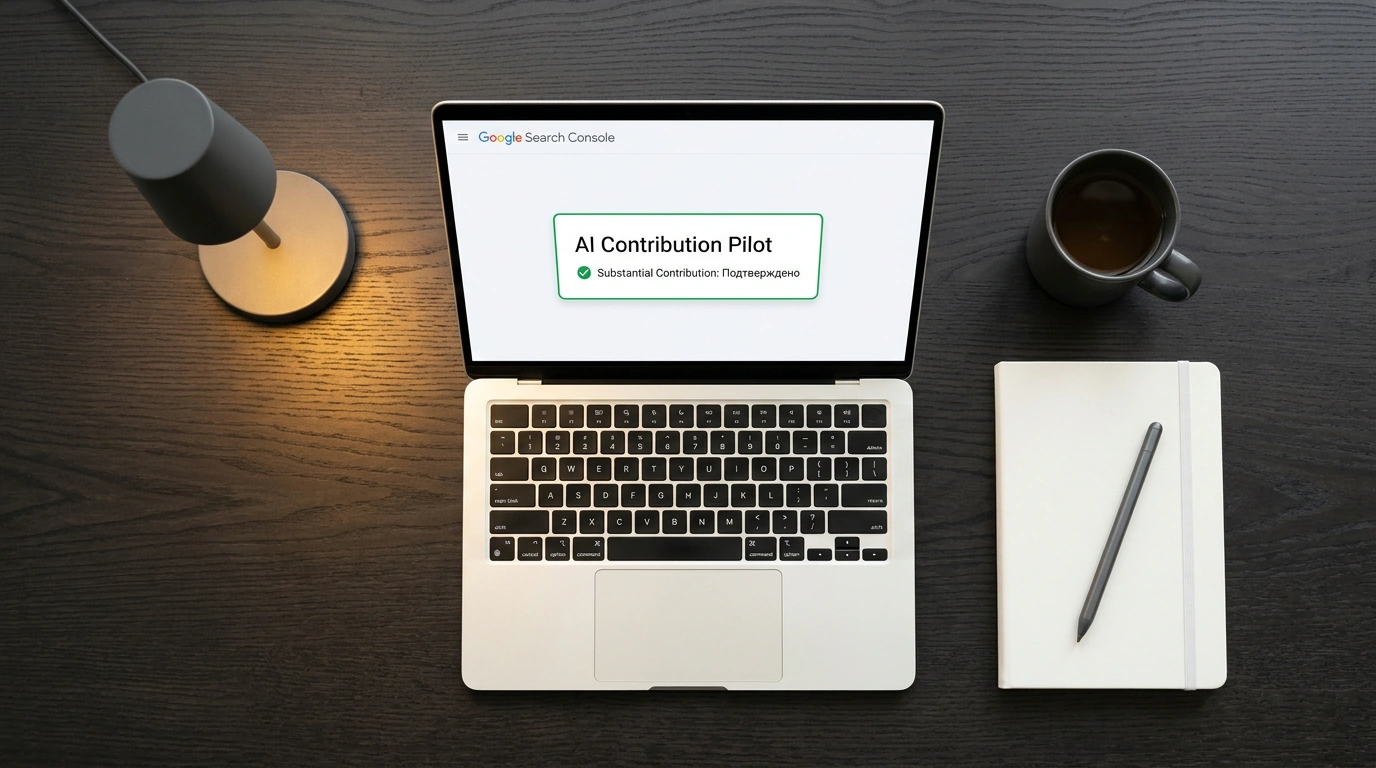
Among owners of content projects and media outlets, this sparked a storm of outrage. Search giants spent years training their models on open web pages, and now they are effectively cutting off creators' oxygen, depriving them of ad views and conversions. In response to a brewing boycott and threats of lawsuits, Google launched a closed pilot program called AI Contribution Pilot, integrated directly into the Google Search Console dashboard.
Pilot in Search Console and a Closed Club of Participants
The program launched in test mode: personal invitations were sent to the first hundred selected sites. A special section appeared in their Search Console interface displaying monthly usage statistics for their materials and the amount of accrued creator compensation. Payouts cover three core neural network products: AI Overviews summaries in main search, interactive AI Mode, and conversational answers from the Gemini language model.
However, it's too early to celebrate the arrival of an era of fair monetization. To qualify for a payout, a page's content must meet a strict criterion: "substantial contribution." If the neural network simply mentioned your brand in a list or took a boilerplate definition of a term, compensation is zero. Search engine algorithms evaluate whether the material became the factual core of the generated answer — meaning whether it contained exclusive data, calculations, or results of specialized research.
The Licensing Agreement Trap
The main pitfall of the initiative lies in the legal terms. By accepting the pilot agreement rules, a website owner grants the search engine an irrevocable, non-exclusive license to use all of its content for further model training and calibration. At the same time, fixed royalties per impression or click are not provided for in the contract: Google calculates compensation using internal opaque formulas from a general bonus pool.
For businesses, this creates a classic fork in the road. On one hand, ignoring the initiative threatens the loss of the last shreds of visibility. On the other, by agreeing to symbolic payouts, a webmaster helps the search engine become smarter with their own hands and accelerates the decline of direct human traffic. We discussed how to protect a project's information architecture during strict search filtering in the breakdown of mass page deindexing in Google.
The only winning strategy in the new reality is to stop producing superficial compilation content. Neural networks have learned to instantly retell well-known facts better than any copywriter. Payouts and audience attention will go only to those who publish primary data: original measurements, their own sales figures, and unique practical case studies that cannot be extracted from any other source.