Issue October 20Daily digest · 9 items
In this issueReviewed 67 sources, gathered 9 items
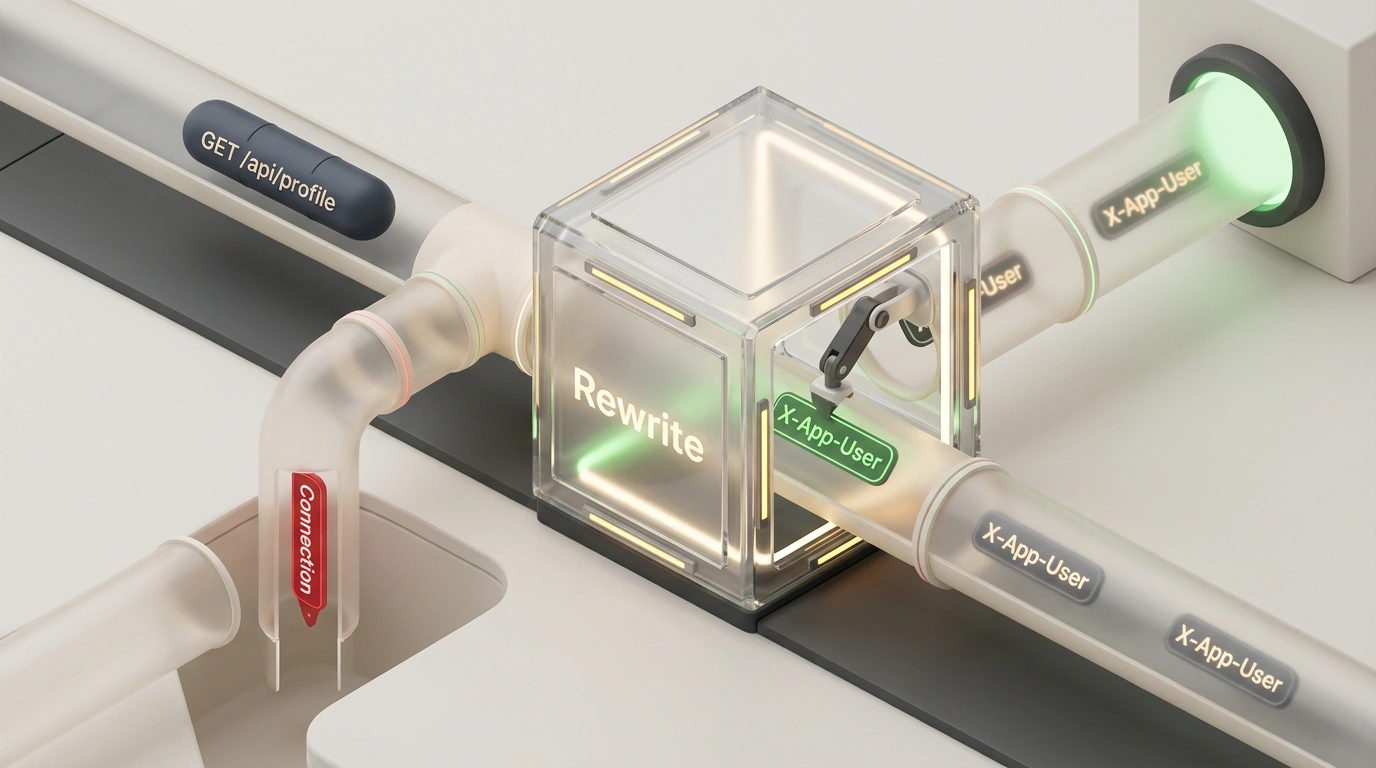
45-degree isometric architectural cutaway of a network gateway: a strict filter strips transit headers before forwarding the request to a Go microservice.
ArticleDevelopmentSafetyGoBackend

The httputil.ReverseProxy Trap in Go: Why Director Drops Your Headers

You build an API Gateway in Go, validate a token, and dutifully forward the user ID to an internal microservice via the standard Director. Yet in production the backend suddenly receives an empty string, and authentication silently breaks without a single warning in the logs.

The root cause lies in the HTTP specification and the execution order inside the legacy httputil.ReverseProxy. Any external client can send a Connection header naming your internal field. Go's handler runs your Director first and then obediently strips all hop-by-hop fields, erasing the header you just set before sending the request into your private network.

The fix arrived in Go 1.20 with the Rewrite interface. It strips all client transit headers first and only then hands control to your code, guaranteeing your auth data gets through.

👍 0
Библиотека Go-разработчикаGo Packages — net/http/httputil ReverseProxy
October 20
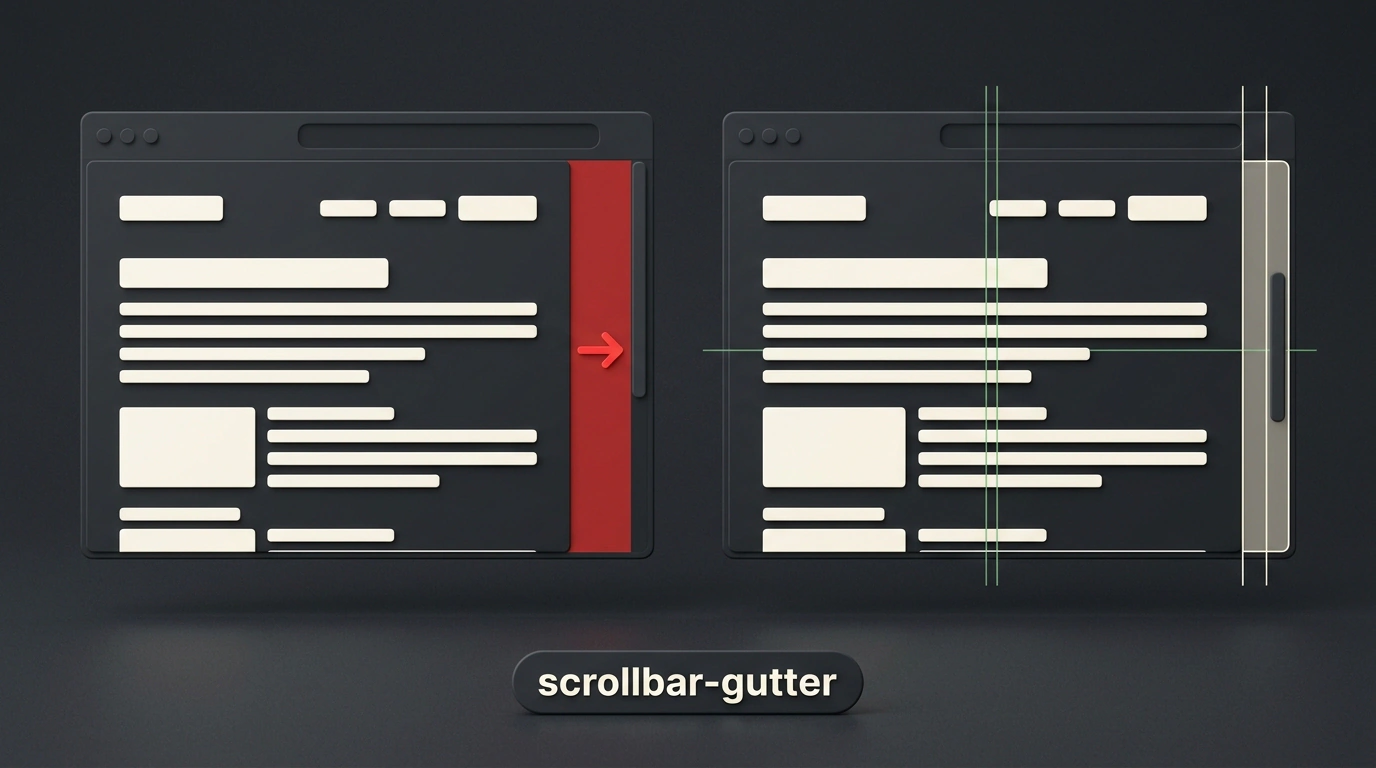
Comparative perspective mockup of a web interface: visual reservation of the scrollbar-gutter stable track to prevent layout shifts.
ArticleDevelopmentDesignCSSFrontend

Taming the Scrollbar: How scrollbar-gutter Saves Your Layout

You spend hours aligning a UI grid on a MacBook, admire the smooth animations, and ship the release. Then the very first Windows user opens the page, scrolls down the catalog—and the layout jerks left by a dozen pixels, tanking your Cumulative Layout Shift score in performance reports.

The catch is that trackpad devices float scrollbars as overlays, whereas a standard mouse forces the browser to physically carve up to 17 pixels out of the container width. For years, frontend developers fought this with grayed-out tracks or negative calc() margins.

The standard CSS scrollbar-gutter property solves the problem in one line. The browser reserves an invisible gutter for the scrollbar ahead of time, keeping column boundaries stable and centering intact.

👍 0
Библиотека фронтендераMDN Web Docs — scrollbar-gutter
October 20
Still life of an engineering desk with a useSetup architecture notebook and a monitor running fast isolated React 19 component tests.
ArticleDevelopmentAutomationReactTesting

Clean React 19: Extracting Logic into useSetup Hooks and Isolating Tests

When a React 19 component mixes data fetching, loading flags, and JSX markup, testing it with standard render turns into a nightmare: any minor tweak in a child card breaks parent tests.

Engineer Evgeny Plotnikov proposed separating responsibilities with the useSetupComponent pattern and shallow rendering:

  • useSetup hook: handles all business logic, context calls, and prop mapping, tested in isolation;
  • Presentational component: contains pure JSX with no internal state or external store dependencies;
  • Shallowly for Vitest: verifies the prop contract passed to child elements without mounting their subtree.

This isolation eliminates flaky CI failures and speeds up test suites dramatically.

👍 0
Node.JS [ru]Habr — React 19: разделяем логику и разметку, тестируем с Shallowly и Vitest
October 20
News · October 202 news items

NestJS v12.2.0 Release: New Guardrails for Streams and Microservices

The fresh NestJS v12.2.0 release introduces long-awaited protection against memory leaks: strict buffer limits for SSE and WebSocket queues, automatic cleanup of rejected files from disk, timeout resets for stalled TCP clients, and safe redaction of source objects in validation logs.

DeepSeek-V4.1-Flash-1017: Open Weights and Thinking Mode at Rock-Bottom Cost

The open DeepSeek-V4.1-Flash architecture just received a major October 17 update: open weights under the MIT license, a sharp jump on Terminal-Bench and DeepSWE coding benchmarks, a built-in thinking mode, and ultra-low generation pricing with a one-million-token context window.

Artistic still life on a dark graphite desk: a sheet of textured cotton paper where a fine pencil outline transforms into bleeding color watercolor beside a brush and pencil.
LongreadDevelopmentDesignSVGAnimation

From Pencil to Watercolor: A Living Graphic Effect with Pure SVG and Web Audio

It feels like a living hand-drawn effect—with a detailed pencil sketch, bleeding watercolor, and the rustle of a brush—must require a heavy WebGL engine like Three.js or a multi-megabyte video. Yet developer Boris0525 proved the entire cinematic show can run on pure web standards weighing under 5 kilobytes.

The secret lies in pairing two native platform tools. Vector outlines draw smoothly via the standard pathLength="1" attribute in CSS without a single line of script to measure curve lengths. Meanwhile, the organic feathered pigment edge emerges where a sliding mask meets Perlin noise filters via feTurbulence.

The finishing touch is procedural sound synthesis through the Web Audio API. No external MP3 files needed: the browser generates lowpass-filtered white noise the instant you touch the screen.

👍 0
Node.JS [ru]GitHub — apostol0525/for-you: interactive watercolor card
October 20
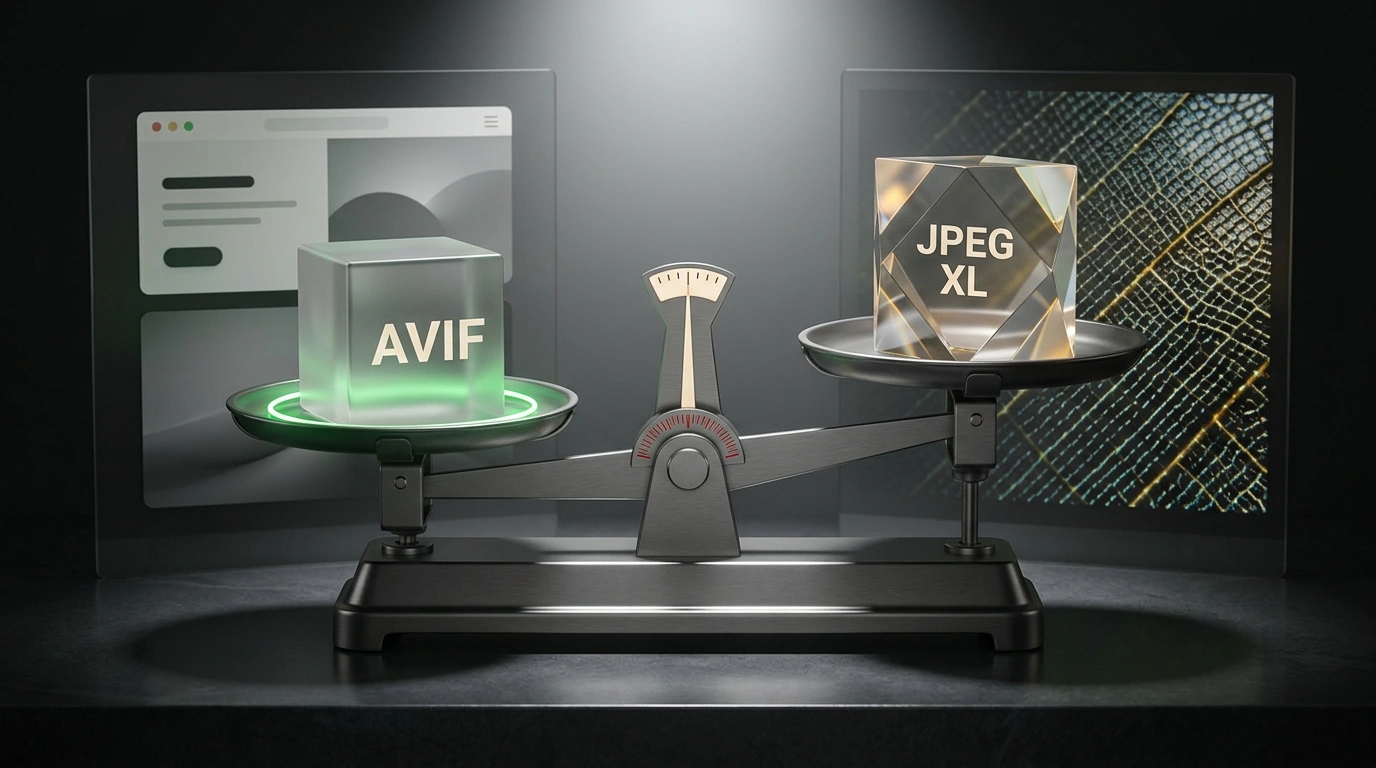
Conceptual duel between AVIF and JPEG XL formats on precision scales: compact compression wins for the everyday web.
ArticleDevelopmentEfficiencyOptimizationWeb

Web Image Format Showdown: Jake Archibald's Deep Dive into JPEG XL vs. AVIF

The debate over which image format should become the modern web standard took a sharp turn in Jake Archibald's benchmark. Running hundreds of photos and UI screenshots through the latest encoders, he mapped out the real boundaries of AVIF and JPEG XL.

For everyday web content, AVIF wins decisively. On standard lossy photos it comes out 15–25% smaller than its rival, on screenshots it saves up to 70–90% of file weight, and on transparent images it packs 2–3x smaller thanks to gentle lossy alpha compression.

Still, it's too early to bury JPEG XL: it dominates pure lossless compression, losslessly recompresses legacy JPEG libraries with up to 20% savings, and decodes giant 18+ megapixel photos faster.

👍 0
Веб-стандартыJake Archibald — JPEG XL vs AVIF for web use-cases
October 20
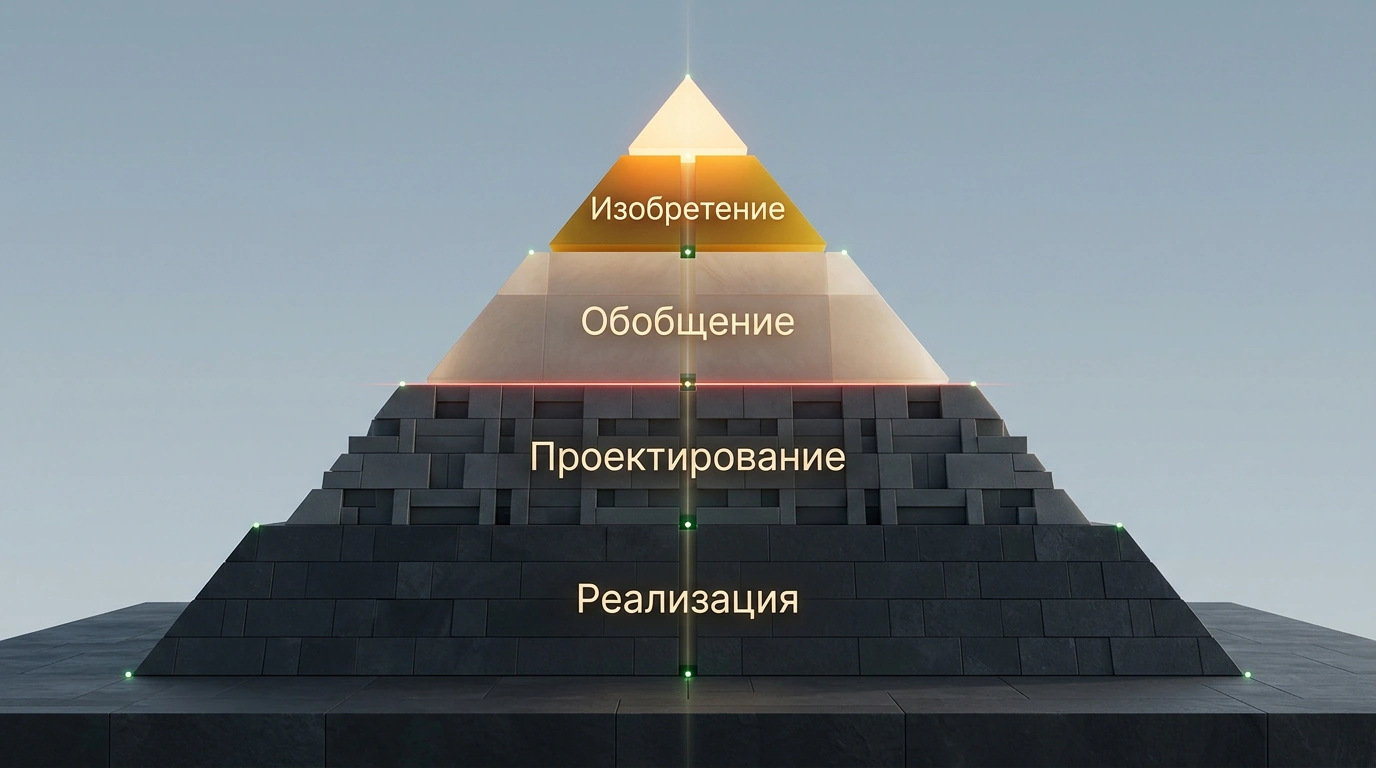
Four-tier pyramid of software engineering mastery: from syntactic implementation to inventing new paradigms.
ArticleAIDevelopmentArchitectureParadigms

Four Levels of Programming: Why AI Still Hasn't Invented a Single New Paradigm

Are generative neural networks really stealing creativity from developers and leaving only tedious code review behind? Architect Timur Shemsedinov argues the opposite: AI is taking away syntactic grunt work and exposing core engineering thought.

Breaking programming down into four levels—from writing loops to inventing new computing paradigms—makes the boundary of modern models obvious. Neural networks excel at implementing specs and standard patterns because they interpolate humanity's accumulated training data.

At the highest level of architecture, though, the score is still zero: AI hasn't created a single new paradigm like OOP or the actor model. Automating syntax simply raises the bar for the profession, shifting focus to system invariants, loose coupling, and fault tolerance.

👍 0
HowProgrammingWorksHowProgrammingWorks GitHub Organization
October 20