Every seller dealing in electronics, branded clothing, perfume, or jewelry has felt that clammy sense of helplessness at least once. You ship a customer brand-new headphones worth twenty thousand rubles, and three days later a taped-up box comes back to the pickup point with a bar of laundry soap or an old dummy inside. In the rush, the pickup point employee marks it as accepted, the money instantly flies back to the buyer, and you're left with a long, humiliating back-and-forth with support—where, with a ninety-percent probability, they'll turn you down for "insufficient evidence during packing."
Recently, Ozon announced a long-awaited tool to protect against consumer extremism—a service called "Partner Item Verification" (Proverka tovara partnyorami). The mechanics are simple and long overdue: the marketplace is introducing a protocol for individual numbered seals, turning package integrity checks into a mandatory digital procedure.
How "Partner Item Verification" Works in Practice
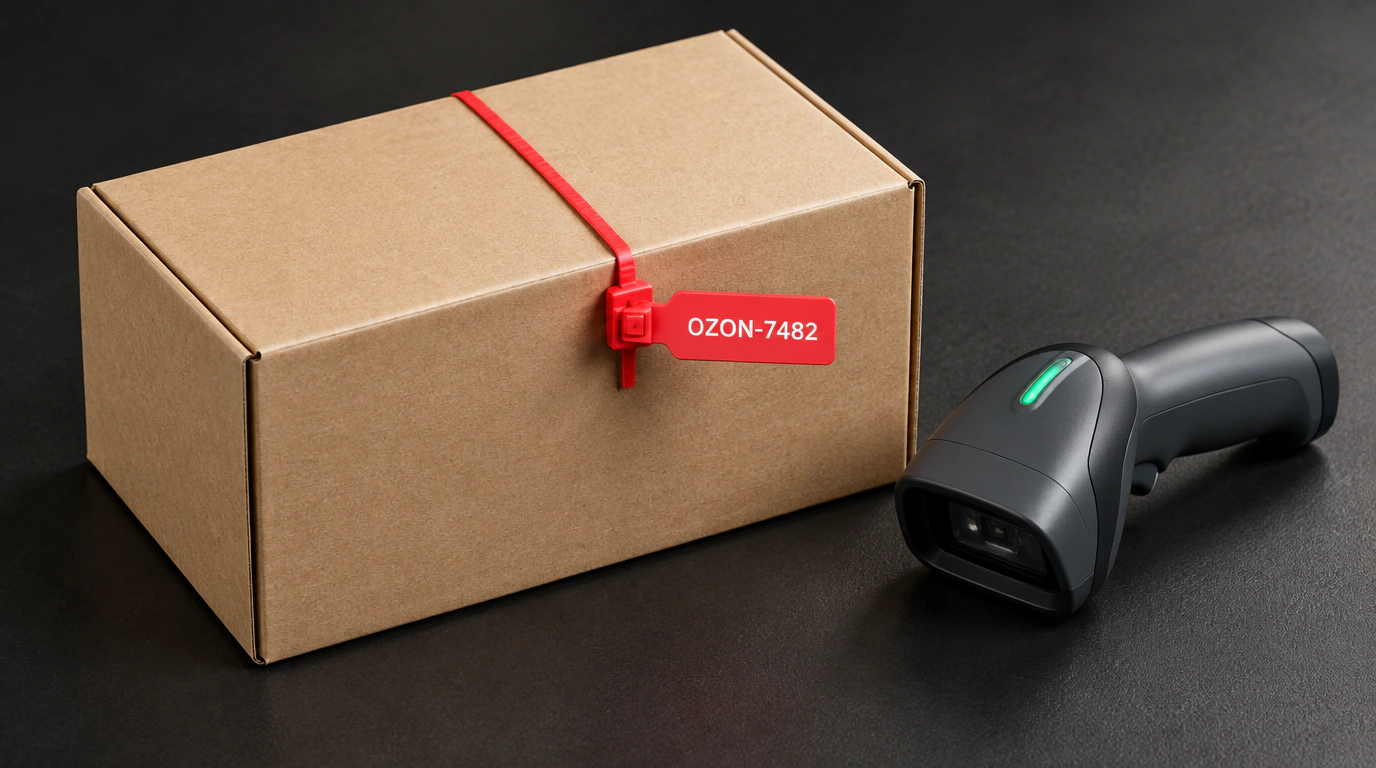
Let's break down this mechanism piece by piece, without any marketing fluff. The seller purchases special numbered security seals at their own expense. When packing an order at the warehouse, you securely attach the seal to the item itself or its branded factory box, and enter the unique alphanumeric number into the shipment card in your Ozon Seller dashboard.
When the parcel arrives at the pickup point or is handed over to a courier, the interesting part begins:
- The pickup point employee is required to verify the physical seal number against the value in the Turbo-PVZ software interface right in front of the customer.
- If the customer decides to return the item—either right at the counter or within the allowed return window—the operator first checks the integrity of the seal and scans its number.
- If the seal is broken, damaged, re-glued, or shows a different serial number, the return is blocked at the software level. The system physically won't let the operator press the accept-return button. The parcel stays with the buyer, and the seller's money isn't debited.
If, however, the pickup point employee is negligent and still accepts an item with a broken seal, having the recorded number on the digital waybill becomes ironclad grounds for unconditional compensation of the item's full retail value by the platform. Earlier, we covered Ozon's tariff changes and the cancellation of strict FBS slots in detail, and the rollout of seals looks like a logical continuation of shifting control onto formal protocols.
The Unit Economics of Sealing: Who Benefits and Who Goes Into the Red
Now let's take off the rose-tinted glasses and do the math with a calculator in hand, because marketplaces aren't in the charity business:
- For the FBS scheme: the service launches on November 17, 2026. A trial period runs until December 15—the marketplace checks shipments for free, and you only pay for the physical seals themselves. Starting December 16, however, a regular fee kicks in: 15 rubles per item handover.
- For the FBO scheme: the service launches on December 16, 2026, immediately on a paid basis with the same rate—15 rubles per handover.
And here lies a critical detail that's easy to miss. If a buyer tries on an item at the pickup point, sees the seal is intact, and declines the purchase (wrong size or fit), the item goes back into stock. When it's ordered again and handed over to the next customer, the marketplace will charge another fifteen rubles to verify the number.
On low-ticket items (goods under 1,000–1,500 rubles), enabling the service is a surefire way to kill an already thin margin. But if you sell complex electronics, watches, or designer goods with an average check starting from 7,000 rubles, where a single swap wipes out a week's profit, those 15 rubles plus the cost of the seal become a completely reasonable insurance policy against blatant theft.

