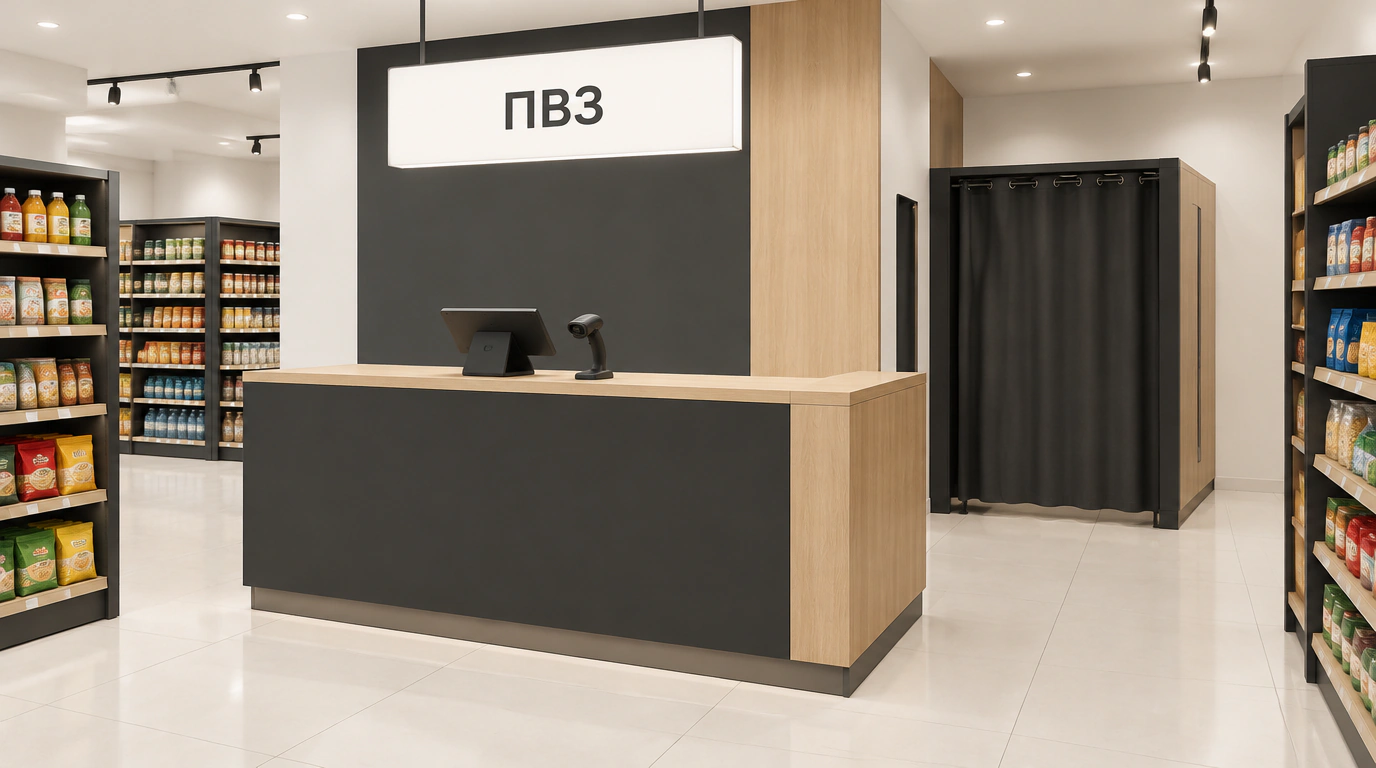
The pickup point (PVZ) market in major Russian cities hit saturation long ago: finding a vacant space with the right foot traffic without violating a neighboring partner's protected zone has become a puzzle with an asterisk. The merged company Wildberries & Russ (RWB) found an unconventional way out and announced a corporate partnership program for large retail chains.
The marketplace has set its sights on federal and regional grocery supermarkets, pharmacy chains, gas stations, and even bank branches.
Entry Terms: From 30 Branches and a Free Signboard
The key difference between the corporate format and the classic partner franchise is a radical lowering of entry barriers. No major renovations, repainting walls in signature purple, or ordering expensive brand-book furniture are required.
The marketplace sets straightforward criteria:
- Chain scale: at least 30 active branches must operate under the partner's unified brand.
- Minimum floor space: the retailer only needs to allocate 10–15 square meters of free space on the sales floor or near the checkout area.
- Free branding: Wildberries manufactures and provides an illuminated exterior signboard and wall bracket at its own expense. No lump-sum franchise fees or royalties.
- Equipment: a handover counter, a laptop or tablet running the "WB PVZ" app, a 2D barcode scanner, at least two 24/7 CCTV cameras, and one mandatory fitting booth with a curtain and mirror for apparel and footwear handovers.
Earlier, we broke down how the business of partner pickup points and Wildberries fulfillment centers works, and the corporate format opens up a similar stream of live foot traffic for retail chains: an average of 200 to 500 visitors per day per location.
Pitfalls for Retailers and Independent Pickup Points Next Door
On paper, the deal looks like a fairytale: the retailer earns a commission on every handed-over order and return, while simultaneously converting marketplace shoppers into buyers of impulse and everyday goods—coffee, pastries, medicine, or groceries for dinner.
In practice, however, retail chains will inevitably run into harsh operational reality:
- Overloaded frontline staff: supermarket cashiers or pharmacists will have to split their time between the main register and receiving pallets of customer parcels. During peak hours, this is guaranteed to create irritating lines.
- Conflict with neighbors: for independent owners of classic WB pickup points, a new pickup counter opening in the neighboring Pyaterochka or at a gas station threatens direct revenue cannibalization. The marketplace approves corporate locations on an expedited track, often turning a blind eye to existing protected zones.
For regular marketplace sellers, this move is an unambiguous plus. Expanding a walkable pickup network lowers non-buyout rates and speeds up delivery.

