A batch of 300 ₽ goods arrives and it's time to ship. You open a calculator, run the numbers for fulfilling from your own warehouse, and wince. On low-ticket items, FBS (storing, packing, and dropping orders off yourself) instantly eats your margin, adds manual labor, and weakens ad returns due to slower delivery. A seller poll in the Telegram channel 'Andrey: About Wildberries, OZON and More' confirmed the obvious: FBO—storing and shipping from marketplace warehouses—remains the backbone of sales. It is faster, simpler, and cheaper per unit.
One problem remains: warehouse fires and drone strikes haven't gone away. Worse, on October 13, 2026, Ozon and Ingosstrakh shut down their voluntary FBO inventory insurance program due to reinsurer (RNRC) restrictions on UAV risks. No new policies are being issued, and payouts apply only to prior claims. Meanwhile, recovering damages under standard marketplace terms after a major incident means months of gathering UPDs, waybills, and dispute paperwork. Low-cost items can't survive on FBS, yet FBO stock can no longer be insured.
The 'Pain Threshold' and Virtual Insurance
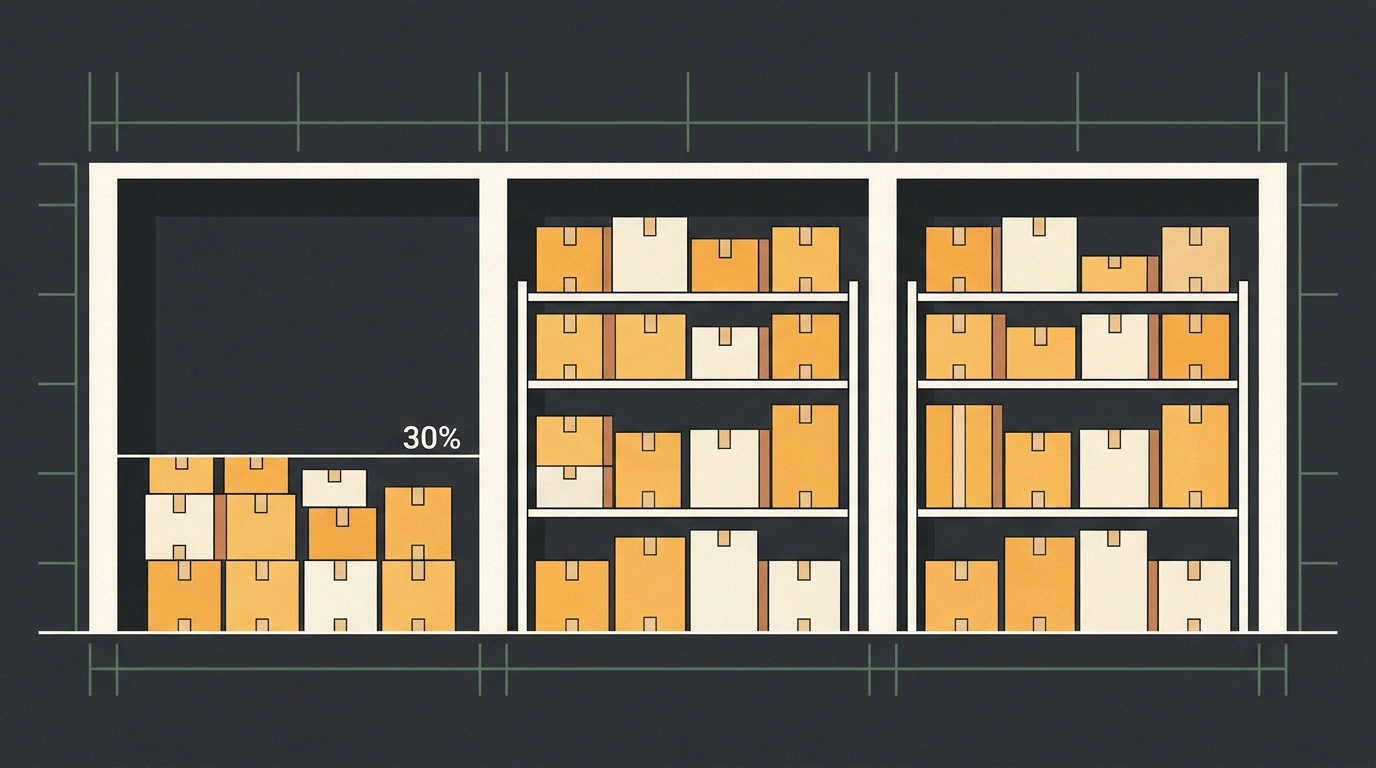
The solution borrows from ship bulkheads. If a hull is divided into sealed compartments, a breach in one is painful, but the ship stays afloat. In e-commerce, each warehouse is a compartment, and the bulkhead is your 'pain threshold'—the maximum inventory cost you can lose without triggering a cash-flow crisis.
Using real numbers from the channel author's practice, the setup looks like this:
- total Ozon stock in one category: 7M ₽ at cost (30 days of supply);
- inventory split across 8–12 warehouses;
- hard cap per site: 1M ₽ at cost.
Every seller sets the cap to fit their scale. Inside the team, the rule is strict: once a warehouse hits the ceiling, shipments there stop. Previously, an Ozon insurance policy cost around 100,000 ₽ a month. Now that cash stays in working capital, and math replaces insurance: if disaster hits one hub, you lose a pre-accepted amount, not the whole business.
Where It's Easy and Where You'll Work Harder
In regional hubs, staying under the cap is easy—stock rarely tops a million on its own. The real risk bottlenecks are Moscow, St. Petersburg, and sometimes the South, where sellers push volume for fast delivery.
On Ozon, you relieve the Moscow bottleneck manually. The platform has 5–7 warehouses around Moscow: if Khorugvino reaches roughly a million at cost, shipments pause and the manager books slots at neighboring Moscow hubs. Even in finicky food categories, this works, though it takes more time.
Wildberries is trickier because you don't always see the final warehouse when booking a shipment. Third-party monitoring tools help here. In practice, one sorting center (SC) usually routes transit to 1–2 predictable warehouses. Once you map the route and see a warehouse hit its limit, stop shipping through that SC.
Worst-Case Scenario and Emergency Stock Compression
You can't eliminate FBO risk completely. There have been nights when two warehouses burned at once and three sites were targeted. In the example above, losing two Moscow hubs doubles the hit to 2M ₽. It's rare, so you price it into your plan.
If a new wave of fires begins, an emergency protocol kicks in: pause restocks, boost ads, cut prices, and compress inventory from 30 days down to 7–14 days. Margin dips temporarily, but inventory turns quickly back into cash in the bank.
Set up an FBO risk cap in 4 steps
- Calculate your 'pain threshold' at cost—the loss your business can absorb without halting operations.
- Enforce a strict team rule blocking shipments to any warehouse already at its cap.
- In Moscow, St. Petersburg, and the South, split Ozon stock across nearby hubs and map WB 'SC → transit warehouse' pairs.
- If new incidents surge, pause shipments immediately and use ads plus discounts to shrink stock to 7–14 days.