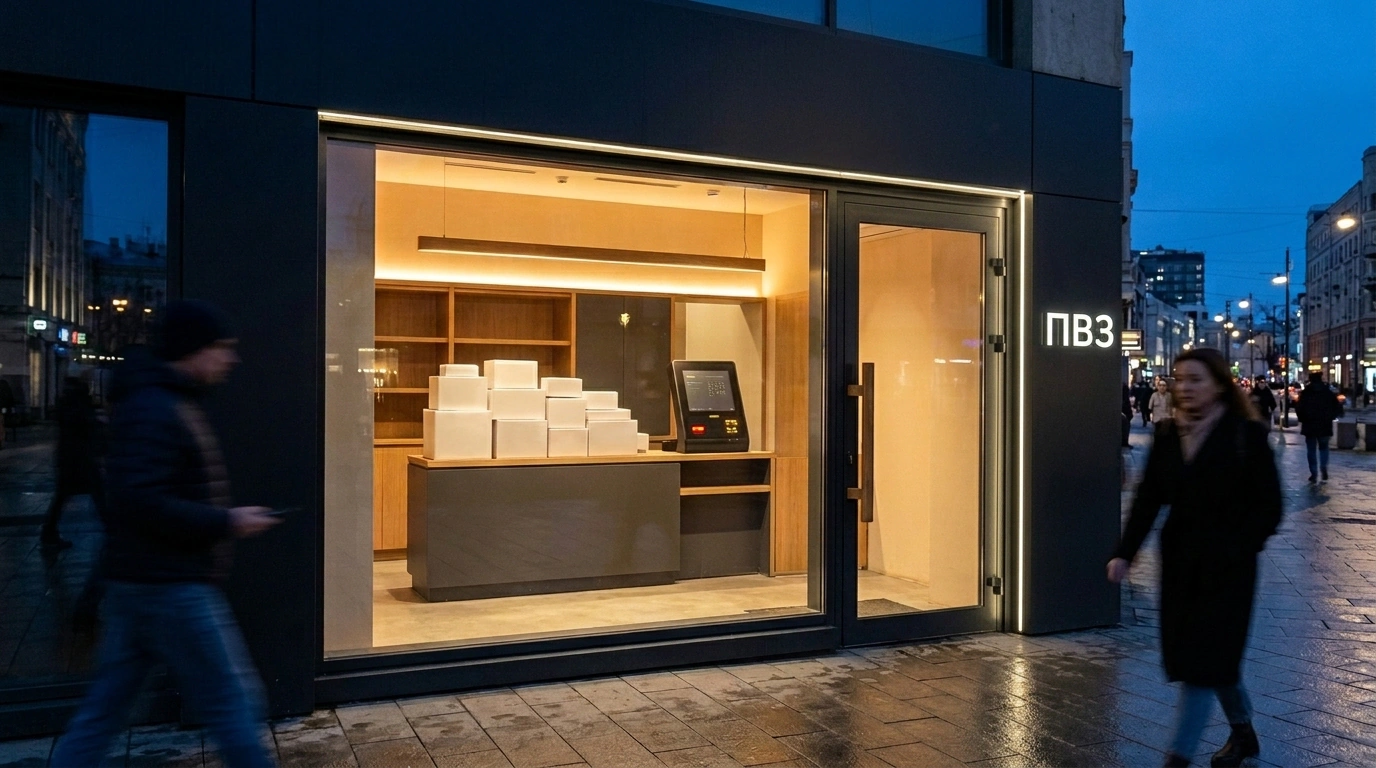
Over six autumn weeks—from August 25 to October 14, 2026—Wildberries' partner pickup point (PVZ) network shrank noticeably nationwide, with closures outnumbering openings several times over. You might expect the pickup map to thin out visibly. Yet look at the platform's total pickup locations across all formats, and the count barely moved.
A paradox? Not at all. Wildberries' network is quietly restructuring: independent franchisees are shutting down unprofitable doors while the platform fills gaps with other formats.
Scale of the Drop: Why August Denials Don't Contradict Fall Data
The autumn snapshot, circulated across industry channels and confirmed by Oborot.ru, points to a systemic nationwide contraction rather than a glitch in a couple of cities.
| Metric (August 25 – October 14, 2026) | Value |
|---|---|
| Partner PVZs closed | 1,847 |
| New partner PVZs opened | 512 |
| Net partner network change | −1,335 (−2.3%) |
| Regions with fewer partner points | 78 |
| Steepest drops: Pskov and Tambov regions | −8% and −6.7% |
| Moscow and St. Petersburg (closed / opened) | 237 / 43 (net loss 194) |
The geography speaks for itself. Both smaller regions and Russia's two largest cities saw closures sharply outpace openings.
That raises a fair question: wait, didn't Wildberries deny mass PVZ closures back in August? Who is spinning the numbers? There is no contradiction. In August, the marketplace cited July figures, before the wave of closures hit the data. The autumn snapshot captured the aftermath of disruptions that struck locations later. Wildberries has not yet issued a detailed public comment specifically on the October numbers.
Why Partner PVZ Economics Break First
To see why locations close, look at a pickup point's basic math. A partner PVZ is opened and funded by an entrepreneur under Wildberries' standard agreement. Their income is the PVZ commission—a variable percentage tied directly to the volume of orders handed out and accepted.
Expenses, however, barely budge. Rent, staff salaries, and utilities are fixed bills due every month, regardless of how many boxes cross the counter.
A simple chain reaction follows. When summer-and-fall attacks on Wildberries warehouses disrupt supply rhythms, order volumes dip at certain points. When parcel volume falls, the owner's commission drops in lockstep. With rent, payroll, and utilities unchanged, thin-margin locations slip straight into the red.
Small franchisees have little cash cushion. Two weak months mean paying rent out of pocket—and closing down beats bleeding cash on a losing site.
How Wildberries Plugs Gaps on the Map
For the marketplace itself, the exit of independent partners wasn't a logistics crisis. Total pickup points across all formats barely changed because two other pillars hold up network density.
The first is company-owned (branded) PVZs run directly by Wildberries without an outside sole proprietor or LLC. Here, math works differently: the marketplace optimizes for total GMV and neighborhood customer retention rather than single-door break-even. The second pillar is co-branded pickup zones inside Russian Post (Pochta Rossii) branches. The postal service already has buildings nationwide, including low-traffic areas where an independent owner couldn't cover rent.
Wildberries' logistics didn't collapse, and shoppers aren't facing a pickup shortage. What is changing is the market structure: independent franchisees' share is shrinking while platform-owned infrastructure and major partners like Russian Post gain weight. One practical question for sellers remains unanswered in public data: how replacing a familiar partner PVZ with a Russian Post counter affects local return intake and FBS drop-offs. Sellers will have to test that firsthand at their own shipping points over the coming months.