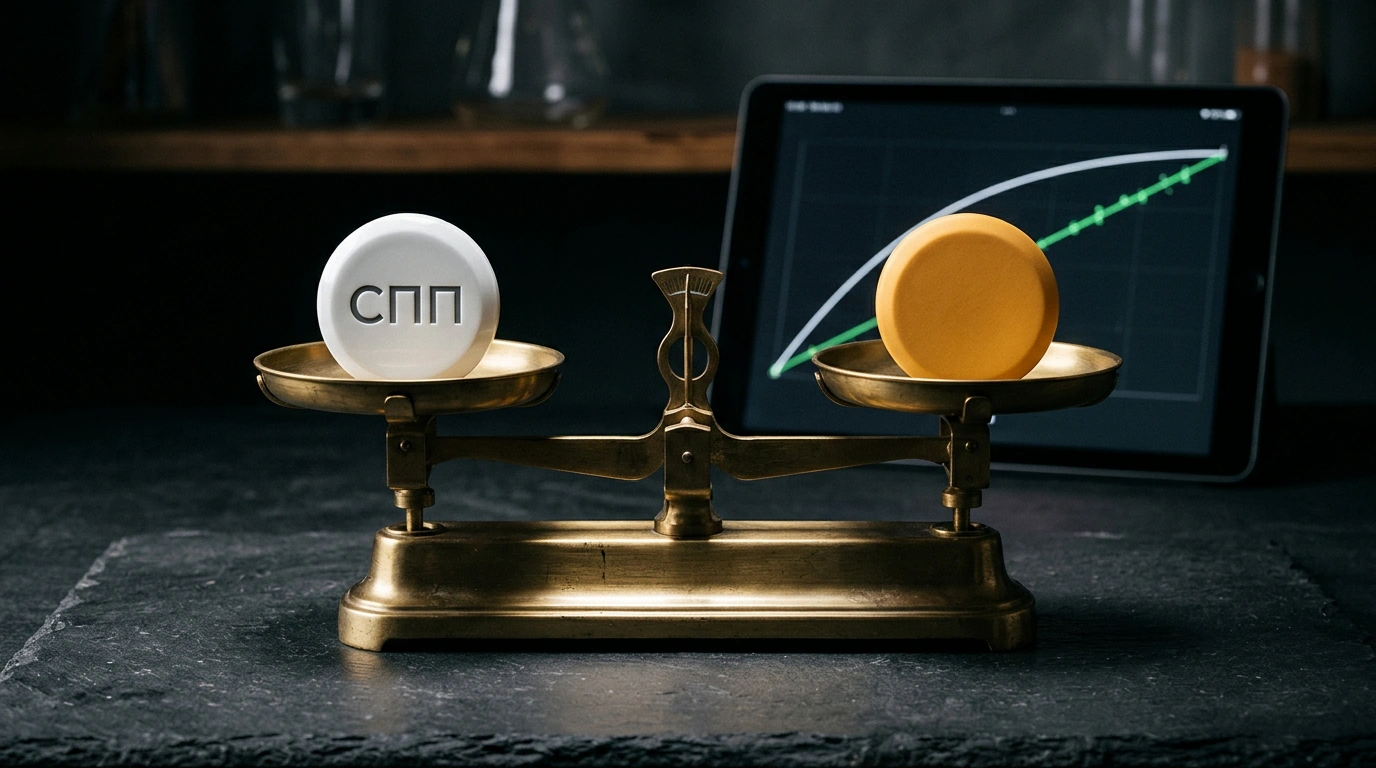
It's tempting to assume the rule is simple: pour more rubles into Wildberries ads and the platform gives buyers a bigger discount. In reality, it works differently. You can burn tens of thousands in promo bonuses or run ads in bursts with weekend pauses—and get a tiny storefront discount instead of the promised max. In a WB Partners video guide released November 20, 2026, Wildberries spelled out exactly how it calculates the extra promotion discount.
How the 14-Day Formula Works
First, a quick terminology check. The WB Discount (still widely called SPP—loyal customer discount) is a storefront markdown funded out of Wildberries' own pocket. Shoppers see the lower price, while your payout is still calculated from your set price. The marketplace covers the gap.
You can boost this percentage in two ways: join an eligible calendar promo (discount rules are listed in each promo's terms) or run internal WB promotion and ads. In the second case, the extra boost caps at 10%, and the calculation updates daily.
Watch what the algorithm actually measures. Two levers drive it:
- Ad spend share (DRR) over the past 14 days. Wildberries divides your ad spend by total order value across a rolling two-week window. Absolute budget doesn't matter. WB's official example makes this clear: spend 1,000 ₽ on ads and generate 10,000 ₽ in orders, and your ad share is 10%. A small store with a steady ratio competes on equal footing with a major supplier.
- Campaign continuity. If ads sit paused at any point during that 14-day window, the extra WB Discount starts slipping. Pause campaigns for two days to 'take a breather', and the algorithm immediately trims your percentage.
- Paying with promo bonuses. Only real money spent from your unified balance—your main cash account—counts toward the formula. Gifted platform promo bonuses are excluded completely.
- Pausing campaigns. Any gap in promotion over the past 14 days pulls your accumulated percentage down, even if you spent heavily on active days.
'What If My Store Has Multiple Categories—Do I Have to Advertise Everything?'
That's a fair question when your catalog spans dozens of SKUs across different niches and you can't fund separate campaigns for all of them. Here, the mechanic offers a welcome bonus: a cross-category spillover.
The extra ad discount doesn't apply only to the exact listings currently running in campaigns. It extends to all eligible-category items in your account. WB's guide gives a concrete example: say you sell both 'household goods' and 'home textiles'. Run promotion only on household goods, and the WB Discount rises for both household goods and home textiles at once. One steady campaign in a high-margin category can sharpen storefront prices across an adjacent line.
The Widget, the Kill Switch, and Cool-Headed Math
You can track your status inside WB Promotion right on the campaigns page. A dedicated widget shows your current percentage and the list of eligible categories. If you don't see the widget, your products aren't in the qualifying list yet. Wildberries doesn't publish a static external list and expands it periodically, so the widget itself is your main signal. Hover over it to see your 14-day trend in a tooltip.
One key caveat: the widget figure is your available maximum, while the actual discount an individual shopper sees at checkout may vary.
If the WB Discount gets in your way (for instance, when you need strict retail price parity), you can switch it off manually on the 'Price and Discount Management' page—and turn it back on just as easily. Changes take effect immediately. Toggling the discount on or off doesn't hurt item ratings or directly change search rankings.
That leaves unit economics. Yes, Wildberries funds the buyer discount, but the ad budget from your unified balance comes out of your pocket. Pushing bids up for two weeks just to chase the 10% ceiling only makes sense if the extra orders pay for the higher ad-to-sales ratio. If chasing a shiny widget number eats your net profit, leave it alone.