Short-form videos have latched onto a new DIY diagnostic trend. Women are told to stand in front of a mirror and judge the shape of their glutes: a rounded, heart-shaped curve supposedly signals balanced estrogen, while a square silhouette or noticeable hip dips are labeled an alarming sign of "adrenal fatigue" and sky-high cortisol.
It sounds tempting—why book a doctor's appointment and run blood work if you can read your endocrine status in two seconds from a reflection? Evidence-based endocrinology and anatomy, however, view these claims with well-earned skepticism.
Pelvic Anatomy vs. Social Media Trends
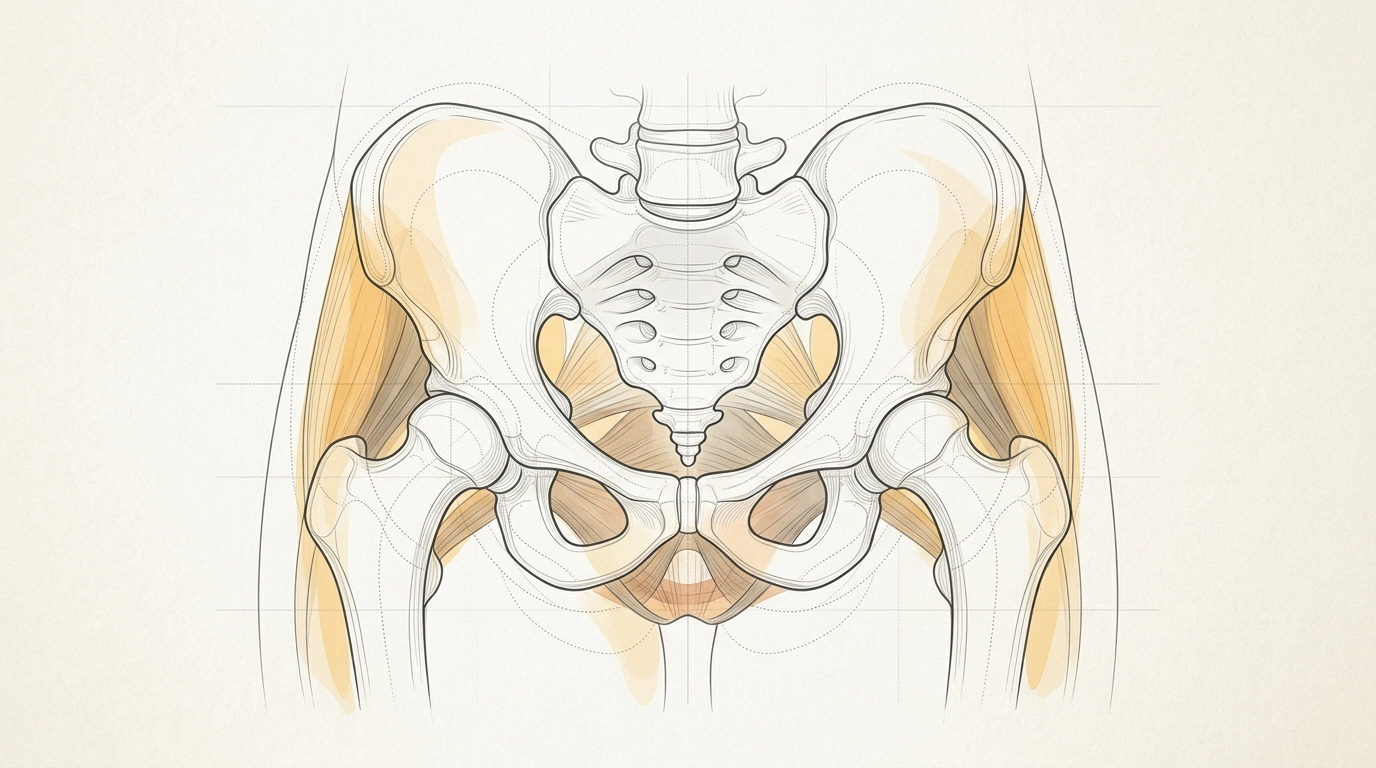
The outer contour of your hips and glutes is shaped by three things, and the biggest one is your bone structure—written into your genetics:
- The width of your iliac crests sets the upper frame of your pelvis.
- The length and angle of your femoral neck determine how prominently the greater trochanters sit on the sides.
- Torso proportions: when the gap between your lower ribs and iliac crest is short, the curve from waist to hips looks sharper. With a longer torso and a narrower pelvis, the silhouette naturally appears straighter and more square ("H-shape"), even with textbook-perfect lab results.
The second layer is muscle: the gluteus maximus, medius, and minimus. Their volume, firmness, and tone depend on movement and resistance training—not daily swings in stress hormones. If those muscles don't get regular strength work, the upper glute area simply looks flatter because there is less muscle tissue there.
The Protective Role of Gynoid Fat
Sex hormones do influence where the body stores fat, but that is a slow evolutionary pattern unfolding over years:
- During reproductive years, estrogen directs fat storage toward the hips and glutes (the gynoid pattern). Fat cells in this region have more receptors that slow down spontaneous fat breakdown.
- Landmark research at Oxford University led by Dr. Konstantinos Manolopoulos (International Journal of Obesity) showed that subcutaneous gluteofemoral fat is metabolically passive and acts as a "safe buffer." It traps free fatty acids—shielding the liver and blood vessels from atherosclerosis—and produces the protective hormone adiponectin.
As for cortisol, severe clinical conditions like Cushing's syndrome really do shift fat toward the abdomen. Everyday work stress or a rough night's sleep, though, cannot selectively melt fat off your hips. We looked closer at how hormones regulate body weight in an earlier piece.
The shape of your glutes does not measure the hormones in your blood. If you are dealing with persistent fatigue, irregular periods, or unexplained weight changes, the reliable move is to see an endocrinologist and check actual lab markers (TSH, ferritin, prolactin, salivary cortisol)—not a mirror diagnosis from social media.
Make peace with your natural build: bone geometry doesn't change, while strength and shape come from smart training and balanced nutrition.