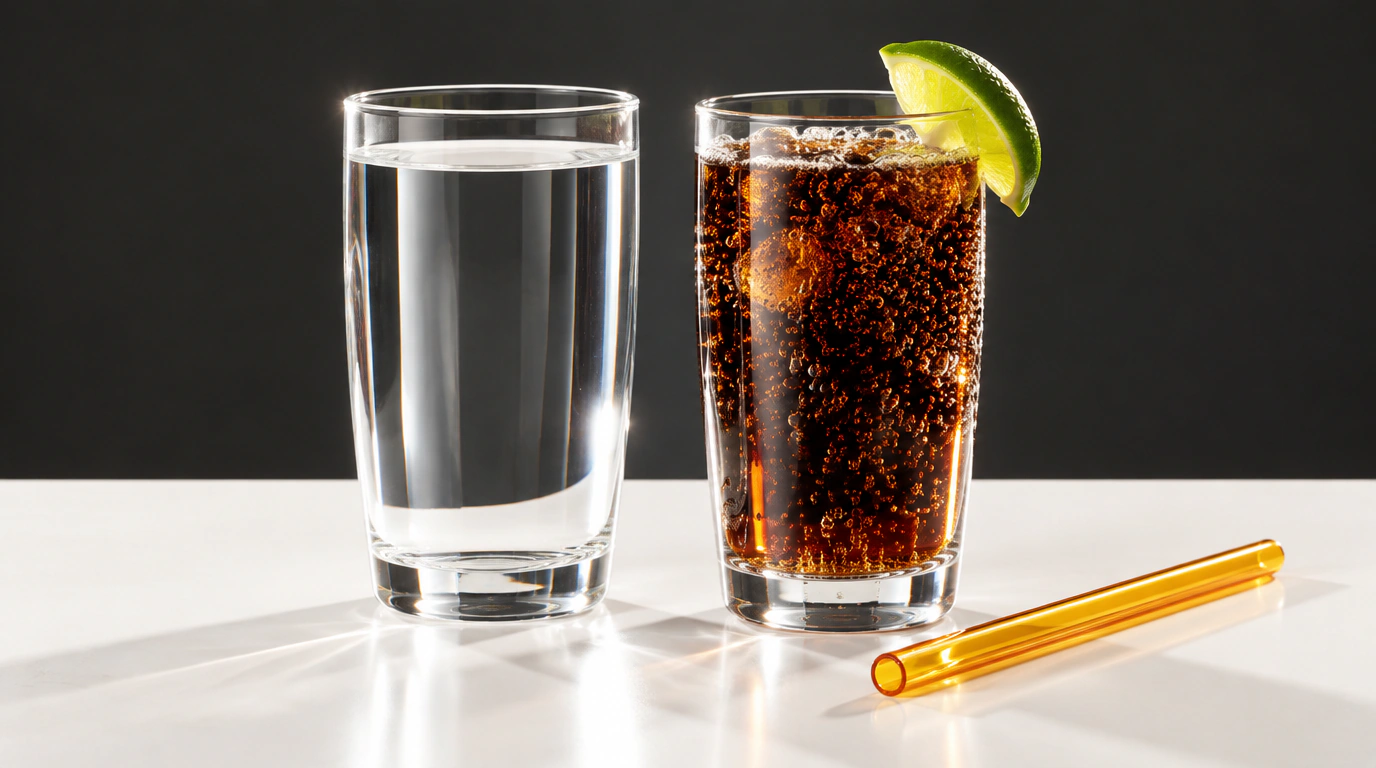
Conventional wisdom sounds airtight: if you want to lose weight, drink nothing but pure, still water, and stay far away from "Zero" sodas and artificial sweeteners—supposedly toxic chemicals that wreck your metabolism and pack fat onto your waist.
On the surface, that logic feels obvious: why drink lab-made sweeteners when plain water exists? Yet when scientists put that belief to the test in strict randomized clinical trials, the results surprise almost everyone: people drinking diet soda lose just as much weight—and often statistically more—than those drinking water alone.
The Clinical Trial Surprise: Diet Soda vs. Water
In a classic 12-week weight-loss trial by Dr. John Peters and colleagues (Peters et al., published in Obesity), more than 300 volunteers with obesity were followed closely:
- Participants were randomly split into two groups: one drank at least 710 ml of plain water per day, while the other drank the same volume of beverages made with zero-calorie sweeteners (aspartame, sucralose).
- The outcome turned heads: the diet-beverage group lost an average of 5.95 kg, compared with 4.09 kg in the water-only group.
- People using zero-calorie sweeteners reported noticeably less hunger and found it easier to stick to a calorie deficit.
- A follow-up two-year trial (SWITCH) confirmed that sugar-free drinks help keep lost weight off long term with zero "metabolic slowdown."
Hedonic Hunger and the Real Toxicology of Aspartame
Where does this surprising edge come from? Brain psychology. Evolution wired sweet taste into our limbic system as a signal of fast energy and safety, triggering a small burst of dopamine and endorphins.
When someone goes on a strict diet and bans every sweet taste, "hedonic hunger" quietly builds up. Eventually willpower runs dry, and a binge hits—not on an apple, but on cake or chocolate packed with hundreds of extra calories and fats. A zero-calorie drink satisfies sweet taste buds without adding sugar to your bloodstream, taking the edge off mental deprivation.
And what about the scary headlines around aspartame? The Joint FAO/WHO Expert Committee on Food Additives (JECFA) reaffirmed an acceptable daily intake of up to 40 mg per kilogram of body weight. For a 70 kg adult to hit that limit, they would have to drink 9 to 14 cans of diet soda every single day—an amount virtually nobody reaches in normal life. We have tackled similar claims in myths about sugar substitutes.
The one real downside of fizzy drinks is phosphoric and citric acid, which can soften tooth enamel with frequent exposure. Sip through a straw, rinse your mouth with plain water afterward, and wait at least 30 minutes before brushing your teeth.
There is no need to demonize modern food tools. If a glass of sugar-free cola helps you stay comfortably in a calorie deficit without raiding the cookie jar, it is a safe, practical ally for weight loss.