When most people decide to drop a few pounds, they stare at a single number: daily calories. Portions shrink, fats and carbs get exiled from the plate, and the scale obediently ticks down. Hardly anyone stops to ask what tissue is actually disappearing.
Without enough dietary protein, up to a third—and sometimes half—of lost weight comes from skeletal muscle. Your body literally burns its own muscle for fuel. The result is frustrating: a softer, "skinny-fat" look, a slower resting metabolism, and rapid fat regain once the diet ends. To burn fat while protecting lean tissue, endocrinologists recommend aiming for 1.5–2.0 grams of complete protein per kilogram of body weight.
The Metabolic Cost of Protein and Muscle Protection
Protein stands apart from other macros thanks to its high thermic effect of food (TEF). Breaking down peptide bonds, absorbing amino acids, and processing byproducts burns 20% to 30% of protein's calories right off the top. Out of every 100 kcal of pure protein, your body nets only 70–80 kcal; the rest dissipates as heat.
Amino acids in the gut also trigger satiety hormones (cholecystokinin and peptide YY) while dialing down the hunger hormone ghrelin. A large meta-analysis by Dr. Robert Morton in the British Journal of Sports Medicine (49 studies, nearly 2,000 participants) showed that around 1.62 g of protein per kilogram of body weight fully protects muscle mass during regular training. We covered this mechanism earlier in preserving muscle mass in a calorie deficit.
Five Satisfying Alternatives to Boiled Chicken Breast
The number-one reason people quit high-protein diets is sheer boredom. Nobody wants to chew dry chicken breast and chalky low-fat cottage cheese for months on end. Here are five practical, protein-dense swaps to keep meals interesting:
- Part-skim ricotta (11 g protein per 100 g): Made from whey, ricotta delivers fast-digesting whey albumin packed with BCAAs and calcium, with a creamy texture that easily replaces heavy spreads.
- Chicken hearts (17 g protein per 100 g): A lean, firm muscular organ meat rich in complete animal protein, coenzyme Q10, and heme iron to guard against fatigue and anemia.
- Canned tuna in water (24 g protein per 100 g): Nearly pure protein (24% protein with under 1% fat). Choose cans packed in water rather than oil, and you still get heart-friendly omega-3s.
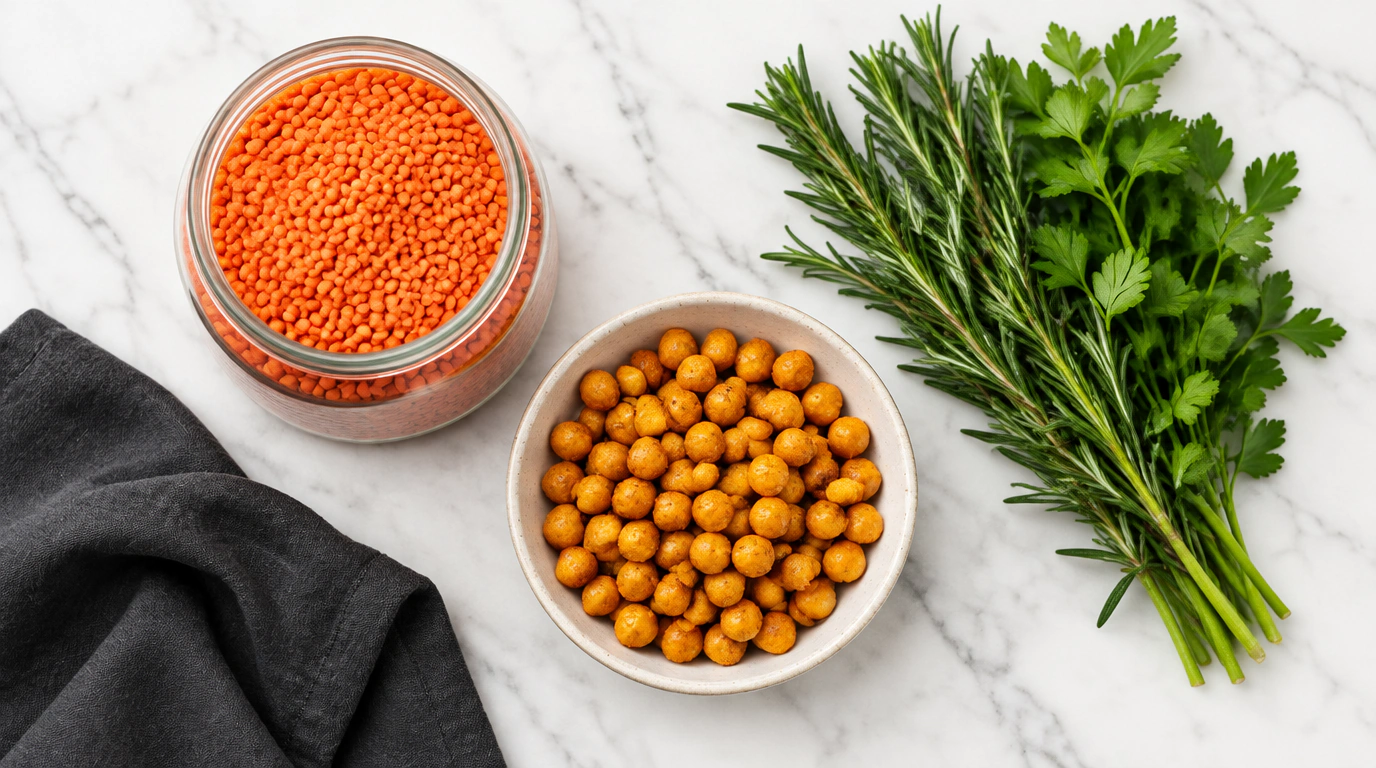
- Red or green lentils (25 g protein per 100 g dry): A plant-based protein heavyweight loaded with resistant starch and soluble fiber to feed gut bacteria and keep you full for hours.
- Crispy roasted chickpeas (19 g protein per 100 g): A smart swap for potato chips. Boiled chickpeas baked with spices and a touch of oil crunch like croutons while adding serious protein.
Daily Protein Balance Checklist
- Every main meal includes a palm-sized serving of protein
- Protein sources rotate across fish, poultry, organ meats, and legumes
- A 25–35 g protein serving is planned after strength workouts
- Total daily protein is split evenly across 3–4 meals
Build your meals around protein, and fat loss stops feeling like a miserable battle with hunger.