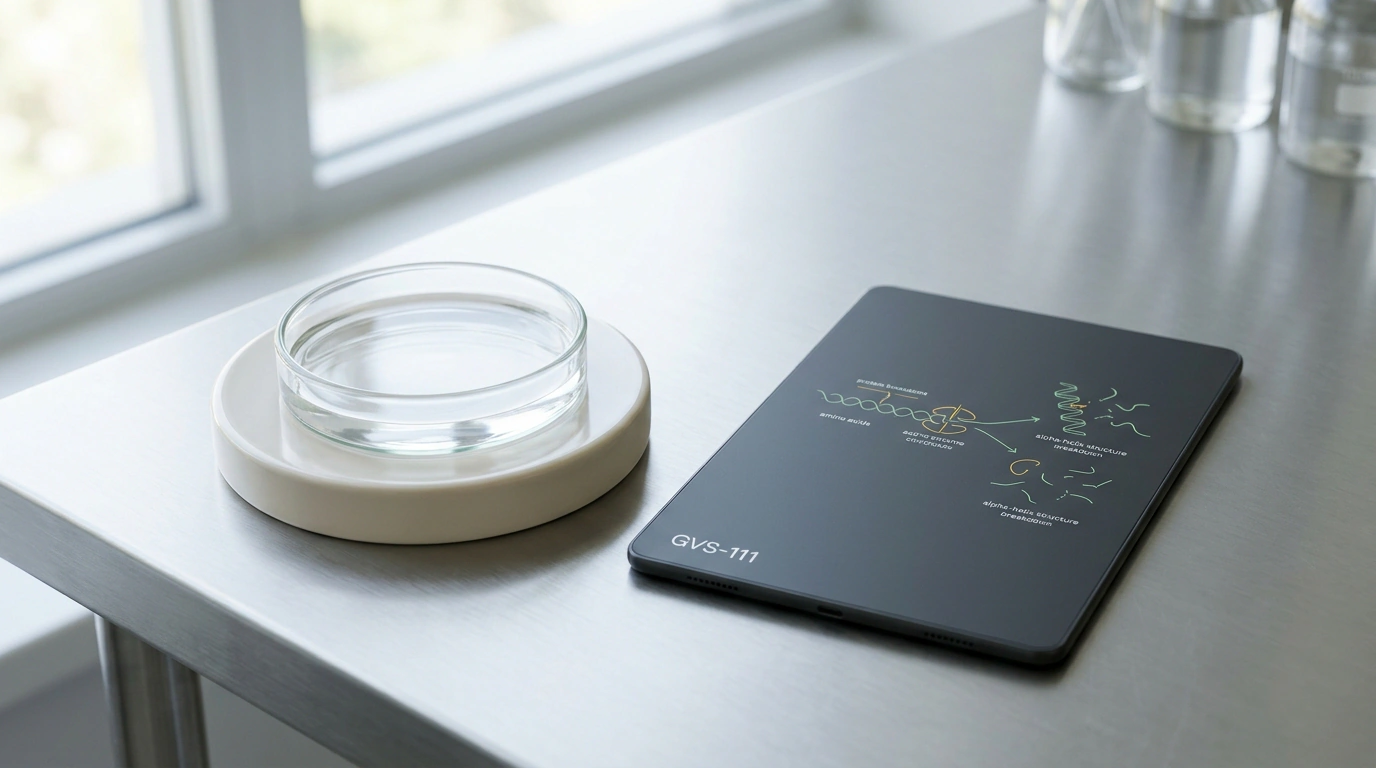
In the world of biohacking, nootropics, and the endless chase for productivity, legends periodically surface about "unique domestic molecules" capable of turning a tired brain into a supercomputer. The brightest example is Noopept (omberacetam, also known by the lab code GVS-111). The drug is actively advertised as an accessible over-the-counter remedy that supposedly protects neurons, upgrades memory, speeds up learning, and does so—wait for it—exactly 1,000 times more powerfully than good old piracetam.
It sounds stunning. Yet if you strip away the advertising gloss and look at the chemistry and pharmacokinetics through the sober eyes of a physician-researcher, the excitement evaporates instantly. A doctor on the channel «Бородатый не пробовал...» pointed out a classic sleight of hand: marketing masterfully mixes a molecule's preclinical activity in a Petri dish with clinical efficacy in a living human. Let's break down this mechanism piece by piece.
Where the Myth of "1,000-Fold Power" Came From
To understand the origin of that flashy number, we have to look into the history of the drug's creation. In 1992, a team of scientists at the V.V. Zakusov Research Institute of Pharmacology of the Russian Academy of Medical Sciences, led by T.A. Gudasheva and R.U. Ostrovskaya, engineered an interesting molecule: N-phenylacetyl-L-prolylglycine ethyl ester. The idea was elegant—to combine a fragment of a classic racetam with the endogenous neuropeptide cycloprolylglycine to create a stable dipeptide stimulant.
In preclinical trials on rodents, researchers tested the formation of a passive avoidance conditioned reflex in mice. And here lies the root of the advertising trick. For a mouse to remember an electric shock in a dark chamber, the effective dose of Noopept was 0.01 to 0.1 milligrams per kilogram of body weight. Meanwhile, achieving the same effect with piracetam required feeding 100 to 300 mg/kg.
Comparing those numbers (0.1 mg versus 100 mg), marketers declared with a clear conscience: "Noopept is 1,000 times stronger than piracetam!" Yet in pharmacology there are two fundamental concepts that must never be confused:
- Potency (binding strength / affinity): how tiny a dose of a substance is needed to trigger a receptor response.
- Therapeutic efficacy: how much a patient's condition actually improves, mortality drops, or memory recovers compared to a dummy pill (placebo).
Fentanyl is hundreds of times more potent than morphine by dosage, but that doesn't make it a universal cure for a headache. The "1,000 times" figure only speaks to milligrams per kilogram of mouse weight, not that your memory will work a thousand times deeper.
What Actually Happens in a Rodent's Brain
In experiments on isolated slices of rat hippocampus and cerebellum, the molecule indeed behaved curiously. It increased the sensitivity of glutamate receptors (AMPA and NMDA) involved in long-term potentiation—the electrophysiological basis of memory formation. With prolonged administration in rats, levels of brain-derived neurotrophic factor (BDNF) and nerve growth factor (NGF) rose, while markers of lipid peroxidation fell.
Watch how deftly biohackers extrapolate this data: "Since BDNF went up in a rat, I'll grow new neurons and learn Chinese in a month." But between a tissue slice in a nutrient solution and a thinking human lies the insurmountable chasm of human biochemistry and physiological barriers.
The Gastrointestinal Trap: Why Peptides Die Along the Way
The main stumbling block for any oral peptide is our digestive tract. The human stomach and intestines are literally packed with peptidase and protease enzymes. Their evolutionary job is to aggressively chop up any foreign protein chains into individual basic building blocks—amino acids—to protect the body from toxins.
When a Noopept tablet enters the stomach, rapid hydrolysis begins. In a human pharmacokinetics study (Boiko, Zherdev et al., 2004, PMID: 15079908), scientists honestly tried to detect therapeutic concentrations of cycloprolylglycine in the venous blood of volunteers after taking a standard tablet dose. The result was discouraging: they failed to reliably confirm the presence of therapeutically meaningful concentrations of the intact peptide in the human bloodstream.
The molecule breaks down in the digestive tract, and there is simply no evidence that the unsplit peptide can cross the blood-brain barrier in any appreciable amounts and enter human brain tissue. The paradox is clear: in a Petri dish the molecule is active, but when you swallow a pill, it simply never reaches your neurons.
A Clinical Trial Without a Placebo and Piracetam's Legacy
You might reasonably ask: "If the drug is sold in pharmacies, surely it was tested on humans?" It was—and that is the most revealing part of the story.
The pivotal clinical study of Noopept's efficacy was published in 2009 (Neznamov, Teleshova et al., doi: 10.1007/s11055-009-9128-4). Let's look at its methodology:
- Only 53 people with mild cognitive impairment following traumatic brain injuries and vascular disorders took part in the trial.
- The study lasted 56 days and was completely open-label: both patients and doctors knew in advance who was receiving which drug.
- Most importantly, the study had no placebo group. Noopept (20 mg/day) was compared solely against piracetam (1,200 mg/day).
- The work was conducted by staff of the very institution that developed the molecule.
From the standpoint of modern evidence-based medicine (GCP standards), comparing an unproven agent against piracetam is a methodological dead end. The reason is that piracetam itself lost its status as a proven drug long ago. In a landmark Cochrane systematic review (Cochrane Database of Systematic Reviews, CD001011) summarizing dozens of piracetam trials for dementia and memory impairment, the conclusion is unambiguous: high-quality double-blind studies showed no statistically significant difference from placebo.
Comparing a new peptide to an old racetam without a placebo group is like trying to figure out which of two spells is better at dispersing clouds. Roughly 30–40% of the subjective "improvement in mental clarity" in such tests comes from a pure placebo effect multiplied by natural recovery after injury.
That is precisely why neither the US FDA nor the European EMA has registered Noopept as a medicine. On the Western market, it circulates strictly in the gray zone of the internet labeled as a "research chemical" or as a dubious dietary supplement.
The Sober Bottom Line: What an Enthusiastic Biohacker Risks
It might seem that if a person believes in a miracle pill and feels a surge of energy, what difference does it make whether it's a placebo or not? The difference is colossal, and it lies in the cost of lost time.
When a young, healthy student takes stimulants during exam season, at worst they get irritability, evening insomnia, or a spike in blood pressure (the drug stimulates sympathomimetic reactions). But when an older person with the first warning signs of vascular dementia, a depressive episode, hypothyroidism, or severe vitamin B12 deficiency starts "feeding their brain" for years with heavily advertised over-the-counter pills, the precious therapeutic window slams shut.
Any attempt to build health on handfuls of pills often leads to dangerous polypharmacy, whose risks we covered in the article on uncontrolled supplement intake. Memory and mental clarity really can be supported—not with capsules of unproven peptides, but through blood pressure control, deep sleep, aerobic movement, and timely consultation with an evidence-based neurologist.