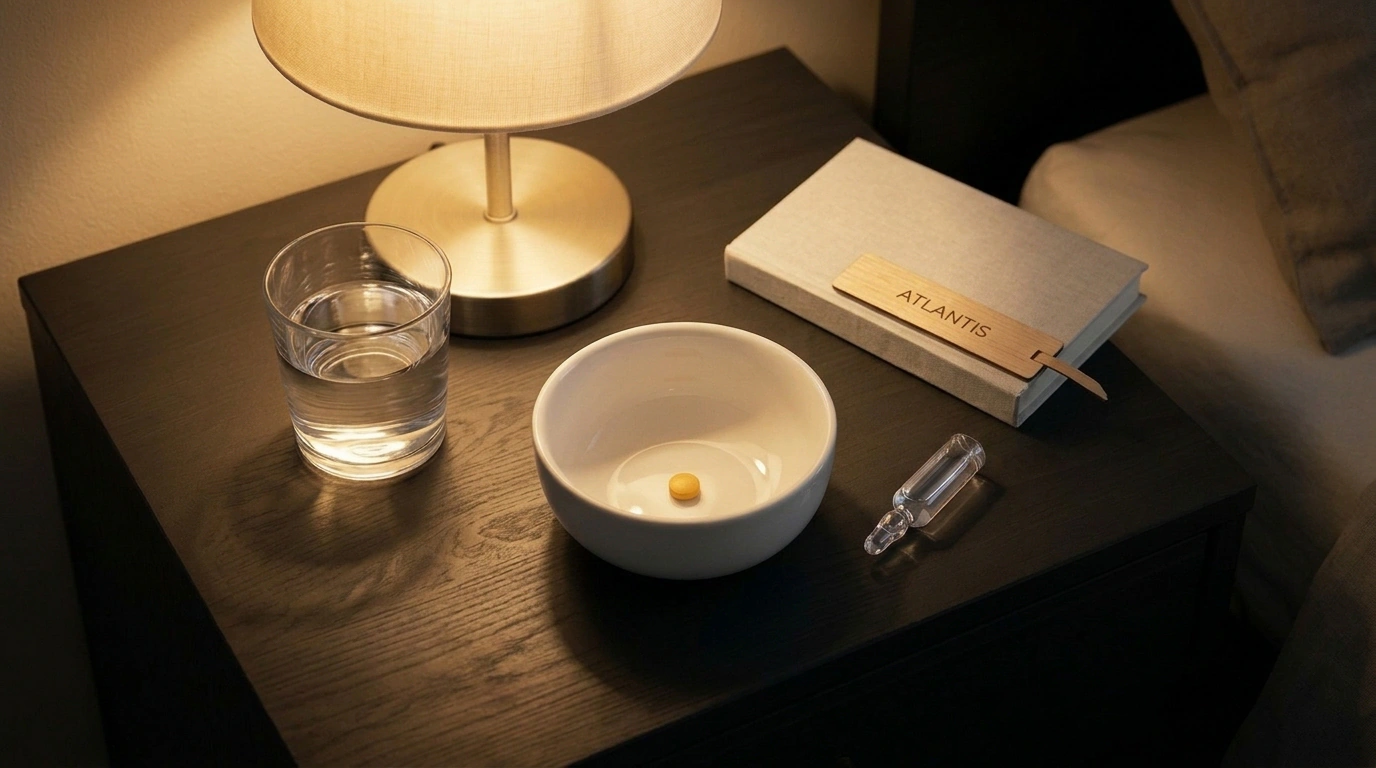
"Amitriptyline and IBS: who does it work for? Another study showing the drug's advantages over placebo," writes gastroenterologist Andrey Kharitonov as he begins breaking down a fresh analysis of the British ATLANTIS clinical trial. Behind that dry remark lies a drama familiar to many in the doctor's office.
When someone suffers for years from morning abdominal cramps and a doctor prescribes an old tricyclic antidepressant, the first reaction is often hurt or bewilderment. Why do gastroenterologists prescribe amitriptyline for irritable bowel syndrome (IBS), and who does it help?
The Gut–Brain Axis: Why Cramps Are Regulated Through the Nervous System
You might reasonably ask: "Wait—if my stomach is physically cramping, what do psychiatric pills have to do with it? Does the doctor think the pain is all in my head?" I understand that skepticism. IBS cramps are real, but the glitch isn't hiding in the gut lining—it's in the signal line between your belly and your brain.
The intestinal wall contains more than 100 million neurons connected to the brain via the vagus nerve and spinal cord. In IBS, visceral hypersensitivity develops: pain receptors act like an oversensitive car alarm going off from a falling leaf. Normal gas movement gets read as a threat and triggers a spasm, something we covered in our breakdown of the gut–brain axis.
That's why gastroenterologists use the drug differently than psychiatrists. Depression requires 75–150 mg per day, whereas for IBS, microdoses of 10–30 mg at bedtime do the work. They act in the dorsal horns of the spinal cord like a volume knob: keeping serotonin and norepinephrine in pain-suppressing pathways and gently slowing gut motility.
A tiny evening dose isn't fixing your mood—it's fixing a broken pain-signal filter.
The ATLANTIS Protocol: Microdose Titration and Four Patient Clusters
This mechanism was tested by the British ATLANTIS trial in The Lancet (PubMed) across 463 patients at 55 clinics. For 6 months, participants took either placebo or amitriptyline at night, gradually titrating the dose over the first 3 weeks, and the drug reduced symptom severity on the IBS-SSS scale by 27 points more than placebo.
A real-world example: a patient with years of diarrhea-predominant IBS and morning cramps gets no relief from antispasmodics, while anxiety runs sky-high. The doctor prescribes 10 mg of amitriptyline at night, titrated up to 20 mg—and within 3 months, the gut's sensitivity threshold resets.
In 2025, the ATLANTIS authors grouped participants into four clusters:
- mild GI symptoms and moderate psychological difficulties;
- pronounced bowel symptoms with minimal anxiety;
- moderate GI complaints alongside a strong physical reaction to stress;
- severe abdominal pain with intense anxiety and depression.
Treatment success depends directly on the balance between pain and anxiety.
Profile of the Ideal Candidate: Who Benefits Most from a Microdose
That raises an obvious question: "So which of the four groups saw the strongest effect—surely the most severe patients?" Actually, the exact opposite.
The best response came from the third cluster—moderate GI complaints paired with pronounced somatization of stress. Men, people over 50, patients with the diarrhea-predominant form (IBS-D), and those with high scores on the PHQ-12 questionnaire also responded best.
With accelerated transit, the pill dampens spinal alarm signaling and, through a mild anticholinergic effect, slows peristalsis—whereas in constipation, slowing motility can get in the way.
A microdose delivers the greatest benefit in diarrhea-predominant IBS and high stress sensitivity.
The Nocebo Trap: Why Side Effects Appear Even from a Sugar Pill
Meanwhile, in the most anxious fourth group, patients most often dropped out due to dry mouth or drowsiness—and at the same rate whether they were taking the active drug or empty placebo pills.
That's the nocebo effect in action, which we examined using the example of muscle pain on statins: after reading the package insert, an anxious person mistakes ordinary fatigue for a side effect.
Amitriptyline is a prescription medication: choosing the dose, titrating it, and tapering off without stopping abruptly must be done strictly under a doctor's supervision.
Understanding how the therapy works helps prevent dropping treatment early, and Andrey Kharitonov's conclusion sums it up best: "This once again shows the considerable contribution of the nocebo effect to medication side effects in gastroenterology practice—because the nocebo effect arises from expecting side effects from a drug, even when the patient is taking a placebo."