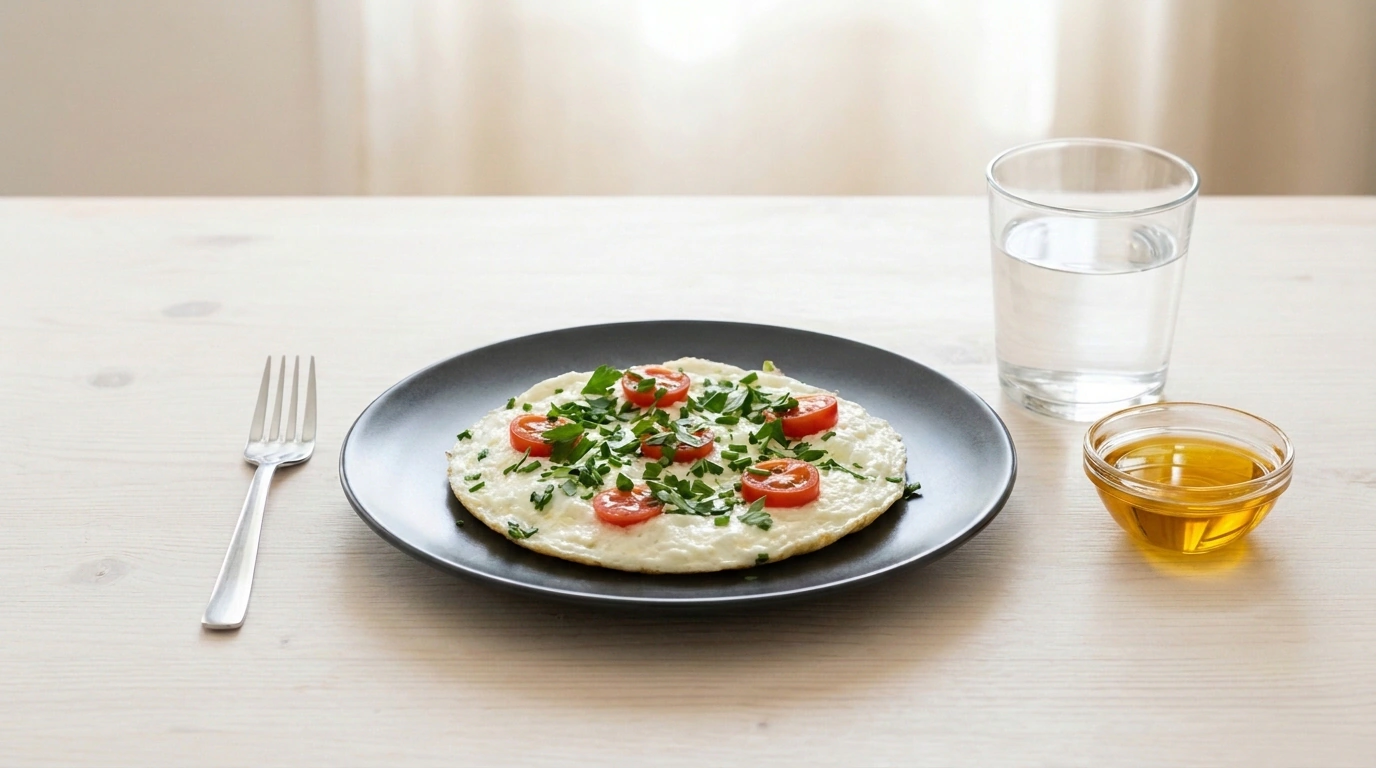
In the kitchen each morning, you have two choices. First, you can force down a piece of pork fat or a spoonful of oil on an empty stomach to 'get bile flowing.' Second, you can calmly cook an omelet or make oatmeal with butter. Pure fat might feel like an emergency start button while regular food comes later. In reality, both options trigger the exact same mechanism in your gallbladder, except the first one also makes you feel awful.
Where the 'Start Your Gallbladder' Trend Came From
This idea has been circulating in detox blogs for years. Recently, Dr. Burlakov in his Telegram channel 'Borodaty ne proboval...' reviewed a video by a toxicologist who urged viewers to eat pork fat, butter, or lamb tail fat every morning. The claim was that this wakes up the gallbladder so flowing bile can kickstart the entire digestive tract.
Burlakov rightly joked about where exactly they are launching this gallbladder, perhaps into space. Not a single clinical study shows any benefit from eating pork fat on an empty stomach. Your gallbladder doesn't sit switched off waiting for a remote control signal. On the other hand, a heavy hit of fat on an empty stomach easily causes nausea, cramps, reflux, and bile-induced diarrhea in people with sensitive digestion.
The Hormonal Signal: How Breakfast Does All the Work
Let's look at the actual physiology. Your liver produces bile continuously, around 500 to 1,000 ml per day. While you sleep or fast, the exit valve stays closed, and bile collects in the gallbladder where it concentrates five to ten times. Its job is to break down dietary fats for enzymes and help you absorb fat-soluble vitamins A, D, E, and K.
When food reaches your small intestine, the lining releases a hormone called cholecystokinin into your blood. It acts like a dispatcher: it tells the gallbladder walls to squeeze and the valve to open. In a study by Liddle and colleagues in the Journal of Clinical Investigation, baseline hormone levels while fasting stayed around 1.0 ± 0.2 pM. Just 15 minutes after a normal mixed meal, they jumped to 6.0 ± 1.6 pM. Ultrasound scans 30 minutes later showed the gallbladder volume had shrunk by 51%.
Both fats and proteins with amino acids trigger this cholecystokinin release. Plain pork fat has zero advantage over a regular breakfast.
Autonomous Rhythm: Why Your Gut Doesn't Wait for Bile
Now for the second half of the myth, the idea that without morning bile your gut sleeps and stalls. A review by Deloose and coauthors in Nature Reviews Gastroenterology & Hepatology explains how the stomach and small intestine work between meals. While fasting, a pattern called the migrating motor complex (MMC) runs in a loop.
One cycle lasts 90 to 120 minutes and moves through several stages: 45 to 60 minutes of rest, 30 to 45 minutes of building contractions, and then 5 to 15 minutes of a strong sweeping wave. That wave clears out food scraps, mucus, and bacteria before the next round. The hormones motilin and serotonin drive this cleanup. Bile plays no role here at all, since it's only needed later when food arrives.
A Normal Breakfast and Common-Sense Limits
In practice, skipping the morning torture is much more pleasant. A regular breakfast with protein and 10 to 15 g of fat is plenty to trigger cholecystokinin and empty half your gallbladder. A two-egg omelet with vegetables, oatmeal with 5 to 10 g of butter and berries, or whole-grain toast with cheese or fish all work well.
Your gallbladder does not need a manual jumpstart in the morning. Cholecystokinin triggers it automatically from any meal with fat and protein, while your empty intestine sweeps itself clean every 90 to 120 minutes through natural motility waves.
For a healthy person, a normal breakfast works without any tricks. If you have a sensitive digestive tract or a tendency toward reflux, cramps, or diarrhea, pure fat on an empty stomach often causes pain and nausea. And if you already have gallstones or regular digestive trouble, home 'bile flushes' are dangerous. In those cases, a doctor should guide your diet and testing in person.