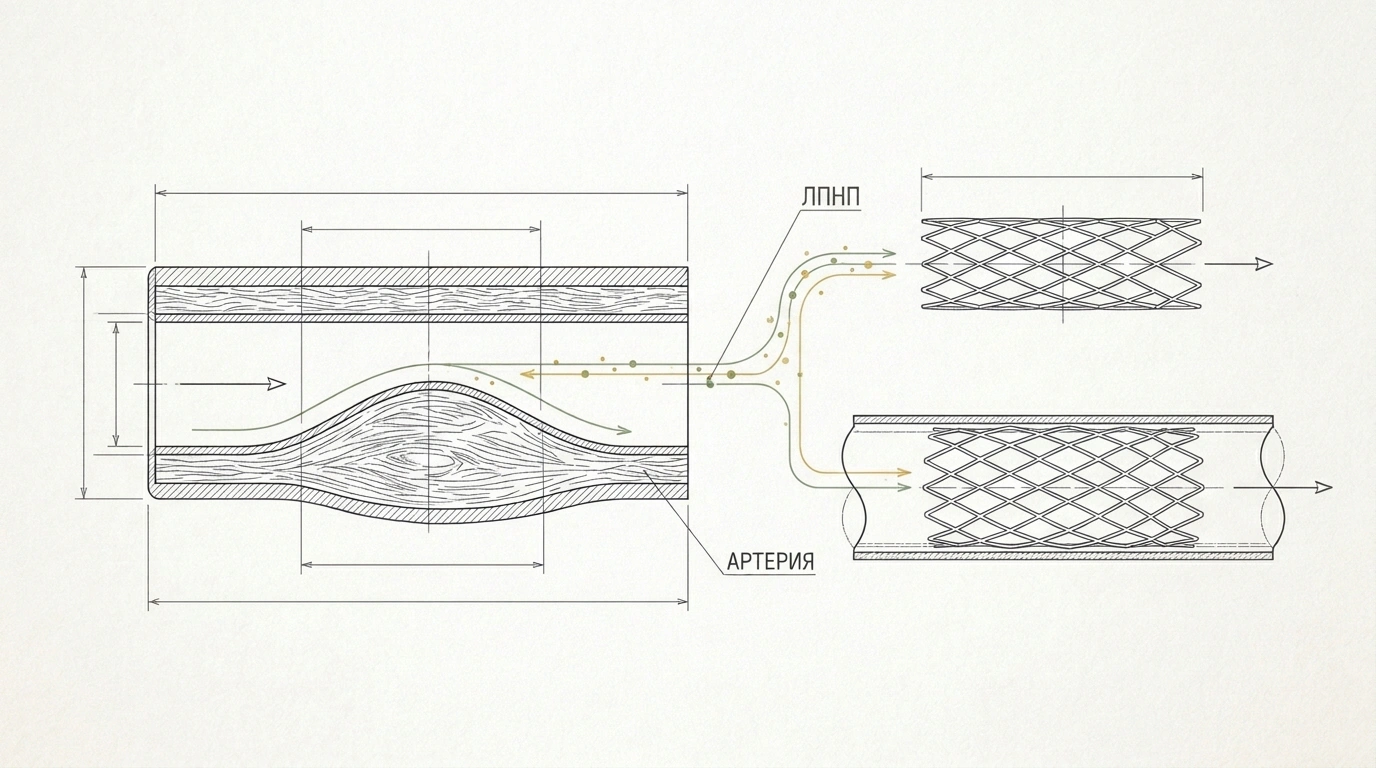
Over 25 years of tracking patients with stable coronary artery disease, the combined risk of heart attack or death was 93.3% with early stenting and 91% with starting on medication. The difference was not statistically significant, and about half of the medication group lived through those years without ever needing surgery.
These findings appeared in the long-term follow-up of the COURAGE trial in JAMA, sparked by a post from cardiologist Alexey Utin. When an angiogram shows a 60% narrowed artery, it's tempting to place a metal mesh right away and call it fixed. Yet in stable disease, that repair doesn't extend life or prevent heart attacks better than well-chosen drugs. Let's look at why this gap exists.
Why the Heart Isn't Plumbing and Plaques Differ
Everyday logic treats heart arteries like water pipes: if a pipe is more than half blocked, you call a plumber to clear the clog. It's better to understand how plaques actually work, because atherosclerosis behaves differently.
Cardiologists separate two distinct situations: chronic stable ischemia and an acute heart attack. In stable disease, the plaque is dense, calcified, and covered by a thick fibrous cap. It narrows the vessel by 50 to 70% and causes trouble only during exertion. When you climb stairs and feel burning or pressure in your chest, that's stable angina. At rest, blood flow is enough, and that dense plaque rarely ruptures.
An acute heart attack usually starts in a different spot: a soft, vulnerable plaque with a loose fatty core and a thin cap that may have narrowed the artery by only 30 to 50%. When that thin cap tears, your body tries to seal the crack and forms a large blood clot within minutes. Blood flow stops completely. Placing a stent in one stable 60% narrowing won't protect you if a soft plaque ruptures in a neighboring artery.
During an acute heart attack, emergency stenting is the only proven way to save your life and heart muscle. Heart tissue survives without blood for only about 20 minutes, and irreversible cell death begins after an hour, which is why doctors race for a 'door-to-balloon' time under 90 minutes. If you feel sudden crushing chest pain spreading to your left arm, shoulder, or jaw, along with shortness of breath and cold sweat, call emergency services immediately. Elective surgery when you feel stable follows completely different rules.
A Quarter Century of Data: What the COURAGE Trial Showed
Debates over 'preventive' stents have lasted for decades. Supporters of early surgery kept one argument in reserve: what if the benefit only shows up after ten or twenty years? The large COURAGE trial answered that question.
In the early 2000s, researchers enrolled 2,287 patients with stable coronary disease and confirmed heart muscle ischemia. Everyone received intensive medical therapy, but half got immediate balloon widening and a stent while the other half started with pills. Already in 2007, five-year results in the NEJM challenged routine stenting: early intervention lowered neither mortality nor heart attack rates.
Now scientists have tracked 959 U.S. veterans from that trial for up to 25 years, following half of them for more than 15 years. Survival curves for both groups tracked almost identically from start to finish. Counting deaths and heart attacks separately showed no difference either, and half of the medication group never needed a stent.
There is one honest caveat to that data. In the early 2000s, patients mostly received bare-metal stents without drug coatings. Modern drug-eluting stents scar over less often and stay open longer. Still, that doesn't change the core issue: even the best stent only holds open a 15 to 30 millimeter stretch, while atherosclerosis affects the entire vascular network.
Stent vs. Pills: A Local Patch vs. Treating the Whole Network
Let's compare the cost and payoff of both options. A stent mechanically presses one specific plaque into the artery wall and opens blood flow right away. The price for that speed is procedural risk plus mandatory dual antiplatelet therapy for 6 to 12 months so clots don't form on the metal. You have to take two blood-thinning drugs without missing a single dose, which raises bleeding risk and complicates other planned care, even a dental visit.
The medication strategy from COURAGE and the 2024 European Society of Cardiology guidelines works systemically across every artery at once. The main target is pushing 'bad' LDL cholesterol below 1.4 mmol/L and cutting it at least in half from your baseline. Cardiologists prescribe high-dose statins such as atorvastatin 40 to 80 mg or rosuvastatin 20 to 40 mg, often adding ezetimibe 10 mg to block cholesterol absorption in the gut. Treatment also includes antiplatelets like low-dose aspirin and blood pressure drugs, tailored in person by your doctor.
When LDL stays consistently below 1.4 mmol/L, fat drains out of the plaque core and its fibrous cap grows thicker and stronger. Intravascular ultrasound studies show plaque volume shrinks by an average of 28% without a single puncture. The price here is daily discipline over years, regular lab checks, and calm dose adjustments with your doctor instead of quitting therapy.
When Elective Surgery Truly Makes a Difference
Rejecting stents blindly is also a mistake. The 2024 ESC guidelines point to two situations where a procedure is clearly justified.
The first is severe angina that ruins daily life. If you faithfully take two or three chest-pain medications yet still get short of breath after 100 meters or one flight of stairs, a stent relieves pain and restores mobility. It won't change your lifespan, but it makes living much easier.
The second is dangerous anatomy on an angiogram, where a large part of your heart depends on one narrow segment. Intervention improves survival when the left main coronary artery is narrowed by more than 50%, or the proximal left anterior descending artery by more than 70%. The same applies to three-vessel disease when ejection fraction drops below 35% or ischemia covers more than 10% of the left ventricle. For these complex cases, doctors often prefer coronary bypass surgery to build a detour for blood.
What to Ask Your Cardiologist Before Elective Angiography
When a doctor suggests checking your arteries and possibly placing a stent, it's easy to feel overwhelmed and agree on the spot. A short checklist helps turn an anxious visit into a clear discussion of your options.
Questions for Your Cardiologist Before Elective Surgery
- What goal does a stent serve in my case: relieving pain during exertion or improving my long-term survival?
- Have I reached the target LDL level below 1.4 mmol/L on modern doses of statins and ezetimibe?
- Have I had a stress test such as stress echo, nuclear scan, or stress MRI to measure the size of the ischemic area?
- Which exact stent is planned: a modern drug-eluting model or a bare-metal one?
- Will I be able to take dual blood-thinning therapy for 6 to 12 months without interruption or high bleeding risk?
