You have probably felt that nagging disconnect: your seller dashboard shows impressions climbing steadily, yet the cash register stays dead silent. You turned on paid promotion, impressions jumped by half, and still the phone won't ring—save for a couple of random chat messages asking "is this still available?" before the buyer vanishes into thin air.
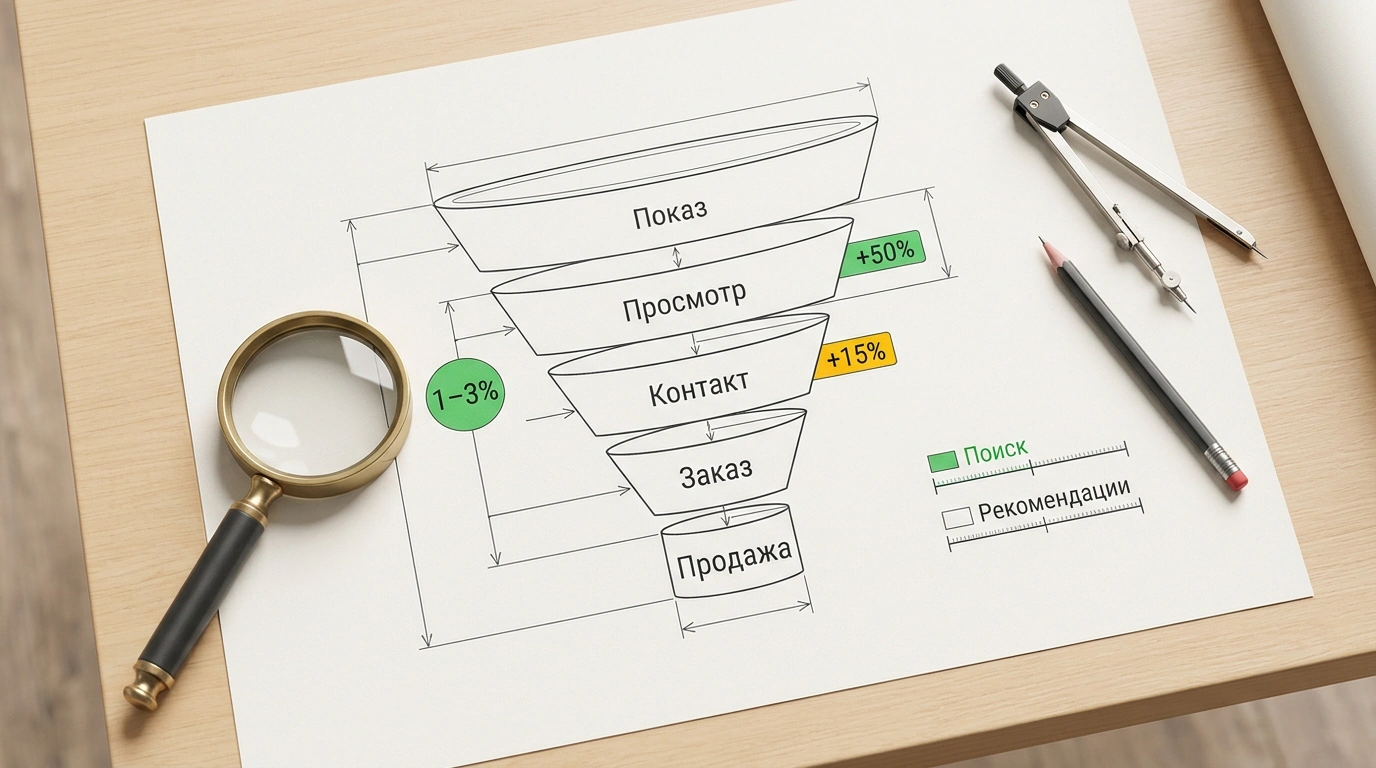
The knee-jerk reaction is to blame "dumb algorithms" or "window-shoppers with no money." But peek under the platform's hood and a sobering picture emerges. Official Avito Business stats reveal a telling gap: paid promotion delivers +50% more views on average, yet only +15% more direct contacts.
That more-than-threefold drop-off isn't the platform's fault. Paid packages do their job—they put your listing in front of eyeballs. What they can't do is turn a browser into a buyer. If your funnel has hidden leaks, your ad budget simply goes down the drain.
Five Funnel Stages: Where Buyers Drop Off
On Avito, a customer's journey follows five sequential steps: Impression → View → Contact → Order → Sale.
When you pay for promotion, you are only buying the jump from step one to step two—the right to show up in search results or the recommendation feed. Everything after that comes down to buyer psychology. According to Avito Pro data, the standard view-to-contact conversion rate for core product categories sits between 1% and 3%. If fewer than one in a hundred people who open your listing hit the contact button, the problem isn't reach—it's the offer itself.
Here are the main spots where buyer interest dies:
- Clickbait pricing. Putting "1 RUB" in the price field hoping to lure people into a chat is the fastest way to burn your budget. A shopper clicks through, sees the real price is 20,000 rubles higher in the description, feels tricked, and closes the tab without a word. You paid for the view and lost their trust. I covered similar traps in detail in my breakdown of why pricing tricks on Avito lead to bans and falling sales.
- Blurry or generic visuals. A single stock photo pulled off the web brings in random clicks, not confidence. Buyers want to see real texture, true dimensions, and any minor flaws.
- Vague descriptions. Copy-pasted fluff with no exact specs, included accessories, or delivery terms forces people to ask basic questions. Most won't bother—they'll just buy from a competitor who laid everything out clearly.
- Low seller rating. A profile sitting below 4.5 stars or sporting unanswered negative reviews loses up to half of its potential contacts at a glance.
Hot Search vs. Cold Recommendations
Over 90% of converting traffic on Avito comes from two distinct streams: classic search queries and the smart recommendation feed.
Someone using search types in an exact model—that's a hot buyer ready to pull the trigger today. Someone scrolling recommendations is just browsing the aisles, comparing prices and weighing alternatives.
Inside the Avito Pro dashboard, separate your campaigns by traffic source. Raise your cost-per-view (CPC) bid for direct search so you capture the top spots where conversion is highest. For recommendations, stick to the base bid—there's no point overpaying for cold views.
Avito Pro tracks unique actions over a 24-hour window, so repeat clicks from the same person within a single day won't eat your budget twice. And the Demand Analytics tab lets you benchmark your conversion rate against the category average in your region.
Closing the Deal and Running Fast Tests
Even a spotless listing won't save you if incoming messages sit unanswered for half an hour. On Avito, the first 10–15 minutes are make-or-break: in that window, an undecided buyer will easily message three competitors.
Don't try to fix a slump in leads by blindly doubling your ad spend. Test your setup in short, controlled steps: verify your pricing honesty and lead photo first, tighten your geographic targeting next, and only then dial up promotion intensity.