You pour tens of thousands of rubles into an on-location photoshoot, product staging, and sharp infographics. You turn on search ads, drive external traffic, and watch your listing climb the rankings... until sales suddenly flatline. You open your product page and spot a rival store sitting right under your price tag behind a "Cheaper elsewhere" or "From other sellers" badge.
Click through, and there's an overseas seller who lifted your photos pixel for pixel, copied your description, and slapped on a price 30% lower for a dirt-cheap knockoff. Shoppers you paid to acquire walk straight over to the copycat. It's a classic e-commerce headache that burns through your unit economics if you don't build a defense system.
Anatomy of Parasitic Traffic Hijacking via "Cheaper Elsewhere"
Marketplace algorithms are wired to surface the lowest price for a given item. Once the system spots visual matches or identical specs, it happily drops the clone right onto the original seller's product card. You foot the ad bill; someone else rings the register. Worse yet, if that overseas clone ships defective junk, you risk getting buried in angry reviews—much like in cases of targeted sabotage and fake reviews on Ozon.
Tracking dozens of clones manually is brutal work. Marketplace practitioner Pavel Novak shared a working setup built around a browser extension paired with the @OzonSellerHelp_bot Telegram bot:
- A background script scans recommendation shelves across your catalog and compiles a list of offending store URLs.
- The bot automates repetitive Ozon support tickets: opening the chat, picking the IP infringement category, attaching your claim template, and submitting the report. To keep Ozon's anti-spam filters from flagging your account, submissions go out on calibrated time intervals.
- A monthly subscription costs 1,590 rubles with no SKU cap, while also tracking Ozon Card co-investment discounts and competitor pricing trends.
Still, no automation tool can save you if your paperwork isn't bulletproof.
Evidence Standards and Ozon Brand Protection Rules
Marketplace moderators won't take down a competitor just because you wrote an angry ticket saying "they stole my photos." Under Ozon Brand Protection and the Rights Holder Portal, the evidentiary bar is strict:
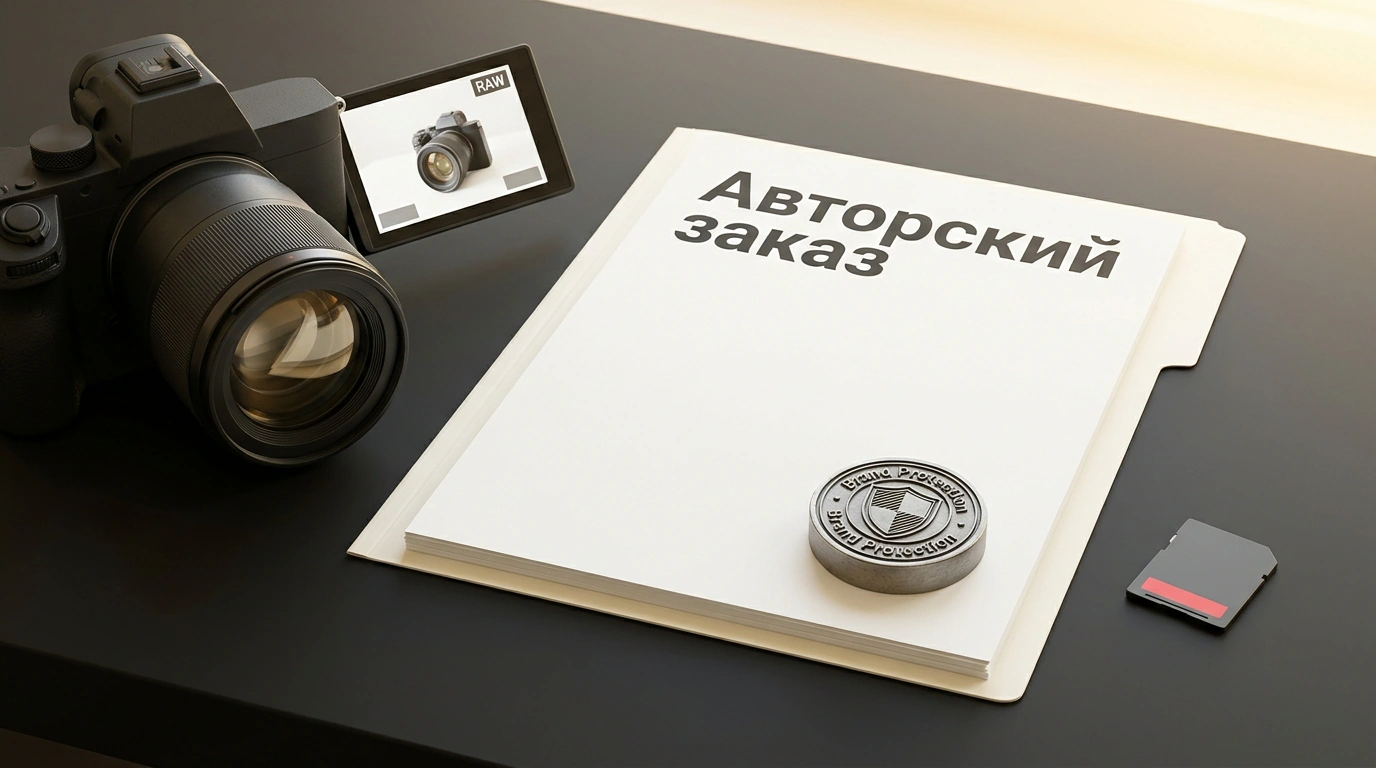
- Uncompressed camera originals. The very first thing moderation asks for is original RAW, NEF, or CR2 files with intact EXIF metadata—camera model, date, timestamp, and exposure settings. Screenshots from Photoshop or exported JPEGs do not count as proof of authorship.
- Commissioned work contract and IP transfer act. If you hired a photographer or a freelance designer for infographics, a payment receipt isn't enough. You need a formal commissioned work agreement with a creative brief plus a signed transfer act assigning exclusive IP rights to you. Without that transfer, the designer remains the legal author.
- Trademark registration with Rospatent. This is your strongest line of defense. Uploading your trademark certificate to Ozon's Rights Holder Portal lets you go beyond pulling down stolen images—you can block any unauthorized replicas sold under your brand name without an official distribution agreement.
Once your documents pass review, moderation sends an official notice to the infringer. If they fail to prove content rights within the deadline, the parasitic listing is permanently blocked. Don't skimp on paperwork: a clean folder of contracts and RAW files pays for itself on day one.
